Monday, July 27, 2009

Japan's Finest! Space Cowboys and Hiphop Samurai!

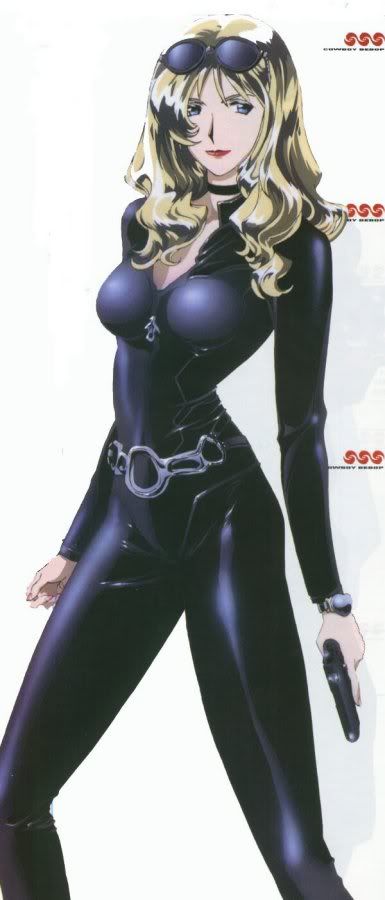
Howdy Amigos. As promised last time, we're heading back to the Old West in space via the Far East on Earth. Our mission? To examine one of the finest anime ever produced: Cowboy Bebop. If you get tired of my palaverin' on about intergalactic cowboying, just click the links to the awesome tunes, and check out the amusing embedded video (!). If you make it all the way to the end, I have some words about the hip-hop swordplay of Samurai Champloo too. If that don't satisfy, I dunno what to tell ya, there's just no pleasing some folk.


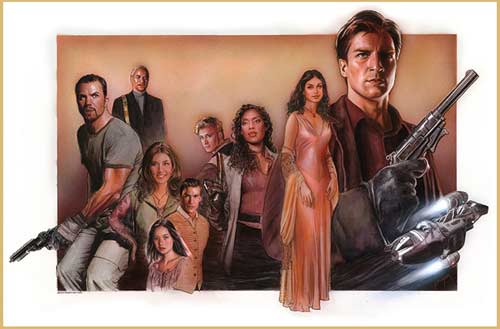
Premise-wise, Cowboy Bebop probably sounds very similar to Firefly. In both cases you've got a crew of lovable misfits drifting around a loosely policed galaxy looking for enough work to pay the repair bills and keep food on the table. The Bebop's Crew is smaller, and they work as bounty hunters (called "Cowboys" in the series) instead of outlaws, but the real distinction between the two shows is a matter of style. While Firefly is solely a western within it's sci-fi trappings, Bebop is by turns, a Hong Kong Kung-Fu flick, a film noir, and a Jazz Odyssey.

In fact, it's the music that makes the show. Series director Shinchiro Watanabe is as renowned for awesome music as Joss Whedon is for witty dialogue, and Yoko Kanno, who might be considered the John Williams of anime, penned the score. Listening to the opening and closing themes will do your ears good and give you a feel for the general poles of the show (funky and frenetic vs. soulful melancholy) , but there is so much more to hear before you can really appreciate the incredible range of the soundtrack (and what I've linked here just tips the 'berg). Musicality is a general theme for the show, with episodes referred to as sessions and named after record titles or various pieces of music.


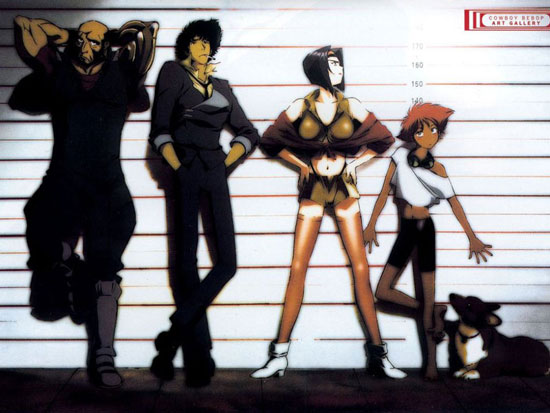
Meet the cast and crew of the Bebop. From left to right we've got ex-cop Jet Black, ex-triad Spike Spiegal, femme fatale Faye Valentine, crazy girl Ed, and Ein the data dog.

The eclectic nature of the music reflects on the quality of the writing. There is the eastern emphasis on the journey as opposed to the ending, but unlike so many other anime and manga, the narrative does come to a coherent and decisive conclusion. There aren't any plot holes either, at least, not in the sense of incoherence, though it does suffer from cavernous blind spots which move beyond titillation and into exasperation; a distinction I measure by the moment viewers stop thinking "I wonder what happened there..." and start wondering "Did the writers even bother?" In this case, I am referring to the "main plot" of the series that focuses on Spike's history with the criminal element and his missing lady-love Julia. What little we learn of it is compelling enough to move you along with the story, but when looking back at it you can't help feel that something significant was left unsaid. Part of the problem may be that I love the enigmatic (if shallow) main bad-ass, Vicious too much; possibly because he reminds me of another ruthless, effiminate silver-haired swordsmen.

Before bidding a fair well to space westerns for the foreseeable future, I must acknowledge that Cowboy Bebop is not the only anime to do space cowboys, and some may dispute my claim that it does them best; namely Trigun fans. I'd be lying if I tried to tell you I enjoyed Trigun as much as Bebop, but before you decide to nail me to your cosplayed crucifix cannons (officially my strangest alliteration ever), allow me to qualify my decision: Trigun is a better Western, but a worse Space Western because the space aspect of the show is restricted to just a couple of episodes. Mostly it's just Vash The Stampede wandering around a barren desert planet, shooting at folk without killing them, devouring doughnuts and shouting "Love and Peace!". In case you ever wondered who would win a shoot out between Vash and Spike, allow me to present you with the following hypothetical:


For those wondering why the Japanese have such a yen (or should I say Zen?) for Westerns, the simple answer is that they are trying to get back at John Sturges for stealing the plot of Akira Kurosawa's Seven Samurai to make The Magnificent Seven. Feeble jokes aside, our romanticization of the gunslinger parallels Japan's treatment of Samurai, and I believe it accounts for much of the cross cultural genre bending.

Interestingly enough, Shichiro Watanabe's other genre blending masterpiece is about swordsman in the Edo period; Samurai Champloo. As I mentioned earlier, Watanabe is renown for musical shows, and Champloo happens to be Hip-hop flavored, which means it's about as historically accurate as Cowboy Bebop is historically predictive. Fortunately, it's also just as entertaining, and frequently entertaining in the same ways. Once again, we've got a two guy one girl set up, (though we've ditched the dog and the kid who were included in Bebop to lighten up the show's blueszy atmosphere) and we follow the trio through a trail of odd jobs as they seek out "The Samurai who Smells of Sunflowers". Unlike Bebop, the story telling is completely rooted in the eastern school of the journey, with the plot mounting up to a final duel between the two guys that never ends up happening.

Jin, Mugen and Fuu, just chillin'

Yoko Kanno doesn't come around again, presumbly because hip hop ain't her thang, but the music continues to impress anyway, and in closing, I present you with this link to Samurai Champloo's closing theme. Til next time, See You Space Cowboy.

Thursday, July 23, 2009

My Kind of Folk

Even though I love the arcane trappings of magic and the raw symbolic power that pervades the fantasy genre, I am a science fiction man at heart. The reason is very simple really. While Fantasy draws its power from heritage and whimsy, Science Fiction is all about addressing change and exploring possibility. Essentially, one is nostalgic and the other is forward thinking.
So consider yourself forewarned: When Nerdmagedon commences, and battle lines are drawn to determine whether sci-fi or fantasy shall reign supreme, I will stand tall beside the Klingons, Jedi and Cylons against the elves, dragons and fairies.

Believe it or not this post was not inspired by Comicon, which I still have yet to attend. Rather, it stems from the sci-fi genre-bender binge I've been on the whole summer. I'm currently reading a tech-noire with heavy military undertones, playing a space survival horror game, and on the weekends, I get together with friends to re-watch the finest Space Western the world has to yet to see: Joss Whedon's Firefly.


Depending on who you are, that may sound like small praise or blasphemous hyperbole. The space western is still a pretty young sub-genre of science fiction, but what's there is good stuff. The earliest and most prominent example I am aware of is Star Wars, and while the work is too broad to be wholly classified as western, there is no doubt in my mind that it's lawless, frontier atmosphere is what allowed it to stand apart from Star Trek's universe, whose federation of planets seems insufferably tame and preachy by comparison. Another fine piece of fiction to work with the space cowboy concept is the anime Cowboy Bebop, which I shall discuss in detail next post.

The thing that sets Firefly above the above-mentioned series, is that it is a western first and foremost, with just a little bit of science fiction thrown in for flavor. Almost every character in the cast is based on a classic western archetype. You've got the wise old preacher, the hooker with heart of gold, the crass and crude mercenary brawler, the fancy doctor, and the confederates (Browncoats) who have turned to outlawin' following their defeat in the Civil War (The Unification). The only recurring characters who break the theme are crazy psychic girl, perky mechanic girl, and sarcastic ship pilot. Even the reavers(!), the series reoccurring bogeymen, conform to the old western stereotypes of Indians, in that they are also people, though frightening violent people who have a tendency for scalping and cannot be communicated with.

Now, I love a good western as much as the next sumbitch, but I couldn't rightly tell you that it's one of my favorite genres. By and large, there tends to be a little too much talk of land for my tastes and the folksy atmosphere, where men are supposed to be strong creatures of few words well versed in farming, firearms, and mechanics is hardly hospitable to my nerdy nature and suburban upbringing. The patriotic undertones and lack of cultural diversity also tend to bother me. Seeing how I am an average sample of Whedon's fan base, it is easy to see how he had trouble marketing this series and why Fox decided to pull the plug. Like most other people, I only discovered the show after it had been canceled, and realized that the sci-fi elements addressed all my country western anxieties.


Setting the series in a spaceship, as opposed to a town or a farm gives the series a sense of home (which is essential for the Western) without rendering it sedentary. To inject some cultural diversity into the mix, Whedon sprinkles Chinese throughout the script and refers to his personal take on the evil galactic empire as The Sino-Asian Alliance, acknowledging China and America as the two superpowers most likely to seize control over human society. The cast also has more color than typical American television, let alone a typical western, featuring two black actors, and a Brazilian as well. The real thing which translates the folksiness of Firefly into something nerds can appreciate however is the dialogue. Whedon manages to unite the witticisms of nerd culture with folksome earthiness by relying on plainspoken wit and blunt understatement instead of references to folklore and pop culture.


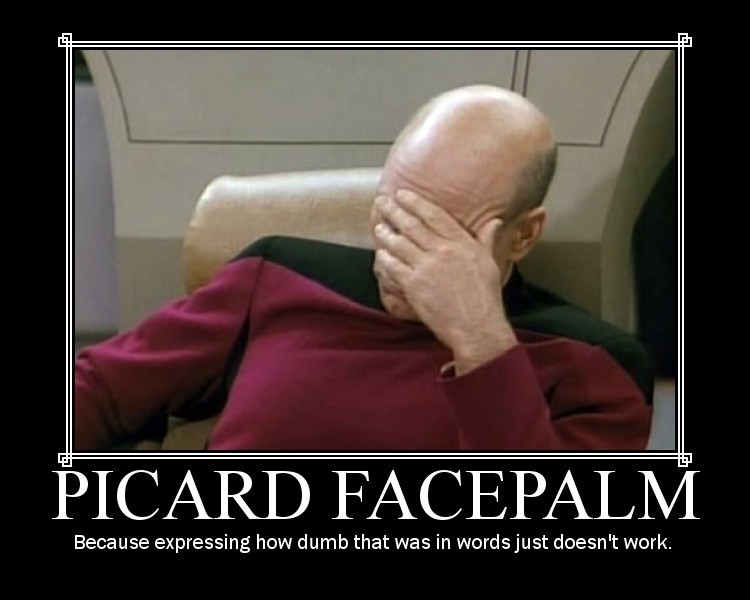
Interestingly, Serenity, the film intended to serve as the possible salvation/wrap up for Firefly, switches gear's from the television series' western tone to a full on Sci-fi adventure. The western influence and folksy language lingers, but the plot moves away from bank heists, cattle raids and shootouts to encoded messages, insidious viruses, and the mysterious ambitions of the nefarious alliance. Laser weapons start popping up in a world that had only been armed with traditional guns. That was actually the thing that tipped me off to the genre switch.Normally, I would link Picard at this point, but I can see the reasoning behind the toneshift. The movie was a last ditch effort to try and draw in a broader audience for the show, so it needed to be easy to market, and since people are skeptical of stories they can't fit a familiar label to, Whedon decided to give it a more traditional Sci-fi flavor.

All in all it seems like a forgivable evil since the movie is still engaging and enjoyable. If you haven't seen any of Firefly yet, I recommend you rent or buy Serenity, and if you like that, pick up the the show on DVD. I really don't know how much it will set you back, but it's the sort of show that you can watch again and again, picking up new things each time, and the episodes are fairly self-contained, making them great to share with friends.

To those Firefly fans who have not picked up the comic books, I would heartily encourage you to do that as well, regardless of how you felt about the movie. Both series (Better Days and Those Left Behind) take place before the movie and hold true to that original western tone while sewing up a few loose ends. There is nothing particularly ground-breaking in either story, but the dialogue is entertaining and the artstyle is detailed and faithful to the show. Finally, for those of you who are hungering to hear about a certain enigmatic preacher's past, word has it that a lil series called A Shepard's Tale is in the works. It is slightly worriesome that said word came mid 2007 with a projected release date of late 2008, but the announcement came from Ron Glass (with Whedon's permission), so there is still hope yet.

Wednesday, July 15, 2009

Dumbledore Dies

This Tuesday I did the "wait out in line for the midnight opening with your friends" thing with Harry Potter and The Half-blood Prince. I really did try to think of a more tasteful title for this post but nothing else seemed to have the same punch. Normally I try to be much more respectful with regards to spoilers, but if you couldn't see it coming from book 1, you could use a glass of cold water in the face. Also, the book came out like four years ago, so I think we're well past the moratorium on this one.

Anyway, I was curious to see how this movie would turn out, as the book struck me as the weakest thread in Rowling's tapestry. As the next-to-last installment in a long-running series, it had a lot of set up to do. Consequently, the pace of the plot was very similar to a climbing roller-coaster. Normally that slow ascension fills one with a delightful anticipatory anxiety, but since I knew I would be waiting at the top of that dramatic hill for another year or few before I would actually be able to take that plunge, the climb was boring and frustrating, especially after the thrill-ride that was Order of the Phoenix, my personal favorite book in the series. Most of this lengthy setup was focused on shipping, which is actually a very important undercurrent in the Harry Potter universe. In the preceding books however, all the affections and potential pairings are buried in the adolescent anticipation of what could be. Rowling lays it all to bare in this book, and frankly it fell short of expectations.


The romantic centerpiece of the series is not actually Harry and Ginny, but Hermione and Ron, because they have provided readers with the long-running, pins and needles anticipation necessary for fans to really care about the romance. Keep in mind, caring is not the same thing as approving. I know a great many fans wanted to see Harry and Hermione together, and others still were hoping for Snape and Hermione. Nobody really seems to like Ron, and I think this book is a large reason as to why. An exorbitant amount of text is spent describing his obnoxious relationship with Lavender Brown, and after about the fifth instance it stops being cringe-some humor and just becomes cringe-some. Harry's affection for Ginny is also disappointing because of the abrupt way it manifests. Even though we might have seen it coming from The Chamber of Secrets, it's difficult to be invested in their coupling because their courtship was so brief and unremarkable. At the same time, we could see it coming so it's not surprising either.


The movies have done a better job of foreshadowing Ginny's interest in Harry, though their coupling still leaves a lot desired. All of the directors can't seem to decide whether they want Ginny to be a Shy Violet or a fire-starter (which is how she came across in the book) and Daniel Radcliffe has better chemistry with Emma Watson and Evanna Lynch (who is, as Rowling herself stated, perfect as Luna) than he does with Bonnie Wright. As I said though, Ron and Ginny are the romantic heart of the film and their sixth book courtship is much more pleasing on the silver screen. Lavender Brown is every ounce the humorous annoyance she was in the text without being completely overwhelming. Emma Watson does some brilliant acting and really manages to seem heartbroken over Rupert Grint's Ron, even though her best scenes are still opposite Radcliffe. I was also impressed with how suggestive the movie managed to make the coupling. While the books always gave me the impression that nothing beyond snogging took place in the Halls of Hogwarts, the movie tells another story. I realize this design decision was probably motivated by the success of Twilight (which is just... Well you know), but sex is part of the teenage equation nowdays and it's nice to see people acknowledging it.

Aside from all the romance, the slow pace of the book is much improved by the movie. You may recall the book opened with a the former Minister of Magic describing the horrors of Voldemort to Britain's new Prime Minister. I found this endlessly annoying, because I really wanted to see all the delicious chaos being described rather than receiving a second hand account of it. The movie indulges me, beginning with the flight of three Death Eaters who tear through London and destroy a bridge. Now that's the way you get a story going! That danger does a lot to hold the story over to its conclusion, considering the threats interspersed throughout the plot are considerably toned down in comparison to those in preceding volumes.

This is one of the slickest movie posters I have seen in a longtime. Note the reflection in the glasses.

Returning to my titular spoiler, I'd like to briefly discuss the death of Dumbledore. Even though you can see it coming a mile off, its the sort of loss that still hurts. In some ways, the inevitability of it is the worst part, because the death of a grandfatherly figure acts as a mirror for such deaths which have yet to touch our own lives. Once one recognizes this emotional mirror however, it is harder to be affected by the emotions it's lens is intended to convey, which may account for I was so callous and indifferent to the conclusion of the sixth book. Yet the movie showed me another symbolic aspect of Dumbledore's passing that I failed to grasp through the text: the grandfatherly headmaster's passing is also commentary on martyrdom.

The sequence in Voldemort's cave where Dumbledore drinks the poison potion is analogous to Socrates death, save that Harry is forced to force-feed his mentor, where as Socrates drinks his hemloc freely. Both men drink for "The Greater Good," but while Plato's ancient account emphasizes Socrates' supposedly selfless sacrifice, Harry's involvement calls attention to the selfishness of dying on your own terms. I realize that Dumbledore doesn't actually perish until Snape shoots him, but the connotations of this scene are far from accidental. First, the entire sequence takes place in a shadowed cave which is an inherently allegorical setting, and the pair must use a boat (which has a clearly stygian design in the movie) to reach the island containing the potion. Finally, the regretful nature of Dumbledore's final request "Once again I must ask too much of you, Harry" recalls the title of Plato's account of Socrate's death: Apology. In hindsight, I feel foolish that it too me this long to recognize this parallel, but it is an excellent example of just how literary Rowling's writing is. This scene invites readers to reconsider Snape's involvement with Dumbledore's death as well; an examination that is absolutely crucial for a full appreciation of the series. While it is fairly obvious that Snape is a good guy despite his apparent alliance with the Death Eaters, its hard to appreciate just how noble his actions are. Killing someone you love, even if it is there wish and they have a good reason for it, is an act which sheers the soul, quite literally in the Harry Potter universe, as is explained earlier in the film.

My chief complaint with the movie is that Harry's misguided attempt to duel Snape and avenge Dumbledore's death is thoroughly abridged. Much like Dumbledore, he teaches Harry to the end by preventing him from using Unforgivable Curses and casually brushing aside his offense to demonstrate just how much stronger Harry needs to become if he hopes to defeat Voldemort. Minor grousing aside, the movie tells a good story and tells it well. The special effects in this series always impress, the music doesn't really deviate from past scores (which is a good thing), and there are some really funny laughs to be had. 'Til Next Time.

Thursday, July 9, 2009

Bustin' Makes Me Feel Good!

As a child of the late 80's, I grew up amidst a host of truly awesome cartoon and toy franchises; many of which are currently seeing revivals as summer blockbusters. My all time favorite was born from a blockbusters however; While other beloved franchises have been eroded by a number of disappointing sequels and lame revivals almost everything Ghostbusters is golden. Case in point: Ghostbusters: The Video Game.


I know what you gamers out there are thinking. I thought it myself when I heard a title was in the works. For those who didn't think anything because they don't play video games, don't worry, I will explain.


Video game adaptations typically fail due to a fatal flaw: corporations view videogames as mere merchandise as opposed to vehicles for story telling, and the effort required to market merchandise is much less than the effort required to craft compelling stories or gameplay. TVTropes goes into the issue in much greater detail, and any skeptics out there can be easily cured by playing pretty much any videogame based on a summer blockbuster release. Admittedly, there are lots of fine Star Wars games out there, and a couple of decent Lord of the Rings titles as well, but a handful of exceptions in a sea of licensed realeses hardly makes for a good track reccord. Games based on the Transformers movies are prime examples. Hah! you get it? Cause Optimus Prime is... *cough* moving on.

I was pleasantly surprised to find favorable reviews of Ghostbusters: The Video Game around the net, and given my fondness for the series, I decided to give it a rent from Gamefly (a service I heartily recommend by the way as it has allowed me to experience a number of titles this summer in a reasonably economic fashion). The reason this post missed deadline is because I felt compelled to keep playing the game to provide you with a thoroughly researched account of it. I can now tell you, with absolute confidence: Ghostbusters has set the standard for every video game adaptation to follow.


Not only did the developers get the original ghostbusters (Murray, Ackroid, Ramis and Hudson) to reprise their roles with excellent voice acting, Ramis and Ackroid even worked on the script for the game. Wikipedia says they 'doctored' it, but based on the quality, I'm willing to wager their contributions went way beyond simple adjustments. The script truly captures the humorous spirit of the original movies (while at the same time implementing bits and pieces from The Real Ghostbusters cartoon, like a semi-domesticated Slimer). The music is also classic Ghostbusters, and I'm not just talking about the Ray Parker Jr. Song, (though thats there too of course), but the charmingly quirky mood music as well. Hell, they even got Annie Potts to reprise her role as snarky yet lovable Janine!! The only ingredients missing are Rick Moranis' Louis Tully and Sigourney Weaver's character Dana Berret. Dana is most sorely missed, as Ilyssa Shepard, the new object of Venkman's philandering, is a boring and flat substitute.

All the same, this game is the Ghostbuster's sequel fans have been waiting for. If the third movie (now reportedly in production!) actually gets made, it should be cannonically regarded as Ghostbusters 4. The Game also fits in well with The Real Ghostbusters, which I only just realized had 147 episodes (a hell of a run for an animated kids' show!). Since the game is it set in modern day, it seems to shove Ghostbusters: Extreme out of the cannon. While this saddens me, it's the cut which makes the most sense; even though it was a decent incarnation of the franchise, at least in my book, the attitude-rich approach of Ghostbusters Extreme seemed to alienate it from the humor of its predecessors, which is where Ghostbusters: TVG truly shines.

It grasps the humor of its fore-runners through the gameplay, which is legitimately fun in its own right. Each level has a bunch of cursed artifacts and ghosts which you can scan using a PKE meter. Once you scan a ghost, a humorous entry about its nature or history is added to your Spirit Guide, and all the artifacts you scan gradually start to clutter up the firehouse as you progress through the camapaign. Even the game's Achievement System has a sense of humor. In addition to the standard "Clear this level at this difficulty!" or "kill X number of enemies!" objectives, each level has a humorous secret achievement. The funniest of these is called "Kosher" and it has you blasting the ham off a buffet table for a bar mitvah when you crash the grand ballroom at the sedgewick hotel (you remember, the original hotel from the first movie?)

Beyond that, there's the actual ghost busting, which is thoroughly enjoyable. You yourself take on the role of a rookie Ghostbuster who is referred to in game as "The Kid," "Sport" "Scooter" "Champ" and a slew of other thoroughly demeaning yet somehow endearing nicknames, and you serve as something of a guinea pig for Egan's new inventions. You've got all the classic equipment from protonpacks and neutrino wands (which you use for blasting) to nuon traps (for err, trapping) , along with some pretty slick new gear. My personal favorite is the slime-thrower, which fires positively charged slime to clog dimensional rifts, free possessed people, uncover invisible objects, and tether objects together. This last application seems to have the making for a "fun with physics game" in and of itself, as a double-ended tether that stretches its targets together has a surprising number of applications.

I have not played any of the multiplayer yet, but I intend to. And in the interest of making sure this title gets as much well-deserved publicity as possible, I will be writing an article on the multiplayer of Ghostbusters: The Video Game sometime this weekend for Biased Video Gamer Blog. So be sure to look for that in your near future. In the meantime, I highly recommend you check out the game for yourself, even you don't consider yourself a gamer. And if for some horrible reason you have not seen both ghostbusters movies, do that. Or else, to paraphrase the gangster from the in-game message machine in the Ghostbusters firehouse (most obscure reference ever), "something sudden and blunt may befall your legs." and that would be a real shame.

Tuesday, June 30, 2009

Japan's Finest! Fo'Shonen

It's time for another installment of Japan's Finest! Today I shall be discussing the concept of age and gender based artistic genres in Japanese comics. If the horrible pun in the title made absolutely no sense to you, this post should be as informative as it is entertaining. If you did understand it, thank you for reading further; I will endeavor to be more clever from here on out.

If it was not apparent from my examination of Monster Plagues, the Japanese are masters of demographic marketing, primarily because categorization is a huge part of their culture. The language has specific counting suffixes for foldable cloth objects and foldable paper objects for chrissakes. I cling to that factoid because I think it was the revelation which led my grammar to flee from Japanese in terror, forever refusing to learn anything further about it. I'm sure there is a practical purpose for this seemingly arbitrary distinction; the language is nothing if not practical. It is that relentless practicality that bothers me in fact: Things must not only be clearly defined, they must also have a clear framework to ensure that they fit in their proper place with regards to other things. In such a society, there would be no allowance for my semi-nonsensical digressions and attention deficiency.

Funny thing is, this emphasis on categorization is largely responsible for the appeal of Japanese art. Specific techniques are collected, distilled and refined into styles that are tremendously iconic and visually arresting. This is particularly true of the two most popular visual styles of manga art: Shonen and Shoujo. The former typically features jagged lines, breasts that are enormous even by anime standards (Sexy, but SFW), fairly-masculine looking guys, and lots of violence. By contrast, Shoujo features softer lines, eyes that are enormous even by anime standards, men so pretty they make Legolas look butch, and lots sparkles and flower petals. As you might guess, the tremendous visual difference between these styles can be summed up with a very simple distinction: Shonen is crafted with boys in mind, while Shoujo is for Girls.


That probably sounds politically incorrect to western sensibilities, and it is to a certain extent. The nearest cultural comparison for a boy who reads Shoujo is a boy who plays with Barbies instead of J.I. Joes, though after taking the Japanese emphasis on conformity into account, the teasing Shoujo-Kun suffers will likely be much worse. If the tremendous cross gender success of Naruto and One Piece are any indication, it seems more socially acceptable for girls to enjoy Shonen, perhaps because masculinity is regarded so highly in Japan. Or maybe there are other reasons? Whatever the case, it's hard to criticize the gender specific approach in comparison to the relentlessly masculine U.S. comic industry.


It also must be said that there is considerable variation between series in both Shonen and Shoujo, and that some series mix and match visual motifs. The seminal Rurouni Kenshin is one such example, with the titular character, Himura Kenshin, sporting two distinctive artstyles that vary depending on the situation. When the ol' urge to kill rises, he is represented in a fashion that is suitably badass and when he is his normal, happy-go-lucky self... well he's adorable. Insufferably so really.


In addition to the visual motifs I mentioned earlier. certain themes, premises and narratives have become recognized as distinctively Shonen or Shoujo recently, and I would like to spend the rest of the post discussing those plots. Unfortunately, my knowledge of Shoujo is extremely limited. We're talking like 3 episodes of Sailor Moon, 1 volume of Vampire Knight and The Ouren High School Host Club theme song on Youtube. So rather than offering a completely one sided discussion, I will touch back on Shoujo at a later date, and focus my attention on Shonen for the time being.

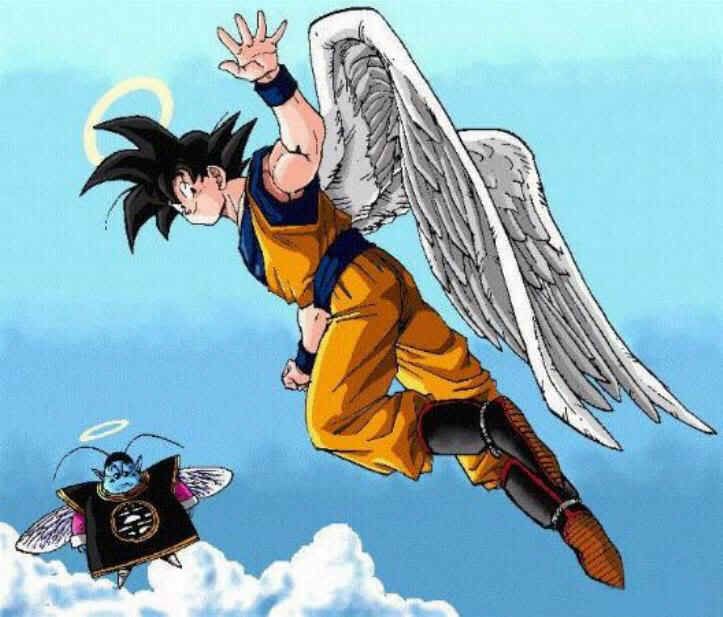
Like so many other American boys, Dragon Ball Z was my introduction to Japanese Anime, and it's plot is about as Shonen as Shonen gets. That is to say, it is about two things: A) Fighting B) Getting Stronger. Somewhere in the background of the fists, fireballs and bulging muscle is a justification about protecting people, but that is really all it is; an excuse for the good guys to fight bad guys with lethal force. Not that dying means anything in the dragon ball universe, where people can be wished back to life ad nausea. While it's not conceptually ground breaking, good fights make for good entertainment, especially when the participants are memorable and there are no dire real-world consequences, and DBZ meets both criteria just fine. Unfortunately, each fight, especially those towards the end of the series, take -forgive the pun- over 9000 episodes to complete. Again, that wouldn't be so bad if each fight was interesting and unique, but about half that time is wasted on exposition and reaction shots.

Fortunately, new challengers have arrived on the Shonen scene, allowing Goku to finally rest in peace. Naruto, One Piece and Bleach are the current kings of the Jump, the most popular Shonen compilation mag in Japan. Naruto is my personal favorite of the group, and my second favorite manga, behind Fullmetal Alchemist (which is technically also classified as Shonen, but really in a class of its own), though both series deserve a post all their own for discussion since they really push the genre into new territory. One Piece and Bleach are more direct descendants of Goku, in that both build on the ideas of fighting for protection and honor, so that they become legitimate themes as opposed to mere justifications. I was initially turned off by One Piece's goofy flavor, but trusted friends convinced me to soldier on, and I am still slowly warming up to it, but I'm still not too familiar with it, which leaves me with Bleach.

Originally, I found Bleach even more intriguing than either Naruto or FMA. he premise had me at the word go: A high school punk with a knack for seeing dead people has to play the role of death god, or grim reaper. Wikipedia can explain it better than I can, or better yet, track down the first couple volumes and see for yourself. The art style is sharp and hip, the world's lore is intriguing, and the first major arc of the story is extremely compelling.Unfortunately, it stagnates shortly thereafter.

While Kubo Tite has a real gift for story telling, character designing seems to be his real passion, and he expands the cast exponentially, though the only 'development' he affords characters is a tedious exposition of their powers and abilities before they are killed off and forgotten. This ever growing roster has proven to be a sort of cancer for the series, as it draws attention away from the existing characters and renders them shallow. I swear I'm quits with the series after each new installment releases, like a Smoker quitting after "one more pack." Of course next week I come crawling back, hopeful that the mangaka will eventually address the tantalizing plot threads which preceded this seemingly endless chain of superficial duels. But he never does.

That raps up this month's look at Japan's finest. As you can see, there's a lot more to discuss where on the horizon. Hope to see you again next week!

Monday, May 18, 2009

Bold Going

As usual, I must apologize for my lack of updates. It turns out school requires work and study. I know I keep promising to post on Y: The Last Man but sadly I just haven't had the juice to finish reading it. It's not that the series has turned sour, in fact it has proven itself to be resilient against the strain of incoherence that tends to haunt long running serials, and I have high hopes that it will deliver a strong conclusion, which I would like to discuss with you. Furthermore, I'm afraid I have to revise my promise of weekly Japan's Finest! posts to a monthly model. As much as I love anime and manga, there are other things I want to talk about, and until I can get into better update groove, I'm just going to write on whatever strikes my fancy.

Today I would like to talk about a little film I've managed to see twice over the past week.

It's the best movie I've seen all year, though that's hardly a badge to boast about considering Wolverine is the only other flick I've seen. Some critics are referring to it as "This year's Ironman," which is a more suitable and accurate marvel-based point of reference in terms of both quality and composition. Both films have lots of action, quick dialogue, a sexy technology from the future aesthetic, impressive SFX and excellent casting. At the end of the day, Star Trek beats out Tony Stark because it has a richer cultural legacy to draw on. Don't get me wrong: Ironman is a great superhero and a rich comic anthology, but it really can't compare to Star Trek in terms of cultural impact.

Like most ought-era twenty-somethings, I've seen more of Star Trek: The Next Generation than The Original Series, but I still have a general feel for it thanks to all the pop cultural lint my brain has collected over the years. Most of the time these catch phrases and inside jokes clog practical thought or dissolve my attention span, but whenever Hollywood decides to resurrect a franchise I have no business being familiar with, this minutiae serves as an almost magical link that lets me share in the reboot buzz. I love the drama of that seems to arise in these reawakened fandoms. On the one side, you have an army of cynics and elitists, fearing that what they loved about the show will be lost or tarnished, and in the other corner you have cautious-optimists who are glad to share the experience with a younger generation.

In Star Trek's case, most of this drama was wrapped up in casting concerns. Almost all of my precious little knowledge of The Original Series concerns the characters of the show; a collection of personas, which, through decades of self-deprecation and jokey skits, have become inextricable from the actors that first played them. "The Shat" is a prime example. Then again, by the time I was old enough to start recognizing celebrities and Hollywood personalities, he had already become thoroughly ironic icon; the good humored has-been. In fact, it's hard to imagine it being any other way.


Whatever the past held, the present cast of USS Enterprise is a blend of charisma, chemistry and talent that is a joy to watch. I started getting excited about the movie when I heard that John Cho would be playing Sulu and Simon Pegg would be Scotty. They certainly live up to my hopes, though they could use a bit more screen time in the sequels. I'd never heard of Anton Yelchin but his eager, bright-eyed take on Chekov is relentless charming, even if the Russian w/v gag is a little over-done. My personal favorite was McCoy. Karl Urban does a brilliant job of capturing Bone's warmhearted cynicism and he has some of the best lines in the film. I always thought Zach Quinto was a great villain on Heroes, but he makes an even better Spock. The traditional Vulcan farewell "live long and prosper" has never sounded more like "Fuck you," and when you see the scene you'll understand how that's a good thing. He also has surprisingly potent chemistry with Zoe Saldana's Uhura, whose character is sadly a touch under-realized. Of course, James Tiberius Kirk is the central figure of the story and he gets the best character introduction since Johnny Depp rode a sinking ship into Port Royal.


To be honest I'm a little bit hesitant to examine the plot carefully, because it really was not crafted with close-reading in mind. Like Ironman, the pacing is so tight and quick that one can't escape the sense that something valuable must have been edited out or glossed over in the interest of presenting viewers with a fun easy to understand experience. Such streamlining is essential for crafting fiction, and even more so for popular fiction, but when taken to excess, the plot can end up feeling lifeless and plastic.

Manufactured plots are sadly familiar to Science Fiction. Hypothesis is the heart of the genre, and writers set out to answer questions about our society by altering it in impossible ways. Unlike researchers though, whose conclusions must conform to the results of their experiments to remain ethically and practically viable, authors are free to change or invent any element they like to adjust the final message of their story. Good authors try to make their additions as reasonably logical as possible so their story can remain relevant and valuable to society. The result are incredibly engineered worlds, crowded with specific jargon and complex explanations.

Star Trek, being a modern mythology, follows the classic heroic template, but rather than complicating the Science Fiction, it makes things simpler. Technology is treated like magic, and the emphasis is placed on two men trying to find their path in the world. It is a timeless universal theme, though the plot escapes the stagnation of classic conventions by trading it for the more complex, engineered Sci-fi approach to structure, creating a story that is grand in scale but laser sharp in terms of pacing. The story begins with what could be considered a prologue, followed by time skip and character introduction scene, followed by a second time skip and character introduction, followed by yet another introduction and time skip scene, before finally settling on the main plot arc which only takes about a day or two to reach a resolution.

This kind of chronological hopscotch is risky business, especially when the main plot is based on time travel, because it invites all kinds of plot holes and can hamper character development. Despite a few absurdly convenient plot elements, nothing crucial has been ignored or explained away, and the story survives the vacuum of space. Most impressive though, is the way the film carves it's niche in the greater Star Trek universe. The temporal twist provides a canonically sound and blissfully simple explanation for the reboot through the concept of alternate universes.

I'm happy to hear that the Enterprise's new crew is signed on for two more films. I realize that's standard procedure these days; every film is a potential franchise, but usually this is a detrimental trend. Some films that should simply be left alone suffer multiple sequels in the interest of turning a profit. Star Trek has always been a fictional universe as opposed to an isolated story however, and the end of the film begs for further exploration. There are no cliffhangers or loose threads here, just more fun to be had.

Sunday, April 19, 2009

Japan's Finest: Monster Plagues

Dear readers I have failed you. Despite my promises of weekly anime and manga commentary, there was none to be had. I will endeavor to correct this error with an extra post this week, but the quarter is getting busier, and putting out two posts a week may be a tad over-optimistic. Now I shall address another oversight:

While I initially intended to discuss the difference between Shonen and Shoujo art styles, I realized my last post missed a rather important chapter of anime's assimilation into America's cultural consciousness: The Monster Plagues. From 1998 to around 2003, America was wracked by Japanese monster collecting franchises. Nobody knows advertising and merchandising like the 日本人, particularly because there is a social element to it. Popular fiction is designed with a sort of brand recognition in mind, blending consumerism and cultural consciousness in a way that would send George Lucas to the Sepuku Mat with shame. America's youth got a taste of this with the Power Ranger craze that came in the mid 90's, although the franchise was rebuilt from scratch in the USA for the USA, and merely based on the Japanese concept of Sentai. Even earlier than that, Transformers demonstrated the lucrative potential of using a cartoon to market toys.

You used the Multimedia stone! What...!? Mickey is evolving!


Congratulations! Your Mickey evolved to Pikachu!

The monster plagues are significant because they represent the first time foreign fictional universes were marketed towards children across a broad spectrum of socially interactive media. Disney has been doing cross-marketting for years, threading Saturday morning cartoons through coloring books, breakfast cereals and happy meals, but they were completely out-classed by the monster collecting menaces which emphasized fan interactivity at every corner. The card and video games were set up to require trading while the manga and anime brought the world behind the games to life.

The First Plague

I first learned about 'Pocket Monsters', or pokemon (lower case refers to the critters, uppercase refers to the franchise.) through an advertising video which arrived on my doorstep. I'm not sure if it was connected to my Nintendo Power subscription, or dropped off by some shady division of the JSDF which had profiled me as an easy target, but the tape captivated me immediately, introducing a bright and friendly world populated with adorable, elementally powered creatures just waiting to be collected in shiny metal balls.

I faithfully watched the anime when it came out, which furthered my indoctrination with insidiously catchy marketing jingles that taught me to memorize each one of the 150 critters names. The Anime, which is apparently still running to my great astonishment and slight horror, follows the adventures of Ash Ketchum and series mascot pikachu as they casually foil the plans of incompetent villains known as team rocket, try to catch 'em all and aspire to be "the very best, like no one ever was," (Click at your own risk, there is more singing).

This was all a preamble to the video game of course, which I pre-ordered and devoured upon arrival, eager to show off all my cartoon gained knowledge. The true evil genius behind the pokemon marketing strategy is that a player couldn't catch all the monsters by playing just a single version of the game. Rather, all the games critters were divided between a two versions of the game, and players were required to trade in order to collect all the creatures. Fortunately, a friend in grade school picked out the blue version to my red version, and we slowly mannaged to fill out our entire pokedex.


It was going to see the movie which really did in my parents' patience, prompting my father to point out "This is really sick." And so it is. Beneath the bright colors and adorable creature designs, Pokemon is really quite dark. You play the role of a pre-adolescent delinquent who wanders around assaulting, abducting and brainwashing animals that pose no apparent threat to society, all for the sake of casually pitting them against each other in gladiatorial combat. It was a truth I rejected when my parents first presented it to me, using dog fighting as the real world analogy. It seemed like hyperbolic comparison, but back then I could not articulate where they were crossing the line.

The trouble is, there is no real world reference for Pokemon, because it is a completely fabricated experience. In the real world, you can't transform something evil into something good or even something acceptable through presentation alone. In fact, trying to dress up the facts in a misleading way tends to compound its evil, especially in fields of Law (Hi Mom!) and Science (Hi Dad!). But video games are not reality.

Presentation establishes the laws of fictional universes. Series creator Satoshi Tajiri-Oniwa did not design Pokemon with animal duels in mind, but rather his hobby of collecting insects. Unfortunately, bug collecting is fairly uninteresting as a game because the only possible outcomes would be "You catch the bug!" and "The Bug got away!" In order to spice things up a bit, a rock-paper-scissors style combat system was implemented to add some depth to the creatures being collected, and the game play itself. The game is actually designed very specifically to punish excessive force (If you knock out the pokemon while trying to weaken it, you can't capture it), and to render violence inconsequential through healing items. It's not a formula which would work in real life, which is why its so pleasing as a game.

Fact vs. Fiction


The idea of inconsequential violence is alarming to a lot of people and for good reason: It's a concept which cannot exist in reality. The great fear is that players will start applying their experiences of these fictional places as if they were life lessons. It is not a baseless concern, though it is one that is frequently exaggerated when it can just as easily be overcome with some guidance and self restraint. My parent's realized this, so they let me keep playing but made sure I did other more necessary things at the same time.

My interest in Pokemon waned quickly however, mostly because I exhausted myself trying to navigate an untranslated import copy of Pokemon Gold after catching all 151 of the Red and Blue bastards, but also because I was bothered by the real world parallel that had been drawn between my favorite past-time and animal abuse. I knew bloodlust was not the driving force behind my monster collecting endeavors, but at the same time I didn't know what was. Looking back, I think the potential for discovery was another element in pokemon I found deeply appealing. Recess and afternoons playing in the back yard frequently meant pretending I was a pokemon trainer, though rather than imagining battles, I spent a great deal of time filling in the gaps of the game's world. How do Pokeballs work exactly? Are all animals in the Pokemon world pokemon? Are ghost-type pokemon born from dead people or dead pokemon? These are the sort of mundane details I am loathe to learn about reality, but utterly fascinated by when they pertain to a completely fabricated universe. Sadly, Pokemon simply walked away from all these questions.

Another huge element of appeal for Pokemon, and all the other monster combat collection series out there is the sense of having some secret knowledge. Considering how many things adults have mastery over, (Sex, Money, Cultural References, Professional knowledge) knowing about something parents have no hope of understanding is absolute bliss. It's even better when your friends don't know about it either. And for a good year or two, Pokemon was a fairly silent phenomenon. Once it was busted wide open, the appeal started to fade.

The Second Plague

Consequently, I shifted my focus toward Digimon, the next monster based anime card/video game property to hit the states. When I first heard of it, I was a rabid pokemaniac and I condemned it as a blatant ripoff based on the title, which is supposed to be short for 'Digital Monsters'. Apparently, most other kids drew the same conclusion and paid no further head to Bandai's take on monster collection. Digmon was never as popular as pokemon, which is sad, because its stories were a great deal more interesting.

I realized this when I actually watched the show and discovered it delved into many of Pokemon's disregarded questions. The story in the first season is still totally formulaic, but it actually bothers to explain how and why a bunch of brats are wandering through a dangerous world filled with monsters instead of attending school; a persistent logical blackhole in Pokemon's narrative. Another narrative boon is that the monsters are capable of human speech, unlike pokemon who can only say their names: a cute gimmick to begin with, but one that wears thin quickly. Furthermore, battles between digimon were generally necessary for survival as opposed to electively enslaving innocent creatures. Finally digital monsters had a much wider aesthetic range than psuedo-Sanrio appearance of pokemon, and occasionally managed to look somewhat bad ass.


Things really got interesting in the show's third season when it went all meta on itself, placing the story in the real world and referring to the events of the first two seasons as a TV show. Even though this shift was primarily intended to accommodate the new card game aspect of the franchise and advertise it to viewers, it was also a sound move narrative. The heroes had already saved the digital world (in the first season) and the real world (second season) so the change of pace was welcome. The question it posed to young viewers, "What if your favorite cartoon franchise became real?" invites an awesome story, though I honestly have no idea how it turned out. I had finally built up an immunity to all Mon-suffixed strains of monster plagues. It's worth mentioning that Digimon's video game properties, at least the ones I played, were inferior to the Pokemon franchise in terms of presentation and actual enjoyable game play.

The Third Plague

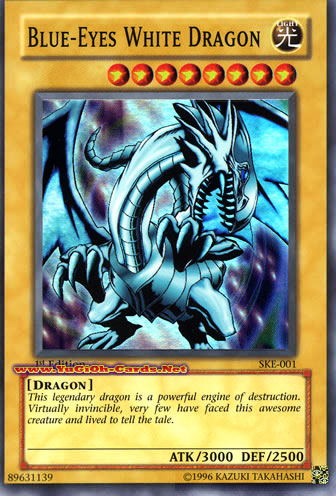
At some point, I was fascinated by YuGiOh! which was the first trend I ever predicted. When I inquired about an untranslated manga a thai classmate of mine was reading, he explained it was a "Card game comic book" and let me take a look. The monster designs alone told me it would be a hit: even more than Digimon, the monsters actually looked monstrous. About two years later, Kids WB brought the anime over, and the TCG (trading card game) started popping up on local shelves.

I dove into the card game excitedly, hoping to fill the card-game void within my heart that neither Magic: The Gathering, or The Pokemon TCG had been able to fill. It was then that I concluded card games are inherently evil. They are a bastion of hope for kids who can't afford to play video games, as a starter pack costs about half as much as a new top shelf console title, and the booster packs are just the right price for blowing one's allowance on, though ultimately, you end up spending about as much money on the cards as you would on a gaming system and a couple of titles. What's worse, the cards are next to useless unless you know somebody else who plays the game. If you do know somebody, it's even odds that he's an expert, or that they're just as clueless as you are. Even if you do get a feel for the game, and build a deck you're satisfied with, it will probably be rendered useless by the next batch of cards which come out. Then again, the cards do feature some very nice artwork, with creatures whose detail surpasses any pokemon or digimon I've ever seen.


The narrative frame for YuGiOh! presents the card game as a modern take on an ancient game played by the Pharoahs of Egypt, though Wikipedia can probably tell you more than I can. I only caught the show a couple of times, and then only in it's first iteration. Like Dragon Ball, YuGiOh! has spawned an alphabet soup of other series set after it. From what I saw of the first version, the main character, Yugi, wears a magic puzzle around his neck which essentially puts him through puberty when he solves it, and has a ridiculously powerful five-carded monster that results in automatic victory if he draws it and...that's pretty much it. The character designs struck me as an awkward mix of too much style and not enough complexity, and even more than pokemon, the story is relentlessly faithful to the flow of the game battles.

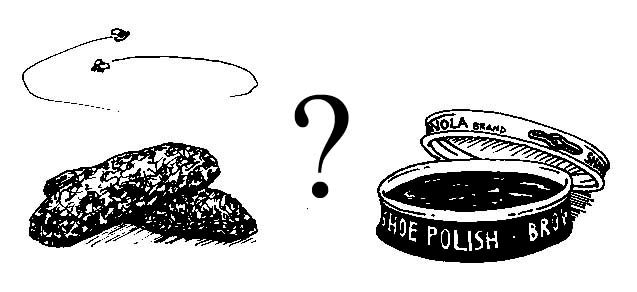
When I concluded my last post, I mentioned that there was some debate about what constitutes anime, and whether it has gone mainstream as an art form. I have heard fellow anime fans argue, that series like Pokemon, YuGiOh and Digimon do not count as anime series at all, because they were series designed with globalization in mind from the start. It's an interesting position, but a weak one, since the shows all follow a decidedly Japanese aesthetic (picture below explains what I mean), and served as the gateway anime to many a young viewer. Not everybody was lucky enough to catch Toonami after all. The series may be heavily edited by localization, but there are occassionaly some good reasons for such cuts. (Again see below.)


Various strains and mutations of the Monster Plagues still exist to this day, and I suspect that they shall endure for many generations to come, as poxes tend to do.