Showing posts with label Anime/Manga. Show all posts

Friday, July 2, 2010

Fullmetal Finale

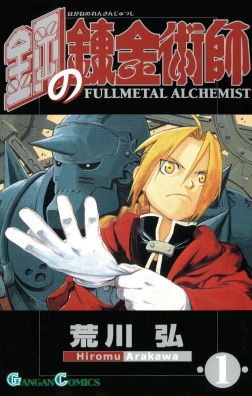
Now that it has finally drawn to a close, I can definitively say that Fullmetal Alchemist is the best manga I have ever read. For those who have never heard of it, the comic series' follows two brothers who attempt to revive their dead mother using the art of alchemy. Their spell goes horribly wrong, and Ed, the elder brother ends up loosing his arm and his leg, while the Al younger brother loses his entire body. Ed manages to save his brother by attaching his soul to a suit of armor, and he replaces his lost limbs with robotic prostheses. The two set out to find the Philosophers Stone to recover their lost bodies. While the series' successes can't be attributed to any single element, I believe the most refreshing thing about the series is it's occidental quality; both in terms of aesthetics and narrative structure.
Edward and Alphonse Elric.

Coming from a westerner, I realize that probably seems incredibly arrogant. I'm not trying to say that all manga should strive to follow the conventions of Western fiction but there are certain elements of manga storytelling, and Shonen in particular, that are down-right hackneyed. Most Shonen heroes have no motivation beyond, "I must become stronger so I can protect those dear to me!" The hero gains enough strength to defeat whatever evil that is threatening his beloved comrades, only to run into a bigger and badder beast later on. I can't help but wonder what these school age superheroes would do with their lives if the bad guys ever stopped bothering them.This eternal dissatisfaction with oneself is extremely appealing to adolescents, who really do have to defeat waves of school work while navigating their hormones and the fucked up social conventions that dominate high school, but what do you do when you're done fighting? Shonen rarely attempts to answer those questions. 

Fullmetal Alchemist's characters all have hopes and dreams beyond defeating the bad guys. Admittedly, the bad guys themselves are flat, seeing how they're all based on the seven deadly sins. But considering that the villains are homunculi; artificial humans created by alchemy, their unidimensionality is actually quite logical. And series creator Hiromu Arakawa does a brilliant job of personifying Lust, Greed, Gluttony, Sloth, Pride, Wrath and Envy in compelling ways that make them threatening and loathsome. 

The other welcome westernization in Fullmetal Alchemist is the ending. Anime and Manga conclusions tend to feature incoherent plot twists, pathetic anticlimaxes, or an explosive, mind-fuck apotheosis. It's partially an East vs. West thing (the emphasis over there being on the journey as opposed to the destination) and it's partially a symptom of the grueling work ethic that defines Japanese culture. Sometimes, creators simply snap from the pressure, as was the case with Evangelion's original ending, which is so horrible it's hilarious. Then again, the "good" ending of Evangelion involves the birth of at least one god and the whole of humanity exploding into puddles of orange juice. This is pretty much par for the course as fas as anime endings go. The obvious explanation is that each of these endings are cultural echoes of what happened to Hiroshima, but knowing that does little to clarify what the hell is happening to the characters you have been following for 26 episodes. 

More frequently, especially when it comes to anime adaptations of ongoing manga, artists have to cobble together an ending for a series that has only just begun. This was the case with the original Fullmetal Alchemist anime, where the artists had Ed take a trip to Nazi Germany out of nowhere.
Fortunately, the recently released conclusion of the manga is everything fans could hope for. It's comprehensive, creative, moving at times, and while it lays the main adventure to rest and ties up the important subplots, it also gives readers a good idea of how the characters will live out their lives now that they have vanquished the ultimate evil. There are some over-the top moments in the final fight, but the plot moves too fast to take itself too seriously. That's another thing I love about the series; it is not mellow-dramatic or over-wrought. The plot earns whatever emotional response it desires from it's readers with compelling events. There is very little introspective whining and none of the dramatic posturing that plagues series like Dragon Ball, Bleach and Naruto.  

Behold the self-portrait of a genius mangaka. I can't wait for Hiromu Arakawa 's next manga!

That said, Fullmetal Alchemist is still very much a manga. The story has a European aesthetic but the art style is very Japanese. The humor is visual and situational as opposed to sarcastic and cynical. While the pacing of the fights are much more visceral and realistic than most manga, the violence is very highly stylized and at times so complicated that it warrants considerable exposition. If you have the slightest interest in manga, consider Fullmetal Alchemist a must read. Or if you're pressed for time, watch the new anime series, titled Fullmetal Alchemist: Brotherhood, which faithfully follows the plot of the manga at the expense of some abridgment. You can get started here now!

Friday, March 12, 2010

The Animatrix: Halo Edition!

I've never been a huge fan of the Halo series. I have thoroughly enjoyed each of the games in the main trilogy, passed on ODST and Wars, and while I am intrigued by Reach, I am not waiting on baited breath for its launch. Overall, the series is the poster child of super big-budget videogame design: enjoyable if not terribly innovative game design, pleasing music and artwork, and a conventional but incredibly detailed story. That same spirit pervades Halo: Legends, an anime styled collection of short films in the fine nerd art meets cross-marketing spirit of The Animatrix.

From Wikipedia

Given gamers' flagging interest in the Halo series after the conclusion of the main trilogy, and the Xbox 360's less than stellar sales in Japan, playing the animation compilation card is a predictable move for Microsoft. Fortunately, they spend the money to do the trend right, hiring well known anime studios like Bones, Production I.G. and Toei Animation to do what they do best. A pity the narratives don't measure up to the quality of the animation.


Looking to accessorize your new Mjolner armor? Nothing says "Death to the Covenant!" like a little teddy bear cellphone keychain . Pic was swiped from Kotaku.

To be perfectly honest, Legends is a largely forgettable experience. Origins parts I and II are a nice primer for Halo virgins and those who didn't pay close attention to the story in the games. It is also where Legends overlaps most prominently with the Animatrix template. It does for Halo what The Second Renaissance (also divided into parts one and two) did for The Matrix franchise. The Duel, which Mike Fahey hails (link under the pic) as "Far and away the best short of the DVD", is a unique and impressive visual experience that tells an utterly hackneyed tale of bushido honor and loyalty. I was similarly unimpressed with The Package, a CGI romp that shows the Spartans kicking ass with vehicles that didn't exist in the game, who save (spoiler alert?) some scientist  I was supposed to recognize but didn't.

Homecoming is perhaps the most promising story in the collection, giving a grim and fascinating glimpse at how the Spartan II recruiting campaign works. It isn't a cheerer upper, but few in the collection are. Take Prototype for example; a story about a squad leader with a gift for leading his squad to their doom. Contrary to Fahey, I rather liked that one. Again I disagree with Fahey on The Babysitter, which I felt was one of the best pieces in the package. While the Samus Aran style twist may not have blown any minds, it tells a unique tale about tensions within the ranks of the UNSC army and it comes to a legitimately poignant close.

No, that is not Master Chief, but yes, that thing does Shoop Whoops.

Not everything is all ass kicking and seriousness however. In fact, my personal favorite is "Odd One Out," a totally bizarre parody of the Halo Universe staring Spartan 1337. Yes, I know '1337 speak' is supposed to be old hat and unfunny by now, but it dovetails nicely with the feature's absurd nature which is an incredible refreshing presence in the somber halo universe. If it has been a while since you've watched something and had an emphatic "What the fuck?" at the end, you would be hard pressed to do better than this short, which features kung-fu fighting kids raised by an AI, dinosaurs, an idiot spartan hero, rainbow laser beams, and a motherly AI.

The tale confirmed a long held suspicion about Halo's universe: it would be infinitely more endearing and entertaining if it had a better sense of humor. Not the only humor of quick quips and snide remarks--don't get me wrong, I like quippery and snideness--but the ability to look absolutely foolish. So many new franchises, especially in the world of video gaming, are utterly desperate to be treated as grown-up art form. I can understand this desperation. I can even sympathize with it. Videogames are growing up and it's time people recognize it. That respect does not lie in melodrama, gore and swearing, but in the ability to laugh at ones self.

Monday, July 27, 2009

Japan's Finest! Space Cowboys and Hiphop Samurai!

Howdy Amigos. As promised last time, we're heading back to the Old West in space via the Far East on Earth. Our mission? To examine one of the finest anime ever produced: Cowboy Bebop. If you get tired of my palaverin' on about intergalactic cowboying, just click the links to the awesome tunes, and check out the amusing embedded video (!). If you make it all the way to the end, I have some words about the hip-hop swordplay of Samurai Champloo too. If that don't satisfy, I dunno what to tell ya, there's just no pleasing some folk.


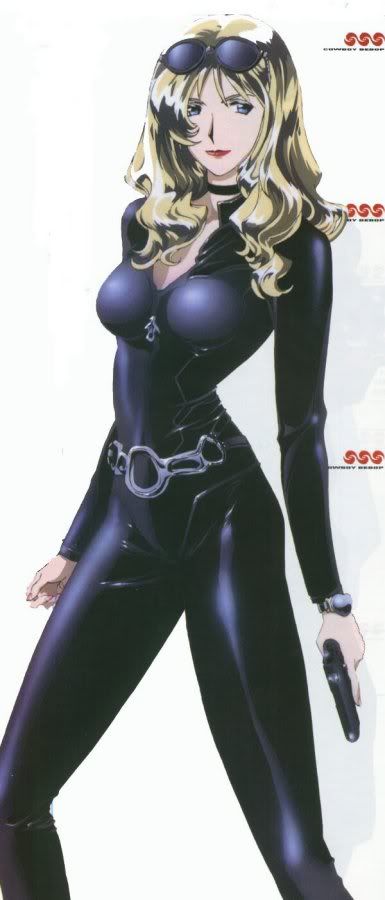
Premise-wise, Cowboy Bebop probably sounds very similar to Firefly. In both cases you've got a crew of lovable misfits drifting around a loosely policed galaxy looking for enough work to pay the repair bills and keep food on the table. The Bebop's Crew is smaller, and they work as bounty hunters (called "Cowboys" in the series) instead of outlaws, but the real distinction between the two shows is a matter of style. While Firefly is solely a western within it's sci-fi trappings, Bebop is by turns, a Hong Kong Kung-Fu flick, a film noir, and a Jazz Odyssey.

In fact, it's the music that makes the show. Series director Shinchiro Watanabe is as renowned for awesome music as Joss Whedon is for witty dialogue, and Yoko Kanno, who might be considered the John Williams of anime, penned the score. Listening to the opening and closing themes will do your ears good and give you a feel for the general poles of the show (funky and frenetic vs. soulful melancholy) , but there is so much more to hear before you can really appreciate the incredible range of the soundtrack (and what I've linked here just tips the 'berg). Musicality is a general theme for the show, with episodes referred to as sessions and named after record titles or various pieces of music.


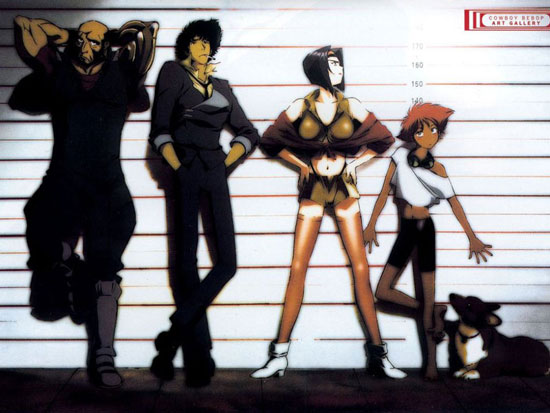
Meet the cast and crew of the Bebop. From left to right we've got ex-cop Jet Black, ex-triad Spike Spiegal, femme fatale Faye Valentine, crazy girl Ed, and Ein the data dog.

The eclectic nature of the music reflects on the quality of the writing. There is the eastern emphasis on the journey as opposed to the ending, but unlike so many other anime and manga, the narrative does come to a coherent and decisive conclusion. There aren't any plot holes either, at least, not in the sense of incoherence, though it does suffer from cavernous blind spots which move beyond titillation and into exasperation; a distinction I measure by the moment viewers stop thinking "I wonder what happened there..." and start wondering "Did the writers even bother?" In this case, I am referring to the "main plot" of the series that focuses on Spike's history with the criminal element and his missing lady-love Julia. What little we learn of it is compelling enough to move you along with the story, but when looking back at it you can't help feel that something significant was left unsaid. Part of the problem may be that I love the enigmatic (if shallow) main bad-ass, Vicious too much; possibly because he reminds me of another ruthless, effiminate silver-haired swordsmen.

Before bidding a fair well to space westerns for the foreseeable future, I must acknowledge that Cowboy Bebop is not the only anime to do space cowboys, and some may dispute my claim that it does them best; namely Trigun fans. I'd be lying if I tried to tell you I enjoyed Trigun as much as Bebop, but before you decide to nail me to your cosplayed crucifix cannons (officially my strangest alliteration ever), allow me to qualify my decision: Trigun is a better Western, but a worse Space Western because the space aspect of the show is restricted to just a couple of episodes. Mostly it's just Vash The Stampede wandering around a barren desert planet, shooting at folk without killing them, devouring doughnuts and shouting "Love and Peace!". In case you ever wondered who would win a shoot out between Vash and Spike, allow me to present you with the following hypothetical:


For those wondering why the Japanese have such a yen (or should I say Zen?) for Westerns, the simple answer is that they are trying to get back at John Sturges for stealing the plot of Akira Kurosawa's Seven Samurai to make The Magnificent Seven. Feeble jokes aside, our romanticization of the gunslinger parallels Japan's treatment of Samurai, and I believe it accounts for much of the cross cultural genre bending.

Interestingly enough, Shichiro Watanabe's other genre blending masterpiece is about swordsman in the Edo period; Samurai Champloo. As I mentioned earlier, Watanabe is renown for musical shows, and Champloo happens to be Hip-hop flavored, which means it's about as historically accurate as Cowboy Bebop is historically predictive. Fortunately, it's also just as entertaining, and frequently entertaining in the same ways. Once again, we've got a two guy one girl set up, (though we've ditched the dog and the kid who were included in Bebop to lighten up the show's blueszy atmosphere) and we follow the trio through a trail of odd jobs as they seek out "The Samurai who Smells of Sunflowers". Unlike Bebop, the story telling is completely rooted in the eastern school of the journey, with the plot mounting up to a final duel between the two guys that never ends up happening.

Jin, Mugen and Fuu, just chillin'

Yoko Kanno doesn't come around again, presumbly because hip hop ain't her thang, but the music continues to impress anyway, and in closing, I present you with this link to Samurai Champloo's closing theme. Til next time, See You Space Cowboy.

Tuesday, June 30, 2009

Japan's Finest! Fo'Shonen

It's time for another installment of Japan's Finest! Today I shall be discussing the concept of age and gender based artistic genres in Japanese comics. If the horrible pun in the title made absolutely no sense to you, this post should be as informative as it is entertaining. If you did understand it, thank you for reading further; I will endeavor to be more clever from here on out.

If it was not apparent from my examination of Monster Plagues, the Japanese are masters of demographic marketing, primarily because categorization is a huge part of their culture. The language has specific counting suffixes for foldable cloth objects and foldable paper objects for chrissakes. I cling to that factoid because I think it was the revelation which led my grammar to flee from Japanese in terror, forever refusing to learn anything further about it. I'm sure there is a practical purpose for this seemingly arbitrary distinction; the language is nothing if not practical. It is that relentless practicality that bothers me in fact: Things must not only be clearly defined, they must also have a clear framework to ensure that they fit in their proper place with regards to other things. In such a society, there would be no allowance for my semi-nonsensical digressions and attention deficiency.

Funny thing is, this emphasis on categorization is largely responsible for the appeal of Japanese art. Specific techniques are collected, distilled and refined into styles that are tremendously iconic and visually arresting. This is particularly true of the two most popular visual styles of manga art: Shonen and Shoujo. The former typically features jagged lines, breasts that are enormous even by anime standards (Sexy, but SFW), fairly-masculine looking guys, and lots of violence. By contrast, Shoujo features softer lines, eyes that are enormous even by anime standards, men so pretty they make Legolas look butch, and lots sparkles and flower petals. As you might guess, the tremendous visual difference between these styles can be summed up with a very simple distinction: Shonen is crafted with boys in mind, while Shoujo is for Girls.


That probably sounds politically incorrect to western sensibilities, and it is to a certain extent. The nearest cultural comparison for a boy who reads Shoujo is a boy who plays with Barbies instead of J.I. Joes, though after taking the Japanese emphasis on conformity into account, the teasing Shoujo-Kun suffers will likely be much worse. If the tremendous cross gender success of Naruto and One Piece are any indication, it seems more socially acceptable for girls to enjoy Shonen, perhaps because masculinity is regarded so highly in Japan. Or maybe there are other reasons? Whatever the case, it's hard to criticize the gender specific approach in comparison to the relentlessly masculine U.S. comic industry.


It also must be said that there is considerable variation between series in both Shonen and Shoujo, and that some series mix and match visual motifs. The seminal Rurouni Kenshin is one such example, with the titular character, Himura Kenshin, sporting two distinctive artstyles that vary depending on the situation. When the ol' urge to kill rises, he is represented in a fashion that is suitably badass and when he is his normal, happy-go-lucky self... well he's adorable. Insufferably so really.


In addition to the visual motifs I mentioned earlier. certain themes, premises and narratives have become recognized as distinctively Shonen or Shoujo recently, and I would like to spend the rest of the post discussing those plots. Unfortunately, my knowledge of Shoujo is extremely limited. We're talking like 3 episodes of Sailor Moon, 1 volume of Vampire Knight and The Ouren High School Host Club theme song on Youtube. So rather than offering a completely one sided discussion, I will touch back on Shoujo at a later date, and focus my attention on Shonen for the time being.

Like so many other American boys, Dragon Ball Z was my introduction to Japanese Anime, and it's plot is about as Shonen as Shonen gets. That is to say, it is about two things: A) Fighting B) Getting Stronger. Somewhere in the background of the fists, fireballs and bulging muscle is a justification about protecting people, but that is really all it is; an excuse for the good guys to fight bad guys with lethal force. Not that dying means anything in the dragon ball universe, where people can be wished back to life ad nausea. While it's not conceptually ground breaking, good fights make for good entertainment, especially when the participants are memorable and there are no dire real-world consequences, and DBZ meets both criteria just fine. Unfortunately, each fight, especially those towards the end of the series, take -forgive the pun- over 9000 episodes to complete. Again, that wouldn't be so bad if each fight was interesting and unique, but about half that time is wasted on exposition and reaction shots.

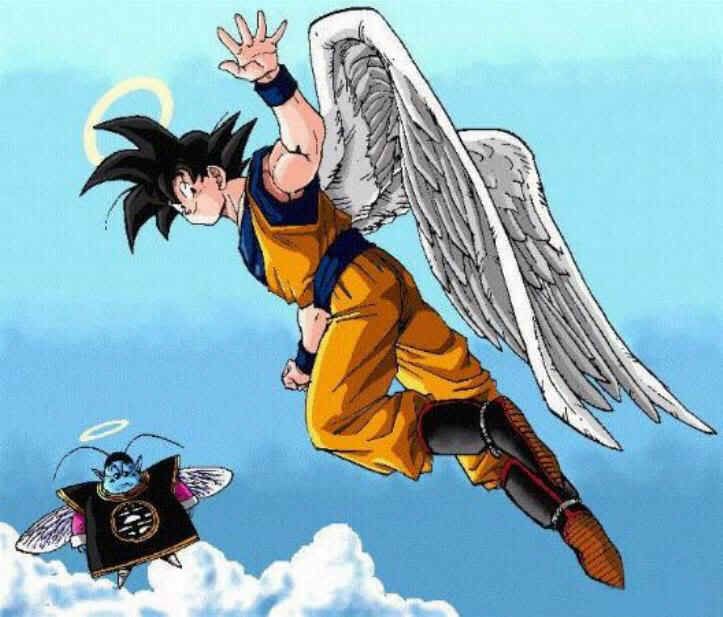
Fortunately, new challengers have arrived on the Shonen scene, allowing Goku to finally rest in peace. Naruto, One Piece and Bleach are the current kings of the Jump, the most popular Shonen compilation mag in Japan. Naruto is my personal favorite of the group, and my second favorite manga, behind Fullmetal Alchemist (which is technically also classified as Shonen, but really in a class of its own), though both series deserve a post all their own for discussion since they really push the genre into new territory. One Piece and Bleach are more direct descendants of Goku, in that both build on the ideas of fighting for protection and honor, so that they become legitimate themes as opposed to mere justifications. I was initially turned off by One Piece's goofy flavor, but trusted friends convinced me to soldier on, and I am still slowly warming up to it, but I'm still not too familiar with it, which leaves me with Bleach.

Originally, I found Bleach even more intriguing than either Naruto or FMA. he premise had me at the word go: A high school punk with a knack for seeing dead people has to play the role of death god, or grim reaper. Wikipedia can explain it better than I can, or better yet, track down the first couple volumes and see for yourself. The art style is sharp and hip, the world's lore is intriguing, and the first major arc of the story is extremely compelling.Unfortunately, it stagnates shortly thereafter.

While Kubo Tite has a real gift for story telling, character designing seems to be his real passion, and he expands the cast exponentially, though the only 'development' he affords characters is a tedious exposition of their powers and abilities before they are killed off and forgotten. This ever growing roster has proven to be a sort of cancer for the series, as it draws attention away from the existing characters and renders them shallow. I swear I'm quits with the series after each new installment releases, like a Smoker quitting after "one more pack." Of course next week I come crawling back, hopeful that the mangaka will eventually address the tantalizing plot threads which preceded this seemingly endless chain of superficial duels. But he never does.

That raps up this month's look at Japan's finest. As you can see, there's a lot more to discuss where on the horizon. Hope to see you again next week!

Sunday, April 19, 2009

Japan's Finest: Monster Plagues

Dear readers I have failed you. Despite my promises of weekly anime and manga commentary, there was none to be had. I will endeavor to correct this error with an extra post this week, but the quarter is getting busier, and putting out two posts a week may be a tad over-optimistic. Now I shall address another oversight:

While I initially intended to discuss the difference between Shonen and Shoujo art styles, I realized my last post missed a rather important chapter of anime's assimilation into America's cultural consciousness: The Monster Plagues. From 1998 to around 2003, America was wracked by Japanese monster collecting franchises. Nobody knows advertising and merchandising like the 日本人, particularly because there is a social element to it. Popular fiction is designed with a sort of brand recognition in mind, blending consumerism and cultural consciousness in a way that would send George Lucas to the Sepuku Mat with shame. America's youth got a taste of this with the Power Ranger craze that came in the mid 90's, although the franchise was rebuilt from scratch in the USA for the USA, and merely based on the Japanese concept of Sentai. Even earlier than that, Transformers demonstrated the lucrative potential of using a cartoon to market toys.

You used the Multimedia stone! What...!? Mickey is evolving!


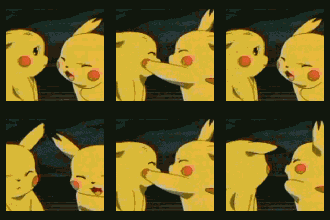
Congratulations! Your Mickey evolved to Pikachu!

The monster plagues are significant because they represent the first time foreign fictional universes were marketed towards children across a broad spectrum of socially interactive media. Disney has been doing cross-marketting for years, threading Saturday morning cartoons through coloring books, breakfast cereals and happy meals, but they were completely out-classed by the monster collecting menaces which emphasized fan interactivity at every corner. The card and video games were set up to require trading while the manga and anime brought the world behind the games to life.

The First Plague

I first learned about 'Pocket Monsters', or pokemon (lower case refers to the critters, uppercase refers to the franchise.) through an advertising video which arrived on my doorstep. I'm not sure if it was connected to my Nintendo Power subscription, or dropped off by some shady division of the JSDF which had profiled me as an easy target, but the tape captivated me immediately, introducing a bright and friendly world populated with adorable, elementally powered creatures just waiting to be collected in shiny metal balls.

I faithfully watched the anime when it came out, which furthered my indoctrination with insidiously catchy marketing jingles that taught me to memorize each one of the 150 critters names. The Anime, which is apparently still running to my great astonishment and slight horror, follows the adventures of Ash Ketchum and series mascot pikachu as they casually foil the plans of incompetent villains known as team rocket, try to catch 'em all and aspire to be "the very best, like no one ever was," (Click at your own risk, there is more singing).

This was all a preamble to the video game of course, which I pre-ordered and devoured upon arrival, eager to show off all my cartoon gained knowledge. The true evil genius behind the pokemon marketing strategy is that a player couldn't catch all the monsters by playing just a single version of the game. Rather, all the games critters were divided between a two versions of the game, and players were required to trade in order to collect all the creatures. Fortunately, a friend in grade school picked out the blue version to my red version, and we slowly mannaged to fill out our entire pokedex.


It was going to see the movie which really did in my parents' patience, prompting my father to point out "This is really sick." And so it is. Beneath the bright colors and adorable creature designs, Pokemon is really quite dark. You play the role of a pre-adolescent delinquent who wanders around assaulting, abducting and brainwashing animals that pose no apparent threat to society, all for the sake of casually pitting them against each other in gladiatorial combat. It was a truth I rejected when my parents first presented it to me, using dog fighting as the real world analogy. It seemed like hyperbolic comparison, but back then I could not articulate where they were crossing the line.

The trouble is, there is no real world reference for Pokemon, because it is a completely fabricated experience. In the real world, you can't transform something evil into something good or even something acceptable through presentation alone. In fact, trying to dress up the facts in a misleading way tends to compound its evil, especially in fields of Law (Hi Mom!) and Science (Hi Dad!). But video games are not reality.

Presentation establishes the laws of fictional universes. Series creator Satoshi Tajiri-Oniwa did not design Pokemon with animal duels in mind, but rather his hobby of collecting insects. Unfortunately, bug collecting is fairly uninteresting as a game because the only possible outcomes would be "You catch the bug!" and "The Bug got away!" In order to spice things up a bit, a rock-paper-scissors style combat system was implemented to add some depth to the creatures being collected, and the game play itself. The game is actually designed very specifically to punish excessive force (If you knock out the pokemon while trying to weaken it, you can't capture it), and to render violence inconsequential through healing items. It's not a formula which would work in real life, which is why its so pleasing as a game.

Fact vs. Fiction


The idea of inconsequential violence is alarming to a lot of people and for good reason: It's a concept which cannot exist in reality. The great fear is that players will start applying their experiences of these fictional places as if they were life lessons. It is not a baseless concern, though it is one that is frequently exaggerated when it can just as easily be overcome with some guidance and self restraint. My parent's realized this, so they let me keep playing but made sure I did other more necessary things at the same time.

My interest in Pokemon waned quickly however, mostly because I exhausted myself trying to navigate an untranslated import copy of Pokemon Gold after catching all 151 of the Red and Blue bastards, but also because I was bothered by the real world parallel that had been drawn between my favorite past-time and animal abuse. I knew bloodlust was not the driving force behind my monster collecting endeavors, but at the same time I didn't know what was. Looking back, I think the potential for discovery was another element in pokemon I found deeply appealing. Recess and afternoons playing in the back yard frequently meant pretending I was a pokemon trainer, though rather than imagining battles, I spent a great deal of time filling in the gaps of the game's world. How do Pokeballs work exactly? Are all animals in the Pokemon world pokemon? Are ghost-type pokemon born from dead people or dead pokemon? These are the sort of mundane details I am loathe to learn about reality, but utterly fascinated by when they pertain to a completely fabricated universe. Sadly, Pokemon simply walked away from all these questions.

Another huge element of appeal for Pokemon, and all the other monster combat collection series out there is the sense of having some secret knowledge. Considering how many things adults have mastery over, (Sex, Money, Cultural References, Professional knowledge) knowing about something parents have no hope of understanding is absolute bliss. It's even better when your friends don't know about it either. And for a good year or two, Pokemon was a fairly silent phenomenon. Once it was busted wide open, the appeal started to fade.

The Second Plague

Consequently, I shifted my focus toward Digimon, the next monster based anime card/video game property to hit the states. When I first heard of it, I was a rabid pokemaniac and I condemned it as a blatant ripoff based on the title, which is supposed to be short for 'Digital Monsters'. Apparently, most other kids drew the same conclusion and paid no further head to Bandai's take on monster collection. Digmon was never as popular as pokemon, which is sad, because its stories were a great deal more interesting.

I realized this when I actually watched the show and discovered it delved into many of Pokemon's disregarded questions. The story in the first season is still totally formulaic, but it actually bothers to explain how and why a bunch of brats are wandering through a dangerous world filled with monsters instead of attending school; a persistent logical blackhole in Pokemon's narrative. Another narrative boon is that the monsters are capable of human speech, unlike pokemon who can only say their names: a cute gimmick to begin with, but one that wears thin quickly. Furthermore, battles between digimon were generally necessary for survival as opposed to electively enslaving innocent creatures. Finally digital monsters had a much wider aesthetic range than psuedo-Sanrio appearance of pokemon, and occasionally managed to look somewhat bad ass.


Things really got interesting in the show's third season when it went all meta on itself, placing the story in the real world and referring to the events of the first two seasons as a TV show. Even though this shift was primarily intended to accommodate the new card game aspect of the franchise and advertise it to viewers, it was also a sound move narrative. The heroes had already saved the digital world (in the first season) and the real world (second season) so the change of pace was welcome. The question it posed to young viewers, "What if your favorite cartoon franchise became real?" invites an awesome story, though I honestly have no idea how it turned out. I had finally built up an immunity to all Mon-suffixed strains of monster plagues. It's worth mentioning that Digimon's video game properties, at least the ones I played, were inferior to the Pokemon franchise in terms of presentation and actual enjoyable game play.

The Third Plague

At some point, I was fascinated by YuGiOh! which was the first trend I ever predicted. When I inquired about an untranslated manga a thai classmate of mine was reading, he explained it was a "Card game comic book" and let me take a look. The monster designs alone told me it would be a hit: even more than Digimon, the monsters actually looked monstrous. About two years later, Kids WB brought the anime over, and the TCG (trading card game) started popping up on local shelves.

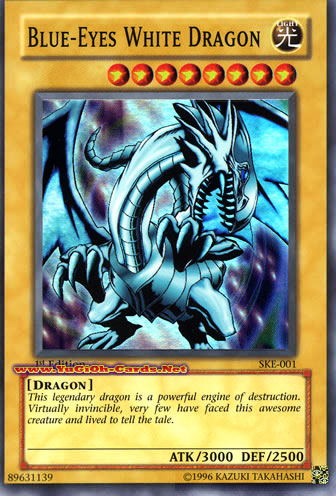
I dove into the card game excitedly, hoping to fill the card-game void within my heart that neither Magic: The Gathering, or The Pokemon TCG had been able to fill. It was then that I concluded card games are inherently evil. They are a bastion of hope for kids who can't afford to play video games, as a starter pack costs about half as much as a new top shelf console title, and the booster packs are just the right price for blowing one's allowance on, though ultimately, you end up spending about as much money on the cards as you would on a gaming system and a couple of titles. What's worse, the cards are next to useless unless you know somebody else who plays the game. If you do know somebody, it's even odds that he's an expert, or that they're just as clueless as you are. Even if you do get a feel for the game, and build a deck you're satisfied with, it will probably be rendered useless by the next batch of cards which come out. Then again, the cards do feature some very nice artwork, with creatures whose detail surpasses any pokemon or digimon I've ever seen.


The narrative frame for YuGiOh! presents the card game as a modern take on an ancient game played by the Pharoahs of Egypt, though Wikipedia can probably tell you more than I can. I only caught the show a couple of times, and then only in it's first iteration. Like Dragon Ball, YuGiOh! has spawned an alphabet soup of other series set after it. From what I saw of the first version, the main character, Yugi, wears a magic puzzle around his neck which essentially puts him through puberty when he solves it, and has a ridiculously powerful five-carded monster that results in automatic victory if he draws it and...that's pretty much it. The character designs struck me as an awkward mix of too much style and not enough complexity, and even more than pokemon, the story is relentlessly faithful to the flow of the game battles.

When I concluded my last post, I mentioned that there was some debate about what constitutes anime, and whether it has gone mainstream as an art form. I have heard fellow anime fans argue, that series like Pokemon, YuGiOh and Digimon do not count as anime series at all, because they were series designed with globalization in mind from the start. It's an interesting position, but a weak one, since the shows all follow a decidedly Japanese aesthetic (picture below explains what I mean), and served as the gateway anime to many a young viewer. Not everybody was lucky enough to catch Toonami after all. The series may be heavily edited by localization, but there are occassionaly some good reasons for such cuts. (Again see below.)


Various strains and mutations of the Monster Plagues still exist to this day, and I suspect that they shall endure for many generations to come, as poxes tend to do.

Monday, April 13, 2009

Japan's Finest: An Introduction to Anime and Manga

Like many others in the cyberculture and gaming crowd, I am a great fan of Japanese animation and comics. My love for that flavor fiction is so great in fact, that it led me to believe I loved Japanese culture as a whole, and inspired an ill-advised attempt to learn the Japanese language from scratch during my junior year. The experience provided a very unique brand of enlightenment. The kind that usually entails a trauma ward. Nonetheless, my love for cartoons from the land of the rising sun remains undiminished. So for the next few weeks I'll be doing a weekly bit on Japan's finest fictional offerings.

By now, almost everybody has heard the terms anime and manga, and probably even been exposed to them in some fashion, so I won't waste text giving a TL;DR version of what wikipedia will tell you. In the interest of accessibility, I will attempt to provide a condensed introduction to the US culture of Japanese animation, starting with how it rose to prominence in the US. For those of you who are familiar with the subject matter, I'm sad to say there won't be much actual analysis in this installment, but it makes for a nice walk down memory lane and funny links abound.

Anime has been making it's way to American shores for decades, though alot of it has been lost in translation as well. Many early efforts were poorly dubbed and aggressively edited in accordance with the quaint notion that all cartoons should be suitable for Saturday morning audiences. Deaths and injuries deemed too grim for the kiddies were often cut, forcing American producers to come up with alternative explanations for character absences and replacements on the spot, resulting in plots that were all but unintelligible. Furthermore, early production values were extremely low, and Japanese animators frequently fell back on recycling lengthy transformation sequences every episode to cut costs. This motif still persists to this day out of nostalgia, as it's become something of a hallmark of Japanese style, and looped animations have recently come back into style. Needless to say, the appeal of early efforts was limited, and anime remained a niche market for a long time.


Though many early adopters have fond memories of Osamu Tezuka, Hayao Miyazaki is widely regarded as the man who managed to present the unique stylistic and narrative merits of Japanese animation to the rest of the world. After decimating Japanese theatrical attendance records, My Neighbor Totoro made its way to US shores through the narrow channel of imported VHS, garnering great praise but little attention. Princess Mononoke (below) provided the real breakthrough, making enough of an impact on the international market that Disney hastily went about securing the rights for a US theatrical release. Even though Miyazaki denied them the right to edit the film for the sake of marketing it to their typical demographic, Disney agreed to release the film and even paid for an impre$$ive voice acting cast. Despite a disappointing box office return on Mononoke, Disney continues to release, (and undermarket, and delay) studio Ghibli's films in the US. All the films discussed or linked in this paragraph deserve your attention, regardless of your experience with and feeling for Japanese cartoons.


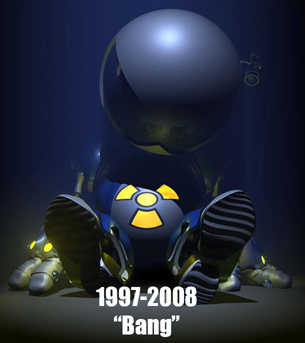
While Miyazaki established a critical reputation for anime, the imported shows were ultimately responsible for building an actual fanbase in America. Cartoon Network's Toonami programming block played a major part in this process by putting classic Japanese franchises (like Dragon Ball Z, Sailor Moon, and Gundam Wing) on basic cable with minor meddling. I realize some of these shows were shown on other networks earlier, but Toonami is the name people remember, and for good reason: It had attitude. While most adolescent advertisers hilariously fail at achieving that lucrative blend of hipness and rebellion, Toonami succeeded by balancing its hyper-kinetic shows with a very cool 'frame' for the block. Bumps and promos suggested the shows were being broadcast to Earth from a spaceship piloted by robots. These commercial buffers alternated between sequences of almost Zen-like calm, which simply showed the ship humming through space, and action montages set against slick, beat heavy techno. Fan favorite android host Tom (pictured below) was so smooth he could even sound cool when he was being preachy.


I was sad to learn Toonami is a thing of the past, but unsurprised, seeing how it handed off the torch of improting anime to Adult Swim. The transition has been a mixed blessing, allowing more adult shows like Paranoia Agent and Cowboy Bebop to be displayed without compromise. At the same time, the translation in their most recent efforts (Bleach, Death Note) feel half-assed. I have no idea about how much of the localization they handle, but they have to do better than this, especially since other networks (IFC and G4) are starting to pick up Anime as well.

Though to be perfectly frank, there's no risk of one network loosing a hardcore fan's business to another network because the hardcore fans never really depend on them to begin with. The 'official translations' are merely appetizers. Those who claim to be anime fans based only on the offerings of American TV are ridiculed by true aficionados who know better and get their fix from the web. This elder breed does not only have access to a wider variety of anime than what has been licensed in the US, but access to comics that less informed viewers will spend months or even years waiting for.

As I implied earlier, there is a very healthy overlap between anime and cyberculture. The practice of Fan Subbing, or posting Japanese anime and manga with subtitles and translations done by fans, inhabits a very dark legal gray area, but endures: A) because the license holders can do very little to stop it and B) because the fan subs generally blow "Mr. I'll Take a Chip and Eat It" out of the water. The superior quality comes from a combination of love and economic freedom. These weekend translators don't treat series as a product which needs to be re-packaged so it will sell to a specific demographic because they aren't worried about turning a profit and fans are seeking it out anyway. The practice hasn't affected anime too adversely, though the manga market is feeling the hurt.

Manga has been around in the states just as long as anime, but it has come to prominance much more recently, and far more rapidly. At this point I should also point out that most anime series are based on manga series. In Japan, various manga series are compiled and released in weekly or monthly anthology magazines, or in collected volumes that come out on a semi-annual basis. For a long time, only the volumes would show up in the states, and then only in comic book stores.Recently though, manga publishers have started releasing their compilation mags in the US, and major bookstores are allocating increasingly large sections of their floorspace to manga. Of course, since most of the series they peddle are available online for free, they take a huge hit on their profit margins.


All the same, the manga industry continues to mature and expand, as evidence by the recent trend of the manga Makeover. Everything from Star Trek to Shakespeare (above) is being retooled according to the hip aesthetics of Japanese illustration. There is some debate amongst purists as to whether these adaptations (which are typically done by American artists) count as true manga, however. There are isolated pockets of fans who feel that the noble heritage of anime is being dissolved by 'Narutards' and Death Note emos, despite the fact that these 'unenlightened noobs' are the only ones supporting official U.S. releases. Of course the elders would argue that the licensing companies are part of the problem...and just like that, we're back at the same old dialectic of the casual fan vs. the dedicated fan, much to the continued exasperation of one Captain Jean Luc Picard.

In any event, the anime and manga market has grown much larger than a niche market, and there is a lot more to talk about. Future installments of Japan's Finest will further your anime and manga education by discussing the difference between specific art styles (what's Shoujo vs. Shonen?) and in depth analysis of favorite series both new and old.

Until next time... See You Space Cowboy.