It's been like half a year since I last blogged about the Marvel Cinematic Universe (MCU), so we're due for more. This spring has an interesting pair of offerings, with Joss Whedon’s long-awaited Age of Ultron and Netflix’s relative dark horse, Daredevil. Now people are already hyping up for Civil War. Even as a self-professed Marvel zealot, I'm starting to experience some fatigue with their project, and I can't help but wonder how much longer less-dedicated audiences will last in Marvel's ambitious (read: insane) media campaign.
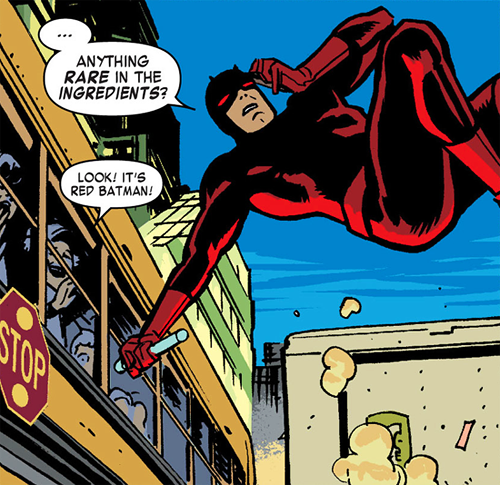
Of the two projects, I actually prefered Daredevil, which once again breaks new tonal ground for their shared-screen universe. Not terribly surprising, given my fondness for dark, vigilante-flavored brooding and hardcore violence.
Stellar fight choreography and production values are enough to carry the show. The corridor fight scene in episode two that pays homage to Old Boy is absolutely brilliant. The brutality has been dialed up to 11, and that does a lot to delineate the show from Marvel's tamer network offerings, or the fanciful CGI brawling of the Avengers et al. There are times where it feels excessive, and it pairs oddly with the show's prudishness. We can watch a man's head get pulped by a car door, but god forbid we see naked people. Admittedly, that is consistent with comic book ethos (and most of American entertainment) but disappointing for somebody who is hoping our society can get over its crippling fear of sex. Rosario Dawson is also excellent at being naked. I'm just putting that out there.
It's not without its faults. My buddy Brian Solloway pointed out the characters are quite weak in the first few episodes. Foggy is likable but initially very one-dimensional (even compared to Arrow's broadly drawn supporting cast) and Karen is even more straightforward and often downright annoying. Matt is a little more interesting, but kind of... under-developed. While the flashbacks do a good job of explaining why he loved his dad, his violent crusade to protect Hell's Kitchen is essentially presented as a cure for insomnia. He puts people in the hospital because he can, and it's cathartic. At best, he comes across as a high-functioning psychopath. That's an observation made about Batman all the time, and Daredevil's own writers have made the comparison, but there are meaningful distinctions. In particular, I would have liked to see is a deeper exploration of the dichotomy between his life as a lawyer and a vigilante. Something to suggest a more complex character arc to be had here.
Especially since the show's villain, Wilson Fisk, seems to have a much more realized and complex vision for the city. In the comics, Kingpin was a generic gangster, even by Marvel's mustache twirling standards, but Vincent D'Onofrio breathes nuanced, menacing life into him. He may be the best villain Marvel has put to screen yet, surpassing even Hiddleston's Loki, Redford's Alexander Pierce, and Spader's Ultron. He has this child-like vulnerability to him that pairs well with explosive rage, but its offset by calculated obsession and chilling megalomania. Each of his scenes are compelling, and unlike most TV villains, his character has a fully realized arc that runs parallel to the hero.
So I'm definitely on-board for season 2. My guess is Electra will make an appearance, but I am more interested to see how this will pair with Kristen Ritter's Alias show. That's a tough project. The show has to start with her as a has-been hero, and she hasn't appeared in the MCU to date. The trades have already talked about cross-overs that may segue into a Defenders series which...agh. You can only stretch this so far, guys. Consolidate a little.
I'm also very curious to see if it will feature Asa Butterfield's Spider-Man, who is also undoubtedly active in other neighborhoods of New York City, but my guess is that he will be largely relegated to the big screen. On that note, I'm disappointed that Sony and Marvel aren't taking Miles Morales or Spider-Gwen out for a big screen spin. Asa is great, and I think he will make a good Peter Parker, but we've seen that guy (and his origin story) twice now in the past 15 years. Age of Ultron had an opportunity to just introduce him with the stinger, and totally punted it. I mean, come on Joss. You don't need to actually show Spidey or have him talk; just a close up of a New York window suddenly "thwipped" with webbing. Let people know he's there, and already active. This fan-made thing goes above and beyond. Perfect execution.
On the whole, I enjoyed Ultron. This one felt more Whedony, which is what I wanted, but somehow it ended up on par with the first film for me. Big fights. Fun dialog interspersed. But we’ve seen that movie a couple times now. There is nothing that changes the status quo, compared to say, Winter Soldier, or even the battle of New York in the first Avengers. Nothing that expands the tonal range of the universe, compared to Guardians or Daredevil. I'm really mixed about how Hawkeye was handled too. I much prefer Clint as the fallible (failure-prone, even) Avenger. He does upstage Ultron by delivering the best speech in the movie, which does double-duty as a snarky meta-commentary of the MCU as a whole ("Look, none of this makes any sense...") and a truly awesome "it’s time to be a hero" speech. It also felt fairly in-sync with his comic persona.
As for the criticisms of how Joss handled Black Widow... I mean, Jesus Christ. Are we really arguing that Natasha having a love interest prevents her from being a strong character in her own right? Because that doesn't seem very feminist to me. Also, my word choice was deliberate: Banner is Natasha's love interest. She does all the brave stuff, courting him broad spectrum without seeming desperate. Meanwhile, he is timid and conflicted throughout. Her romantic interest doesn't diminish her stature on the team. And if you want a romantically aloof female character, look no further than Maria Hill. As a writer, it's really disheartening to see, because there really doesn't seem to be any winning where feminism is concerned. Only cannibalism.
That said, I don't think Whedon taking his ball and going home was the best play. I understand it. Death threats are appalling and nobody should have to put up with that kind of treatment. But quitting social media won't stop it. His reaction strikes me as very generational, which is weird to say about somebody whose writing has always been so hip and with it.
Personally, I don't think the "quiet place" he talks about is a thing anymore. For better or worse, Millenials have been groomed to crave constant contact and assessment, to ceaselessly produce content and respond to it. That interplay informs my writing process. Sure, it may be vain--toxic even--but that makes addressing that system more important. Admittedly, I know not of what I write. I don't have many readers (let alone legions of fans), and they are generally personal friends and family.
Getting back to the film, Spader has some fantastic lines and the perfect voice to deliver them. I think he would have shined even brighter with some more screen time but when you factor in all the big names in that cast, we get pretty well-acquainted with his genocidal tinhead. Aside from the creeping feeling of an aging brand, I think the biggest disappointment with the movie was Vision. There wasn't enough time to make him feel like something other than a literal deus ex machina. His power set could be described as "playing on godmode." Thanos ain't no thang with this dude around.
Even though I'm getting a little worn out by spectacle upon spectacle, I'm still gonna see Ant-Man, if only to hunt for traces of Edgar Wright's vision of the film. Expect more commentary then.
NOTE: (spoiler warning) my friend Kat Eason pointed out most of the criticisms about the handling of Black Widow related to her calling herself a monster because she was sterilized. I assumed that comment referred more to her being trained and forced to murder people at a young age, but the conversation could have been articulated more clearly. Given the envy she seemed to have for Clint's family, it's possible she felt broken, or monstrously disfigured. Or maybe it was just another way to relate to Banner. Given his socio-political track record, it's absurd to think Whedon believes that barren/sterilized women are monsters, but disappointing that he didn't consider how that conversation might come across.

Thursday, May 21, 2015


Friday, May 15, 2015
Slow Going
Sorry for the long delay, though I'm relieved to see it was not as long as I feared. With any luck I won't have a month long posting drought this year. Consider it a late resolution. Anyway! Here are my thoughts on Patrick Rothfuss' The Slow Regard of Silent Things.
I loved The Name of the Wind and The Wise Man's Fear. Best contributions to classic fantasy literature in a long time. Beautiful prose, a tragic frame-narrative that makes you question the otherwise traditional hero's journey, and an incredible cast. It can be tropey. Cliched even at moments (eyes that shift color with emotion). Kvothe, with his limitless talents and quick wit has the godly tang of a Mary Sue. Though those things are part of the charm. It was tremendously refreshing to see the Old Ways done right, with a cunning new voice. Needless to say, waiting for The Doors of Stone has been agony.
Inevitably, people have been hounding and badgering Rothfuss to finish it, which is understandable, but also the wrong thing to do. As per Neil Gaiman, authors are not their audience's bitch. But I know that the impatience and harassment is coming from a place of lust, if not real love. So I can see why people would be disappointed by this quirky little novella about Auri, one of the oddest and most mysterious characters in the world, that doesn't really solve any of her mysteries, or drive much of the plot forward.
Rothfuss knew it too. He wrote an afterword that's longer than a couple of the novella's shorter chapters talking about how distraught he was over publishing it, knowing people would be angry, and acknowledging that it does not even fit the expected criteria of a story. It's a strange little addition; a sorry-not-sorry of literary afterwords with the ultimate take-away of, "I needed to write this, I think there are some people out there who needed to read it, starting with this one friend who I spoke with about it." It's a sentiment I heartily endorse.
But I was not one of those people. The story frustrated me. It's very short; reading material that should have been the matter of an afternoon, and it took me more than a month to get through it once I started reading it in earnest. I was anticipating learning about Auri's past. What made a presumably once-normal person into this strange creature who lives under The University and speaks in riddles with vaguely Carrolean words.
Nope.
Instead we get five days in Auri's curious life. She talks to objects as if they are people, attempts to move them around her underground world in accordance with some undefined personal sense of feng shui, and then imagines or senses the objects' reactions. There's no hint at what happened to her, assuming she wasn't a feral girl from the start who somehow taught herself how to speak and dress and learn something of social norms (what the proper soaps for kissing are). There is a vague teaser of what is to come; I suspect Kvothe may be using The Underthing as a refuge to continue combing the library for information even after he is expelled from The University.
There is no denying the feat of voice craft. Rothfuss clearly became Auri as he wrote, no-longer seeing words on the page, but The Underthing in all its dark, complex splendor. The core of her translates, but the answers behind her are intentionally ignored. It curbs hard away from explanations, save for declarative statements from Auri about what type of day it is, and how objects should be placed
The Underthing itself is also muddled. Despite the detailed descriptions of discrete regions, I found it impossible to link names to places, at least with any certainty, because of the ephemeral, abrupt way Auri moves through them. I might be alone in my confusion, as some meticulous soul actually managed to map it out, but I think that exercise was at cross purposes with the author's intentions. It's meant to be alive, and ambiguously magical, a character unto itself like the detritus around her. Clearly charted paths would pin it down.
It was the lack of dialog that killed me. He means it when he says slow and silent, folks. My work to date frequently strays into territory that looks more like screenplays or graphic novel scripts. When reading I reach for conversation like a thirsty man in the desert. Conversation develops characters. It is story that catalyzes plot.
There are also very few sequences where things other than Auri do something physically observable to the universe. A skunk bites her. Water flows and gears churn. Her alchemic lamp throws light across the wall. And that's almost entirely it. Rothfuss wrote in his afterword that the closest thing to an action scene is when Auri makes soap. I would argue the most action packed moment is actually when she almost loses the massive bronze gear, toward the middle of the book, but his point stands. She is alone in this world, and her activities would be mundane were they not governed by seemingly arbitrary eccentricity.The rest of the time, it's objects feeling things at her, or her projecting those emotions onto them.
A theme that keeps rearing its head is that it is wrong to want at the world. That you play the hand you are dealt, and you try to be a curator of what is good, but that expecting anything from the world, or even trying too to get what you want, is wrongheaded, if not evil. As I read that refrain, I couldn't help but wonder if this little novella Rothfuss' reaction to his fans' monumental, and incessant expectations.
I think there might be something more to glean from the novella. But the book wore me down early on, past the point of closer reading. After the halfway mark I was reading for a twist or a change in pace that never appeared. This may be one to revisit when I am older, and gods willing, more patient.
I loved The Name of the Wind and The Wise Man's Fear. Best contributions to classic fantasy literature in a long time. Beautiful prose, a tragic frame-narrative that makes you question the otherwise traditional hero's journey, and an incredible cast. It can be tropey. Cliched even at moments (eyes that shift color with emotion). Kvothe, with his limitless talents and quick wit has the godly tang of a Mary Sue. Though those things are part of the charm. It was tremendously refreshing to see the Old Ways done right, with a cunning new voice. Needless to say, waiting for The Doors of Stone has been agony.
Inevitably, people have been hounding and badgering Rothfuss to finish it, which is understandable, but also the wrong thing to do. As per Neil Gaiman, authors are not their audience's bitch. But I know that the impatience and harassment is coming from a place of lust, if not real love. So I can see why people would be disappointed by this quirky little novella about Auri, one of the oddest and most mysterious characters in the world, that doesn't really solve any of her mysteries, or drive much of the plot forward.
Rothfuss knew it too. He wrote an afterword that's longer than a couple of the novella's shorter chapters talking about how distraught he was over publishing it, knowing people would be angry, and acknowledging that it does not even fit the expected criteria of a story. It's a strange little addition; a sorry-not-sorry of literary afterwords with the ultimate take-away of, "I needed to write this, I think there are some people out there who needed to read it, starting with this one friend who I spoke with about it." It's a sentiment I heartily endorse.
But I was not one of those people. The story frustrated me. It's very short; reading material that should have been the matter of an afternoon, and it took me more than a month to get through it once I started reading it in earnest. I was anticipating learning about Auri's past. What made a presumably once-normal person into this strange creature who lives under The University and speaks in riddles with vaguely Carrolean words.
Nope.
Instead we get five days in Auri's curious life. She talks to objects as if they are people, attempts to move them around her underground world in accordance with some undefined personal sense of feng shui, and then imagines or senses the objects' reactions. There's no hint at what happened to her, assuming she wasn't a feral girl from the start who somehow taught herself how to speak and dress and learn something of social norms (what the proper soaps for kissing are). There is a vague teaser of what is to come; I suspect Kvothe may be using The Underthing as a refuge to continue combing the library for information even after he is expelled from The University.
There is no denying the feat of voice craft. Rothfuss clearly became Auri as he wrote, no-longer seeing words on the page, but The Underthing in all its dark, complex splendor. The core of her translates, but the answers behind her are intentionally ignored. It curbs hard away from explanations, save for declarative statements from Auri about what type of day it is, and how objects should be placed
The Underthing itself is also muddled. Despite the detailed descriptions of discrete regions, I found it impossible to link names to places, at least with any certainty, because of the ephemeral, abrupt way Auri moves through them. I might be alone in my confusion, as some meticulous soul actually managed to map it out, but I think that exercise was at cross purposes with the author's intentions. It's meant to be alive, and ambiguously magical, a character unto itself like the detritus around her. Clearly charted paths would pin it down.

It was the lack of dialog that killed me. He means it when he says slow and silent, folks. My work to date frequently strays into territory that looks more like screenplays or graphic novel scripts. When reading I reach for conversation like a thirsty man in the desert. Conversation develops characters. It is story that catalyzes plot.
There are also very few sequences where things other than Auri do something physically observable to the universe. A skunk bites her. Water flows and gears churn. Her alchemic lamp throws light across the wall. And that's almost entirely it. Rothfuss wrote in his afterword that the closest thing to an action scene is when Auri makes soap. I would argue the most action packed moment is actually when she almost loses the massive bronze gear, toward the middle of the book, but his point stands. She is alone in this world, and her activities would be mundane were they not governed by seemingly arbitrary eccentricity.The rest of the time, it's objects feeling things at her, or her projecting those emotions onto them.
A theme that keeps rearing its head is that it is wrong to want at the world. That you play the hand you are dealt, and you try to be a curator of what is good, but that expecting anything from the world, or even trying too to get what you want, is wrongheaded, if not evil. As I read that refrain, I couldn't help but wonder if this little novella Rothfuss' reaction to his fans' monumental, and incessant expectations.
I think there might be something more to glean from the novella. But the book wore me down early on, past the point of closer reading. After the halfway mark I was reading for a twist or a change in pace that never appeared. This may be one to revisit when I am older, and gods willing, more patient.
Monday, April 6, 2015
Omniscience & Joss
So after foisting countless novels and comic books on my friend Brian Solloway, he responded by recommending something a little outside my comfort zone: Tai Pan. I'm a sci-fi and fantasy guy to a fault, so I have almost no experience with modern historical fiction (as opposed to stuff written in-period, and all of that was mostly via curriculum rather than pleasure.) That's really my only excuse for having missed James Clavell up until now. I tried to keep this review focused on style and free of spoilers, so you should be good to go even if you have yet to read the book.
In brief, the book is about Dirk Straun, an opium trader who becomes Tai-Pan, the supreme ruler of Hong Kong and head of the 'Nobel House,' which is essentially the middle-ground between a shipping empire and a Chinese dynasty. Dirk is a larger than life figure, a peerless sailor with all the ruthless cunning and fighting skills of a pirate king. He has a stronger sense of honor than his rivals, and everybody from the British Navy, but what really sets him apart is the fact that he has gone native. He has made a tremendous effort to learn Chinese culture, and picked up some invaluable tips about hygiene--like, you know wiping your ass--and concepts such as Face and Joss which were hugely important factors of Chinese culture.
The beginning of the book struck me as a bit of a whirlwind. You meet what feels like twenty characters in the first forty pages, and Clavell jumps from perspective to perspective quickly. True third-person omniscient is extremely difficult to write, and somewhat challenging to read as well, which probably explains why it's been recently replaced by rotating POV chapters. Even rarer is for third omniscient to play with true antagonists as well as the good guys. The only other book that I can think of which pulled it off was Dune, and those transitions were much more distinct in Herbert's writing. Here, in the course of a single conversation, we'll hear how three men are planning on shanking each other in the back, while the fourth is worried about parliament and a fifth is hung up on lady problems.
Acclimating took me some time, and doubling back to keep things straight; the exact mechanics of the British politics never became clear to me; Clavell doesn't do exposition. It's a great counterpoint for me, because all of my stuff still has the shine of YA exposition; here's how magic works, here's how the world works, etc. I think there is a happy medium to be had somewhere, and I'd do well to re-read Clavell when I'm trying to pare down the info dumps in my own work.
What won me over and made me love the book by the end was that it surprised me. Every time I had a prediction, the characters would subvert my expectations (and occasionally themselves), or Clavell would use some momentous event from History to ruin everybody's day (Malaria says "'Sup"). There were characters I initially dismissed as minor or supporting who ended up being fulcrums for the plot. There were a few times when this led to disappointment; as some eagerly anticipated scenes never came to pass, but on the whole, being surprised was far better.
This inherently unpredictable plot does a fantastic job of illustrating the concept of Joss, which Clavell introduces in the first couple pages as luck, God, and the Devil all mixed together. Fate is probably our closest cognate, though it is much more mercurial than that. Joss is not written ahead of time. It the force that plays dice with the universe, regardless of what gods or devils have in mind.
It's the perfect rebuttal to the most common complaint about historical fiction: history is boring because we know how it plays out. To that point, I plan on reading Clavell's Shogun on short order.
In brief, the book is about Dirk Straun, an opium trader who becomes Tai-Pan, the supreme ruler of Hong Kong and head of the 'Nobel House,' which is essentially the middle-ground between a shipping empire and a Chinese dynasty. Dirk is a larger than life figure, a peerless sailor with all the ruthless cunning and fighting skills of a pirate king. He has a stronger sense of honor than his rivals, and everybody from the British Navy, but what really sets him apart is the fact that he has gone native. He has made a tremendous effort to learn Chinese culture, and picked up some invaluable tips about hygiene--like, you know wiping your ass--and concepts such as Face and Joss which were hugely important factors of Chinese culture.
The beginning of the book struck me as a bit of a whirlwind. You meet what feels like twenty characters in the first forty pages, and Clavell jumps from perspective to perspective quickly. True third-person omniscient is extremely difficult to write, and somewhat challenging to read as well, which probably explains why it's been recently replaced by rotating POV chapters. Even rarer is for third omniscient to play with true antagonists as well as the good guys. The only other book that I can think of which pulled it off was Dune, and those transitions were much more distinct in Herbert's writing. Here, in the course of a single conversation, we'll hear how three men are planning on shanking each other in the back, while the fourth is worried about parliament and a fifth is hung up on lady problems.
Acclimating took me some time, and doubling back to keep things straight; the exact mechanics of the British politics never became clear to me; Clavell doesn't do exposition. It's a great counterpoint for me, because all of my stuff still has the shine of YA exposition; here's how magic works, here's how the world works, etc. I think there is a happy medium to be had somewhere, and I'd do well to re-read Clavell when I'm trying to pare down the info dumps in my own work.
What won me over and made me love the book by the end was that it surprised me. Every time I had a prediction, the characters would subvert my expectations (and occasionally themselves), or Clavell would use some momentous event from History to ruin everybody's day (Malaria says "'Sup"). There were characters I initially dismissed as minor or supporting who ended up being fulcrums for the plot. There were a few times when this led to disappointment; as some eagerly anticipated scenes never came to pass, but on the whole, being surprised was far better.
This inherently unpredictable plot does a fantastic job of illustrating the concept of Joss, which Clavell introduces in the first couple pages as luck, God, and the Devil all mixed together. Fate is probably our closest cognate, though it is much more mercurial than that. Joss is not written ahead of time. It the force that plays dice with the universe, regardless of what gods or devils have in mind.
It's the perfect rebuttal to the most common complaint about historical fiction: history is boring because we know how it plays out. To that point, I plan on reading Clavell's Shogun on short order.
Saturday, April 4, 2015
Trespassers, Part 1
This morning I finished the first third of my new book, Trespassers. It's already longer than The Harrowing, and I think it's better by a damn sight. It's 260-something pages of contemporary fantasy set in Los Angeles. Here's a proto-jacket blurb:
"For the last three years, Holden Lockheed has lived a life of utter seclusion. Working from home, eating delivery, and living on the internet. That abruptly ends when he receives a visit from The Pinstriped Man. The strange intruder gives him a stranger gift: each night, Holden must relive the day from the perspective of anybody he has seen that day. After seeing the world through the eyes of Lark Wallace, a fearless delivery girl, and Reza Khan, a brilliant fraud, the three of them are drawn into Los Angeles' supernatural underworld."
I'd say more, but seeing how it isn't even a completed story yet, I don't want to give away much.
Even though I just finished writing it, some lines in chapter 1 are making me wince, and I know it will need some more revisions based on parts 2 and 3. It's also bloated with grammatical errors, (I'm really selling this! Can you tell I write marketing copy?). The take away being: you will have plenty of opportunities to read it later, when it is more complete. Do not feel like this is a one time offer; when I'm done, I will be asking/imploring/conscripting many of you to do your worst.
But if you're curious about what I've been working on for the last fifteen months, let me know and I will shoot you a copy.
Tuesday, March 24, 2015
By the Books
So... if you like detective novels, but supernatural stuff and games a la Wolf Among Us ain't your bag, I have another humble (but emphatic!) suggestion: Bosch. Amazon's first original series that really demands some attention. Check out this sweet intro song:
Right? Tell me that wasn't written for a crime show set in Los Angeles.
If you enjoy modern crime fiction, you are almost certainly familiar with Michael Connelly's haggard, irascible hero, Hieronymus "Harry" Bosch. He's the finest fictional detective fictional Los Angeles has seen since Ed Exley et al from Elroy. Like all lovable cop leads has an explosive temper and a habit for pissing off his superiors, but he also does things by the book.
The books he stars in feel tremendously grounded, but they borrow a few devices from mainstream detective novels to keep things moving. Those devices, like serial killers who 'fixate' on specific cops, do not derail the natural way cases progress. Instead of happenstance, or magical lab work, Bosch solves things with good police work; forensic tests, digging through files, consulting pathologists.
In addition to clever plots, Connelly is known for his dialog. Everybody on the force speaks with the language you would expect from an LA cop. Full disclosure: I don't know any cops. But the diction, and the interplay between characters makes you believe this is what cops sound like, and that's the hallmark of compelling writing.
All these elements translate to the screen handsomely, and the cool thing about Connelly is that he sees the adaptation process as an opportunity to tell a new story. I think I heard he was unhappy with Clint Eastwood's movie adaption of Blood Work, but I enjoyed the fact that the film told a slightly skewed version of the novel. Not a "nix Tom Bombadil so the movies aren't five goddamn hours long" cut, but a "let's do something different here" cut. Cheekily enough, a character in one of the later books refers to a movie adaptation of the detective's life (situating the film in-universe) and decries it for slander.
The show steps things up a notch, merging plot elements from three different novels. This gives writers enough material to carry a ten episode season, and creates this meta-fictional, reverse jiggsaw for readers to deconstruct. Yeah, it can be conventional. Tropey, even, at times. But it never felt formulaic to me.
If you like crime stories, but you've burnt out on CSI, Law & Order, NCIS, Criminal Minds, etc., this is a good change of pace. Something strong to tide you over until season 2 of True Detective.
If you have Amazon Prime, you can already watch the show. And if you are wary of another subscription, the individual episodes are also available for purchase.
Right? Tell me that wasn't written for a crime show set in Los Angeles.
If you enjoy modern crime fiction, you are almost certainly familiar with Michael Connelly's haggard, irascible hero, Hieronymus "Harry" Bosch. He's the finest fictional detective fictional Los Angeles has seen since Ed Exley et al from Elroy. Like all lovable cop leads has an explosive temper and a habit for pissing off his superiors, but he also does things by the book.
The books he stars in feel tremendously grounded, but they borrow a few devices from mainstream detective novels to keep things moving. Those devices, like serial killers who 'fixate' on specific cops, do not derail the natural way cases progress. Instead of happenstance, or magical lab work, Bosch solves things with good police work; forensic tests, digging through files, consulting pathologists.
In addition to clever plots, Connelly is known for his dialog. Everybody on the force speaks with the language you would expect from an LA cop. Full disclosure: I don't know any cops. But the diction, and the interplay between characters makes you believe this is what cops sound like, and that's the hallmark of compelling writing.
All these elements translate to the screen handsomely, and the cool thing about Connelly is that he sees the adaptation process as an opportunity to tell a new story. I think I heard he was unhappy with Clint Eastwood's movie adaption of Blood Work, but I enjoyed the fact that the film told a slightly skewed version of the novel. Not a "nix Tom Bombadil so the movies aren't five goddamn hours long" cut, but a "let's do something different here" cut. Cheekily enough, a character in one of the later books refers to a movie adaptation of the detective's life (situating the film in-universe) and decries it for slander.
The show steps things up a notch, merging plot elements from three different novels. This gives writers enough material to carry a ten episode season, and creates this meta-fictional, reverse jiggsaw for readers to deconstruct. Yeah, it can be conventional. Tropey, even, at times. But it never felt formulaic to me.
If you like crime stories, but you've burnt out on CSI, Law & Order, NCIS, Criminal Minds, etc., this is a good change of pace. Something strong to tide you over until season 2 of True Detective.
If you have Amazon Prime, you can already watch the show. And if you are wary of another subscription, the individual episodes are also available for purchase.
Friday, March 13, 2015
Make a Deal with the Bad Wolf
If you purchased The Wolf Among Us and haven't gotten around to playing it yet, bump it to the top of your gaming backlog. One of my best friends gave me the same advice and I am very grateful he did.
It really does an amazing job of balancing the deduction of a detective novel with the fantastic nature of Fables; much better than a lot of urban fantasy (Dresden Files and Angel to name a couple). There is black market magic, a supernatural serial killer and a couple other brutal Fables who didn't warrant a place in the comics.
You don't need to have read any of the Fables comics to appreciate the story (though if you've read through volumes 1-3, you'll avoid all potential spoilers for the comic and enjoy a couple inside jokes). I'm actually finally reading through the series (courtesy of the same best friend), and playing Wolf alongside it really enriched my appreciation of the comic, which can drag at times.
It may just be the subject matter, but I enjoyed it a lot more than The Walking Dead. Also, it's almost as fun to watch as it is to play (to hear my wife tell it). If you can play it on a TV (either through a console or a linked laptop) playing with an audience that can frantically shout at you to pick a specific dialogue option adds a new dimension of fun.
If you do not yet own it and you like Telltale's stuff, or just narrative driven gameplay in general, you can get it for the song on the next Steam sale. Part of me hopes there is a Season 2, but it also segues into the comic so well and tells such a tight story that I'm satisfied with it by itself.
After I finish the Adversary Arc of the comic, I may write a little something about the Fables mythos as a whole.
After I finish the Adversary Arc of the comic, I may write a little something about the Fables mythos as a whole.
Wednesday, March 11, 2015
(Not) Ready Player One
So I know a lot of people recommended I read Ready Player One. It sounded like a lot of fun, and I aim to entertain, so I read it. Here is my take on it:
On the whole, it was kind of an unnerving experience. The many recommendations I have received make all the sense in the world. Like the main character, Parzival, I am obsessed with nerdy popular culture and revel in my geek esoterica. It is quicker for me to recount the fan circles I am not taken in by (Doctor Who, My Little Pony) than all the ones I love or participate in. I also design ARGs for a living; sprawling campaigns of concatenated puzzles and minigames. Some of them are even competitions or contests like the Egg Hunt that drives the plot of Player.
In fact, I think Ernest Cline's greatest success is that he makes more plausible use of the puzzle-chain plot device than any other author I've encountered to date, including Dan Brown's DaVinci Code, or even any narrative-driven puzzle game. Curators of relics, villains, and ancient architects typically do not spend their days designing puzzles and riddles. But game designers do exactly that, so for once, it makes perfect sense. And that's good because it's a premise that makes for a fun ride.
I was also really taken in by Cline's description of a dystopian America where people live in perilous stacks of mobile homes and their only respite is a utopian online world. Dat situation. It has this beautiful William Gibson tech-speculation by way of Douglas Adams absurdity thing happening. I really wanted to read that book. But what followed was a lot less smart and funny.
Referential humor is a great literary garnish, or social flourish. I enjoy it when people toss out a well timed quote, but I like it even better when they casually drop a line or two without making a big deal out of it. That's the fun of inside jokes. They create common ground, and make denser, dryer, or more somber material light and animated. But the references aren't garnishes here. They are the entire menu.
That may have been enough if I was slightly more attached to the zeitgeist of 80s pop culture that is the core of the book. But I was born just a few years too late for that, and I think I read it a few years too late as an adult. If I read it as a teenager, I think I would happily overlooked the flaws that now bug me and just enjoyed the awesome multiverse that is OASIS. It indulges this child-like manic mania to mash things up. You got Blade Runner in my Star Wars! Voltron in my Dungeons and Dragons! And yes, I love all of this shit! But where's the through line? Where are we going with this?
In a weird way, Ready Player One is the polar opposite of Big Bang Theory, but it spins me so far around the emotional spectrum that I wind up in the same place. BBT always struck me as the sitcom equivalent of locker-room ridicule; laughing at (rather than with) nerds. The jokes are dumb, the references feel disingenuous and most of the characters conform to cursory archetypes. I know many other nerds feel differently. Maybe as the personification of suburban American normativity, I'm desperate for the opportunity to feel persecuted. Whatever the cause, I feel bored, or angry, or uncomfortable watching it. And even though there is nothing insincere about Player, I felt the same things reading a lot of it. Pages of context for things that target audiences will already know (who Gary Gygax is), mixed with paragraphs of exposition for bits of world building that won't matter again (like the gun vending machine at the end), and this uptopian attitude toward how great online games are. The characters have all gone so deep down the rabbit hole of this escapist wonderland that I feel like no light will ever reach them. They effortlessly (but unintentionally, I think) embody so much of the negative aspects of modern 'nerd' culture, that it's like looking in a terrifying funhouse mirror. We have a bunch of hateful escapist elitists who mistake caustic sass for sharp wit and have no ambition beyond being good at games.
Artemis is an abstract manic pixie dream girl with very little personality beyond the references she spouts. Aech is a sounding board for Parzival, and her reveal is under-explored (it also makes Parzival look as self-absorbed as he is). The Daisho Bros are truly dated and offensive caricatures of Japanese people (believe it or not, the entire culture was not minted from Akira Kurosawa samurai flicks). But the worse really is Parzival. He is a haughty, snide prick who always has some kind of ulterior motive. His aunt was a bitch, but I don't think we get a full page worth of regret, or pathos, or mourning, when she and an entire tower of families are blown up because of he just HAD to give somebody the finger.
The nature of the quest also really bugs me. Basically, being a gunter means investing more of your life in other people's creations than creating anything or attempting something yourself. To do this, you must shun reality (which is admittedly awful in Cline's future) and to a large extent, other people. I mean, I just think about what happened to all the other gunters who get wasted (or lose their characters) so Parzival can become unfathomably wealthy. Was it worth it for them? Maybe if he goes through with his promise to end world hunger... but that was never really his motivation. And can we expected a kid who has never really experienced real life to take on that lofty goal when he arguably only took it on to impress a girl? God knows he didn't have time to research the regional variabilities of malnutrition, or the multitude of factors that contribute to food deserts--I'm pretty sure Parzival would have to be about 80 years old to have memorized all those books and shows and in addition to mastering so many old school videogames.
I can hear people who read my first effort shouting at me: "Hey Hank! Remember that chapter where your protagonist receives a decade of fighting experience and instruction in just two days?" Yeah. Yeah I do. I could counter and say that was fantasy, not sci-fi, but that's a deflection. "Remember how your book is also a high stakes last man standing competition against nebulous evil?" Yes. And this is what bothers me most about Player: it reminds me that my first effort is more somber, but ultimately just as shallow. It was fun to write and I am sure that Ready Player One was a blast for Cline to create as well, and I think that in itself is praiseworthy. But I always kind of hoped that if you can do that (have fun creating a thing) and put it in front of your ideal audience, they wouldn't react like I am acting now.
Maybe it is enough though. Ready Player One was well received. Optioned for a movie. NYT best seller. There will always be a guy like me, pissing on the parade. Maybe I should learn to shut up and smell the success, or even look carefully to it's example when it comes time to revise The Harrowing. After all, it made a very complicated world accessible to a broad audience, and fit sex, violence and swearing into a story that feels an awful lot like YA fiction.
But moving forward, I prefer to look at Ready Player One as a reminder to try and do better.
On the whole, it was kind of an unnerving experience. The many recommendations I have received make all the sense in the world. Like the main character, Parzival, I am obsessed with nerdy popular culture and revel in my geek esoterica. It is quicker for me to recount the fan circles I am not taken in by (Doctor Who, My Little Pony) than all the ones I love or participate in. I also design ARGs for a living; sprawling campaigns of concatenated puzzles and minigames. Some of them are even competitions or contests like the Egg Hunt that drives the plot of Player.
In fact, I think Ernest Cline's greatest success is that he makes more plausible use of the puzzle-chain plot device than any other author I've encountered to date, including Dan Brown's DaVinci Code, or even any narrative-driven puzzle game. Curators of relics, villains, and ancient architects typically do not spend their days designing puzzles and riddles. But game designers do exactly that, so for once, it makes perfect sense. And that's good because it's a premise that makes for a fun ride.
I was also really taken in by Cline's description of a dystopian America where people live in perilous stacks of mobile homes and their only respite is a utopian online world. Dat situation. It has this beautiful William Gibson tech-speculation by way of Douglas Adams absurdity thing happening. I really wanted to read that book. But what followed was a lot less smart and funny.
Referential humor is a great literary garnish, or social flourish. I enjoy it when people toss out a well timed quote, but I like it even better when they casually drop a line or two without making a big deal out of it. That's the fun of inside jokes. They create common ground, and make denser, dryer, or more somber material light and animated. But the references aren't garnishes here. They are the entire menu.
That may have been enough if I was slightly more attached to the zeitgeist of 80s pop culture that is the core of the book. But I was born just a few years too late for that, and I think I read it a few years too late as an adult. If I read it as a teenager, I think I would happily overlooked the flaws that now bug me and just enjoyed the awesome multiverse that is OASIS. It indulges this child-like manic mania to mash things up. You got Blade Runner in my Star Wars! Voltron in my Dungeons and Dragons! And yes, I love all of this shit! But where's the through line? Where are we going with this?
In a weird way, Ready Player One is the polar opposite of Big Bang Theory, but it spins me so far around the emotional spectrum that I wind up in the same place. BBT always struck me as the sitcom equivalent of locker-room ridicule; laughing at (rather than with) nerds. The jokes are dumb, the references feel disingenuous and most of the characters conform to cursory archetypes. I know many other nerds feel differently. Maybe as the personification of suburban American normativity, I'm desperate for the opportunity to feel persecuted. Whatever the cause, I feel bored, or angry, or uncomfortable watching it. And even though there is nothing insincere about Player, I felt the same things reading a lot of it. Pages of context for things that target audiences will already know (who Gary Gygax is), mixed with paragraphs of exposition for bits of world building that won't matter again (like the gun vending machine at the end), and this uptopian attitude toward how great online games are. The characters have all gone so deep down the rabbit hole of this escapist wonderland that I feel like no light will ever reach them. They effortlessly (but unintentionally, I think) embody so much of the negative aspects of modern 'nerd' culture, that it's like looking in a terrifying funhouse mirror. We have a bunch of hateful escapist elitists who mistake caustic sass for sharp wit and have no ambition beyond being good at games.
Artemis is an abstract manic pixie dream girl with very little personality beyond the references she spouts. Aech is a sounding board for Parzival, and her reveal is under-explored (it also makes Parzival look as self-absorbed as he is). The Daisho Bros are truly dated and offensive caricatures of Japanese people (believe it or not, the entire culture was not minted from Akira Kurosawa samurai flicks). But the worse really is Parzival. He is a haughty, snide prick who always has some kind of ulterior motive. His aunt was a bitch, but I don't think we get a full page worth of regret, or pathos, or mourning, when she and an entire tower of families are blown up because of he just HAD to give somebody the finger.
The nature of the quest also really bugs me. Basically, being a gunter means investing more of your life in other people's creations than creating anything or attempting something yourself. To do this, you must shun reality (which is admittedly awful in Cline's future) and to a large extent, other people. I mean, I just think about what happened to all the other gunters who get wasted (or lose their characters) so Parzival can become unfathomably wealthy. Was it worth it for them? Maybe if he goes through with his promise to end world hunger... but that was never really his motivation. And can we expected a kid who has never really experienced real life to take on that lofty goal when he arguably only took it on to impress a girl? God knows he didn't have time to research the regional variabilities of malnutrition, or the multitude of factors that contribute to food deserts--I'm pretty sure Parzival would have to be about 80 years old to have memorized all those books and shows and in addition to mastering so many old school videogames.
I can hear people who read my first effort shouting at me: "Hey Hank! Remember that chapter where your protagonist receives a decade of fighting experience and instruction in just two days?" Yeah. Yeah I do. I could counter and say that was fantasy, not sci-fi, but that's a deflection. "Remember how your book is also a high stakes last man standing competition against nebulous evil?" Yes. And this is what bothers me most about Player: it reminds me that my first effort is more somber, but ultimately just as shallow. It was fun to write and I am sure that Ready Player One was a blast for Cline to create as well, and I think that in itself is praiseworthy. But I always kind of hoped that if you can do that (have fun creating a thing) and put it in front of your ideal audience, they wouldn't react like I am acting now.
Maybe it is enough though. Ready Player One was well received. Optioned for a movie. NYT best seller. There will always be a guy like me, pissing on the parade. Maybe I should learn to shut up and smell the success, or even look carefully to it's example when it comes time to revise The Harrowing. After all, it made a very complicated world accessible to a broad audience, and fit sex, violence and swearing into a story that feels an awful lot like YA fiction.
But moving forward, I prefer to look at Ready Player One as a reminder to try and do better.
Subscribe to:
Posts (Atom)