This is the best article I've seen so far on the Zoe Quinn issue, and it's not even primarily focused on Zoe Quinn. Don't care about misogyny or sexism? Fine, (actually it's not fine, what the fuck is wrong with you?), but Paul Tassi points out that this is also a symptom of a society that has given up on journalism. People don't want reporting, or even discussion. They want echochambers:
"The problem is that when people don’t see their own biases or viewpoints reflected in the press, they get unreasonably upset."
Why bother with objectivity when there are hundreds of people who want to tell you how right you are? The internet has furnished us with subreddits, forums, and boards where assholes and whackjobs of every shade and hue can agree with each other until they are whipped into a red-faced frenzy, and they keep going until they explode. Appallingly, what happened to Zoe Quinn has become pedestrian (the woman who works at my comicbook shop is dealing with the same thing). Isla Vista is a more extreme example.
If you don't think Quinn is an immoral slut and gaming journalism is trying to cover everything up, you are part of a systemic conspiracy. The truly terrifying part is that those supposed conspiracies are like egregores. The people who hate these mythical systems of opposition and oppression actually will them into existence by militarizing their opponents. Those of us who disagree are united through hate, and we become an enemy army.
Rape threats? Doxxing? Reading about this shit makes me want to find an echochamber where I can join or found a private army that reflects my own impassioned beliefs (here's one: the prescription for those assholes is an aluminum baseball bat to the genitals. Apply as needed until symptoms subside). Oh look! I'm part of the problem now. I'm a writer, a supposed champion of communication, wit, and eloquence but I do not want to talk. I cannot fathom compromise. Societal progress is no longer the goal. Hell, it was never on the agenda.
What I want, what they want, what we want, is socio-political cleansing. Or rather, we type that we do, safe and masked behind our screens. We can get away with saying and suggesting things that were heinous even by the standards of the dark ages, back when decapitation was in the repertoire of discourse. That immediate threat of physical retribution is mostly gone (for the better), but so is the empathy. We don't have to see the pain and anger we inflict. No matter who we attack, or how we attack them, there are no consequences, save for the inevitable, faceless voices that will whisper praise.

Friday, August 22, 2014


Friday, August 8, 2014
Dresden's Eleven

Good cover, though I always have to wrestle against
them to remind myself that Harry doesn't wear a hat.
I really enjoyed Skin Game. Easily the best since Changes in my opinion. Definitely in my top five. Immediately after finishing it, I said it was my second favorite in the series over all behind Changes, but now that the afterglow has worn off and I've had more time to think on it, I feel it's not as strong as Small Favor (and possibly Death Masks and Grave Peril as well).
Seems like people are really digging the greater scale of the series in the wake of Changes, at least if /r/dresdenfiles is anything to go by, but I think the series had started to drift away from the urban elements of urban noire. The hidden intrigues and petty human motives behind all the supernatural violence.
As Butcher edges us toward his end game the scale is only going to grow. Even with the increase in scope and gravity, The Dresden Files has always been more Sword and Sorcery than Epic (tl;dr for those who don't want to click the link: the former tends to focus on individual actions, moral ambiguity, and characters, while the latter tends to be more concerned with wide-scale battles, politics, and kingdoms). I am fans of both, but I like S&S more, and I think it lends itself more readily to the focused tone of books 3 through 11, where everything felt like a case file, or in Skin Game's case, a caper. So this return to form, however brief, is appreciated.
The main reasons I am not a fan of Storm Front and Fool Moon is that Butcher was trying too hard to write detective novels, and he just isn't very good at them. Even though Harry is clearly modeled after detective heroes, the sign on his door says Wizard, and that's what he is. He gains evidence with magic, which many mystery fans (understandably) consider to be cheating, and more criminally, Butcher withholds crucial evidence and does unfair things to the reader's perspective to artificially prevent them from figuring things out. He does that in Skin Game too; more flagrantly than ever before, in fact. But mysteries aren't why I read the Dresden files.
I read them because they are the best damn pulp adventures on the market. By Grave Peril, Butcher had figured out that is what he is good at. Pulp has a lot of negative connotations because a lot of pulps were truly god-awful. Even the bad ones do archetypal characters, and seedy worlds rife with crime very well though. Butcher preserves those elements, and elevates the genre with immaculate mythological world-building, and by subbing Noire archetypes with D&D classes. The liberal dose of nerdy self-deprecation also does the series a ton of favors. It endears him to his audience and prevents him from getting precious about his world. He also keeps improving his prose and pushing the creative envelope.
For example, midway through the book, we learn what the Parasite in Harry's head is. Caution: from here on out, it is nothing but spoilers. A lot of people suspected the parasite was a "shard" of Lasciel that had survived Lash's self-sacrifice. Most authors would go with that and call it a day, but instead Butcher revealed that it was the psychic offspring of Dresden and Lash; a Spirit of Intellect (like Bob) gestating in Harry's mind. He simultaneously satisfies fan expectations, subverts them, and explains how beings like Bob are made. He also made Harry Dresden "pregnant" in a way that I find hilarious without being appallingly gross.
To go back to the archetype thing, in this book, most of the heist crew corresponds to a standard thief roles. Nicodemus is the schemer who plans on screwing everybody else over. Genoskwa is the muscle. Binder is the cockney crook (which you've got to have). Ascher is the femme fatale. Valmont is the lock-picker. Grey is the disguise guy. Tessa is the "kid" who dies. Murphy is the point-man. And the plat de resistance; Michael is the guy who comes out of retirement for "one last job" by the literal grace of god. Dresden is the good guy doing the wrong thing for the right reasons.
The eleventh is Waldo Butters, who doesn't really fit the list because he is not directly involved with the heist, but he is a major player and I needed to justify my title. Even before he becomes a polka-loving, Jewish Jedi Knight of the Cross (a concept that justifies the book's price of purchase by itself) Butters had taken a level in bad-ass, by crafting a ton of magical tools. Picking up the shattered Sword of Faith (after his faith in Harry had wavered and been restored) only for it to become a lightsaber is the coolest crowning moment of awesome since Harry rode Sue the T-rex through downtown Chicago. Fun fact: one of Odin's soldiers asks when Butters will start training in martial combat, and his response is "About five minutes after I get a functional lightsaber." Awesome foreshadowing turned stealth pun.
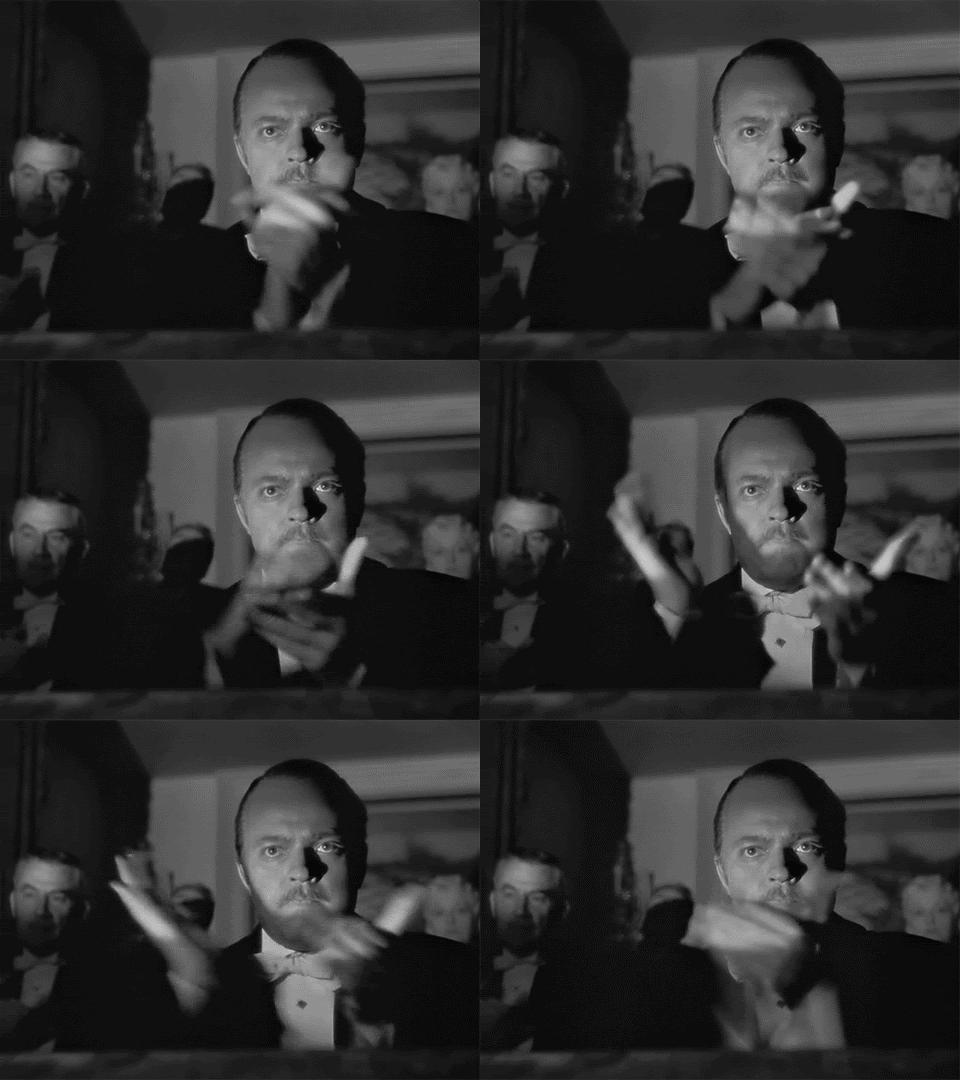
Goodman Grey is also the best character to be introduced to the series in a long time. Given the title of the book, and his shapeshifting abilities, it took most readers roughly five seconds to figure out he is a Naagloshii. For some reason, this does not dawn on our detective wizard hero until the very end of the book. He is sinister and professional, but just when you think he's a total sociopath, he sucker-punches you with this weird-yet-genuine vulnerability like when Murphy rebuffs his romantic advances, or at the end when he implies that he has some serious paternal issues and that he has to pay some form of cosmic "rent," and he did the whole damn thing for a dollar.

One of the coolest, but also most awful things about this book is Harry and Grey's con. Harry describes him as a complete stranger and foreign entity when he is introduced, even though they already met and agreed to screw Nicodemus for the benefit of the good guys. They even worked out that elaborate code. It's implausible that people could speak so carefully in conversation, but forgivable in a world where people throw fireballs around. It also made me go back and review their interactions, and I love writing that forces that kind of non-standard interactivity with a text. But it is rank bullshit that Harry knowingly, flat-out lies to the reader. He's been an unreliable narrator before, but that's usually because somebody has messed with his mind. I hope that Butcher does not have Dresden deliberately mislead readers more in the future. To me, that breaks character and it really is cheating.
If I were writing it, (with the absurd benefit of hindsight) I would have been upfront about their agreement, stayed mum on the details of their communication method, and throughout the book imply that Nicodemus may have his own deal with Grey, or that he was close to discovering Harry and Grey's collusion. You could hit all the same notes and layer on even more tension.
Other mixed stuff: the meeting with Hades was really good, but also exactly what I expected. Butcher honed to the mythology: Hades, while scary and anti-social, is actually not the prick that most people make him out to be. He probably wouldn't take kindly to people invading his vault, but mythologically he is one of the good guys, so I figured he would side with Harry (interesting to note that there haven't been any evil gods in the Dresdenverse to date). Not sure how I would improve on this one.
A friend of mine condemned Harry and Murphy's dream sex scene, which I was actually fairly impressed with. While very effective at describing sexual desire and appearances, I get the impression that Butcher isn't terribly comfortable writing intercourse, seeing how he has skirted intimate moments in the past, or described them very tame and vague terms. Remember that time when Harry tied up Susan? Boring. I mean, light bondage should feel kinky, right? By comparison, the vanilla sex in this one read pretty intense. My wife thought it was a stronger showing too. My friend suggested Butcher read more Harlequin Romance novels, which I have also not read, because I thought they were notoriously terrible. But I am genuinely curious; did you guys enjoy it? And if that is an example of doing it wrong, who would you recommend as an example of getting it right? Not looking for masturbation material; the book I'm working on has some sex in it and I want it to not be awful.
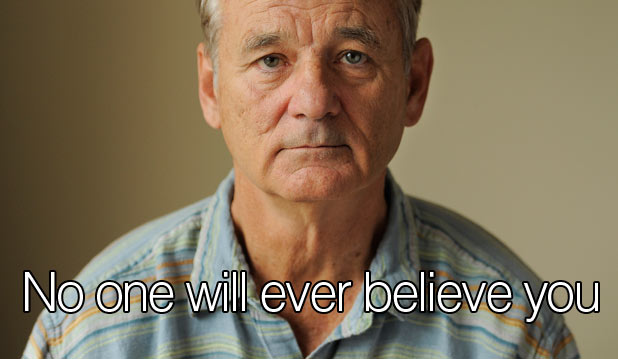
The only thing I outright hated about this book was Harry talking to his mustached inner-self. I've always found these scenes to be lazy writing, but this one seemed particularly offensive. The quips were not witty enough to justify their volume. Worse yet, having the parasite's true nature spelled out for readers undercuts its novelty. I'd rather you lie to me outright in a way that makes the story better than be so blunt that you kneecap a cool reveal. I think a better way to handle this would have been to have Harry tease parts of it out in his quiet moments, and maybe make him worry that he has been infected by Nemesis. Then, when the huge fight in the vault starts, have Lasciel blindside him with the truth. It would make a physical fight into an emotional one, and it would do a better job of preserving the threat that the parasite posed to him. Leave id-Harry on the cutting room floor. You're above that now, Jim!
Maggie and Mouse were the most touching moment in the book, and the most important moment of character progression since Changes: Harry's going to finally act like a father. Also, Butcher teased that we might get a kids book starring Mouse and Maggie which sounds incredible. It was high time that Dresden had a happy ending. He has been through the ringer since Changes--his entire life is just one huge ringer, really--but things are finally looking up a little. In addition to meeting his daughter, everybody who survived the heist makes an actual fortune and at the end of the book, we finally get to see Dresden and Murphy's long-anchored ship start to pull out of the harbor.
I can't wait until Peace Talks is out.
Thursday, July 24, 2014
Third Wave Problems
Still dealing with the health issues detailed in my last post. I promise I will get to reviewing Skin Game, and then move on to Gotham Central eventually. But a friend posted something on her wall that really set me off. Read this first: http://www.vice.com/read/women-against-feminism-have-a-strange-fixation-on-jars-723
You good? Okay. Cue rant:
Third Wave feminism was always doomed to have an image problem. Some of the Second Wavers were extremely radical (and they really needed to be to win what battles they did). But now detractors just remember the radicalness and chalk up the progress to... well, nothing actually, because they have not seen things progress first hand. To them, feminists were just a bunch of uppity bitches. The thrust of the piece is that if people just explained the truth to these people everything would get better. It's actually one of my problems with the way Women's Studies are taught: awareness is the tonic to every problem. Education is sufficient activism.
But a five minute conversation won't fix this problem (or MRAs). And honestly, neither will a university breadth-requirement. I suspect that many of these anti-feminist women feel threatened at some level. They assume fighting for equal pay and professional opportunities comes with the implicit expectations that all women everywhere become something more than a stay-at-home mom, or completely sloughing off your femininity, or burning bras, or refusing to shave, or learning how to open jars yourself (god forbid). It really doesn't though. To them, giving somebody an option that you have no interest in and does not affect their own choices or lifestyle in the slightest translates to harm. It's the same kind of logic that spurs conservatives to imply that allowing gay marriage somehow degrades heterosexual marriage.
And that's the second part of the problem. Third Wave feminism expanded it's scope to embrace every non-normative gender and sex that has been disenfranchised by the status quo (patriarchal and otherwise). And lots of people aren't cool with that, including some people who would have happily been quite radical Second Wave feminists. "We're about women! Why should we bother fighting for the queers or trannies?!" The Third Wavers did it because it was the right goddamn thing to do. If you are serious about fighting 'the patriarchy,' you have to call them out on all of their crimes; not just the ones that affect you specifically.
Unfortunately, that stance also makes things easier for conservatives to lure in people who purport to have "traditional values." The definition of feminist shifts from being "pro-women" to being "against every form of normativity and masculinity." Again, that's not what this is about. Admittedly, the agenda is more 'aggressive' than mere tolerance: we not only want people to stop actively persecuting women, lesbians, gays and trans people, we want them to enjoy the same rights you do as well. But we aren't going to force you to open your own jars.
That inclusive approach though also gave us the birth of Men's Rights Activists who, from my experience, typically range from boys who assume that there must be some misandrist conspiracy which accounts for why all those girls they liked never put out for them, to conservative pseudo-intellectual fuckwits who are frustrated that they can't play the victim card. And this opens the door for the whackjobs who believe that being considered 'dragon-kin' or whatever-the-hell ought to be a constitutional right. Social Justice Warriors are real, and they are also a problem, because they make everybody fighting for actual civil rights issues seem absurd by association.
These are world views that inherently impede and damage progress and equality. You can explain things to people who are confused and want to know more, but mere awareness will not course-correct assholes at cross-purposes. Those people, you have to fight. You can't shame them, or make them feel bad because they don't care what happens to you. They are hoping you're going to magically die off.
Not sure what the solution is, honestly. Neither conservative institutions, nor the "people of traditional values" they puppeteer give a shit about academics. Conservative business interests have the government effectively deadlocked with lobbying. So what channel of discourse is left? You never want to become the monsters they make you out to be, but I think it may be time for a Fourth Wave that's not afraid to kick some teeth in.
Figuratively speaking, of course.
(Mostly)
You good? Okay. Cue rant:
Third Wave feminism was always doomed to have an image problem. Some of the Second Wavers were extremely radical (and they really needed to be to win what battles they did). But now detractors just remember the radicalness and chalk up the progress to... well, nothing actually, because they have not seen things progress first hand. To them, feminists were just a bunch of uppity bitches. The thrust of the piece is that if people just explained the truth to these people everything would get better. It's actually one of my problems with the way Women's Studies are taught: awareness is the tonic to every problem. Education is sufficient activism.
But a five minute conversation won't fix this problem (or MRAs). And honestly, neither will a university breadth-requirement. I suspect that many of these anti-feminist women feel threatened at some level. They assume fighting for equal pay and professional opportunities comes with the implicit expectations that all women everywhere become something more than a stay-at-home mom, or completely sloughing off your femininity, or burning bras, or refusing to shave, or learning how to open jars yourself (god forbid). It really doesn't though. To them, giving somebody an option that you have no interest in and does not affect their own choices or lifestyle in the slightest translates to harm. It's the same kind of logic that spurs conservatives to imply that allowing gay marriage somehow degrades heterosexual marriage.
And that's the second part of the problem. Third Wave feminism expanded it's scope to embrace every non-normative gender and sex that has been disenfranchised by the status quo (patriarchal and otherwise). And lots of people aren't cool with that, including some people who would have happily been quite radical Second Wave feminists. "We're about women! Why should we bother fighting for the queers or trannies?!" The Third Wavers did it because it was the right goddamn thing to do. If you are serious about fighting 'the patriarchy,' you have to call them out on all of their crimes; not just the ones that affect you specifically.
Unfortunately, that stance also makes things easier for conservatives to lure in people who purport to have "traditional values." The definition of feminist shifts from being "pro-women" to being "against every form of normativity and masculinity." Again, that's not what this is about. Admittedly, the agenda is more 'aggressive' than mere tolerance: we not only want people to stop actively persecuting women, lesbians, gays and trans people, we want them to enjoy the same rights you do as well. But we aren't going to force you to open your own jars.
That inclusive approach though also gave us the birth of Men's Rights Activists who, from my experience, typically range from boys who assume that there must be some misandrist conspiracy which accounts for why all those girls they liked never put out for them, to conservative pseudo-intellectual fuckwits who are frustrated that they can't play the victim card. And this opens the door for the whackjobs who believe that being considered 'dragon-kin' or whatever-the-hell ought to be a constitutional right. Social Justice Warriors are real, and they are also a problem, because they make everybody fighting for actual civil rights issues seem absurd by association.
These are world views that inherently impede and damage progress and equality. You can explain things to people who are confused and want to know more, but mere awareness will not course-correct assholes at cross-purposes. Those people, you have to fight. You can't shame them, or make them feel bad because they don't care what happens to you. They are hoping you're going to magically die off.
Not sure what the solution is, honestly. Neither conservative institutions, nor the "people of traditional values" they puppeteer give a shit about academics. Conservative business interests have the government effectively deadlocked with lobbying. So what channel of discourse is left? You never want to become the monsters they make you out to be, but I think it may be time for a Fourth Wave that's not afraid to kick some teeth in.
Figuratively speaking, of course.
(Mostly)
Thursday, July 10, 2014
Kidney Crush Saga
This is the tale of why I have been suffering a parade of
medical problems for the past quarter year. I’ve been complaining about chronic
kidney stones on Facebook for a while now. But I was operating under false
assumptions. I have had one stone. And it has yet to pass. Most stones take a couple days to pass. Sometimes a week. A
month if you’ve really pissed off God.
I got diagnosed with this stone in April.
I got diagnosed with this stone in April.
Normally this would be a medical emergency, because a stone that gets stuck for that long is usually completely obstructing your ureter, and that is usually because it is enormous. This one started out at 4mm and now it’s grown to 5. Even by kidney stone standards, that’s not huge. It’s not obstructing either, so for a good month or so, I was not even aware it was there. But it’s stuck in there pretty good, and it has been steadily irritating my left kidney since April, causing it to swell, making the stone less likely to pass… vicious cycle, etc.
I experienced ‘descending pain’ several times throughout the
past months, which is pain that starts in you back and languidly makes its way
to your groin; the characteristic symptom of kidney stones. So naturally, we
assumed that I had a lot of the little bastards. But the pain was never as bad
as it was supposed to be, and no matter what, I could not ‘catch’ a stone to
find out what was causing it. Instead, it’s likely that little bits were
breaking off this stone, and disintegrating on the way down.
How did nobody notice? Well. I went to a clinic who sent me to
get a CT scan, and they said that I had about an 80% chance of passing the
stone naturally. I went to my doctor, who pretty much said “Drink lots of
fluids, GLHF.” Pain goes away and comes
back about a week later. Go back to the doctor. She says “You probably passed
it and got a new one. Drink more fluids. You don’t want to have another CT scan
so soon cause radiation is bad. Try an ultrasound.” So I get an ultrasound.
Fun Fact: ultrasounds are apparently shit worthless unless
you are previewing your progeny. The diagnosis was “Yup, probably a couple
stones in there.” Oh swell. Wait, 'a couple'? How many is 'a couple'? Does 'a couple' qualify as a scientific unit of measurement now? Anyway, same deal. Awful
descending pain that eventually disappears. I try to go back to my doctor again, but
she is on vacation so I see another doc in the office. He blames salt. Admittedly, I
do consume too much sodium and I have since cut back, but my wife (a nursing
student), my in-laws (pharmacists), and my father (molecular biologist) all told me that diagnosis is insipid. But he says “See a urologist. Drink lots
of fluids.”
The nearest urologist slot is open in a month. In that
intervening month (late May to late June), the descending pain stops altogether.
But I start to experience gas pain in my chest. Very uncomfortable, but I deal with it because I am tired of spending $30 to have some asshole in
a white coat tell me to drink more fluids. The pain gets worse though, as
ignored pain does.
Finally see the urologist. I ask him if the newfound pain in my chest has anything to do with kidney stone pain that has stopped (and at this point, I am very skeptical that I even had kidney stones at all because I’ve been trying to catch one this whole time). He says I need another CT, and that the gas pain is definitely not related to the stone. I consider telling him to piss up a rope, but agree to get another scan.
I get the other scan, and my parents and wife persuade me to see my doctor again. The day I decide to go, the gas pain disappears. Naturally. The doctor says we should wait for the scan results, confirms the chest pain is unrelated, but prescribes me some anti-acid pills. I don’t fill the script immediately because I have to get to work (having missed a lot of days due to debilitating pain and doctor’s appointments) and I am not in pain.
Finally see the urologist. I ask him if the newfound pain in my chest has anything to do with kidney stone pain that has stopped (and at this point, I am very skeptical that I even had kidney stones at all because I’ve been trying to catch one this whole time). He says I need another CT, and that the gas pain is definitely not related to the stone. I consider telling him to piss up a rope, but agree to get another scan.
I get the other scan, and my parents and wife persuade me to see my doctor again. The day I decide to go, the gas pain disappears. Naturally. The doctor says we should wait for the scan results, confirms the chest pain is unrelated, but prescribes me some anti-acid pills. I don’t fill the script immediately because I have to get to work (having missed a lot of days due to debilitating pain and doctor’s appointments) and I am not in pain.
Never do this. Break any date. Piss off whoever you have to.
If a doctor gives you meds, get them before you do anything else. Because around
noon the next day, my abdomen began to burn, and a couple minutes later it felt
like Lucifer himself was trying to screw his way out of my guts with a white-hot
railroad spike. Fortunately, all these trips to the doctor have given me an
arsenal of absurdly potent pain killers. Twenty minutes later, I am no longer in
agony, but trying to do my job while bombed out of my skull.
I get the anti-acids and take them every morning. Been doing that for a week now and I will keep
doing it until the doctor tells me I have to stop. So anyway, I start to look
stuff up, because if this is an unrelated problem, it’s clearly pretty serious.
I have always had an over-zealous gag reflex, but since June, I wake up every
morning and gag uncontrollably, sometimes to the point of vomiting. I had gas
pain that gave way to incredibly intense abdominal pain. I have been under a
lot of stress. Pain responds to anti-acids. This hasn’t been officially
diagnosed yet, so maybe it is just the devil with a railroad spike, but all
signs point to ulcer.
Today I went back to the urologist for the second CT scan
results.
Urologist: Yup, you’ve
got a stone in there.
Me, laughing: Damn,
another one? That’s weird I haven’t even felt any descending pain in like a
month.
Urologist nods: That’s
because it’s the same one.
Wut.
He continues: The first scan showed it at 4mm. This one is
5mm in the same position. It’s stuck.
Me, not laughing anymore: Oh. Uh, so what do we do now?
[Trigger warning for people with a penis]
Urologist: It’s a very simple procedure. We thread a wire up
your urethra, shoot the stone with a laser, vacuum out all of the shards, and put
in a stent to make sure nothing gets lodged in the indentation while it recovers.
Me: Right. Yeah. Okay. And uh, how does the stent come out? Does it bio-degrade, or…
Urologist: Oh no. We just yank it out three days later.
How does a week from today sound?
Funny thing is, this procedure will still probably be far
less excruciating than passing the stone naturally. And much more expedient. So
that’s why I have not been blogging much lately, and why I am having an operation next Thursday.
Saturday, April 12, 2014
Shields of the Marvel MCU
A week ago I saw Winter Soldier. Meant to write sooner but life has been very dense lately.
It was a great movie. Maybe the MCU's best offering yet, including Iron Man and The Avengers. It has the focused storytelling and character development of the original Iron Man, with all of the interconnected cross-world hijinks of The Avengers. And best of all, it had the MCU's cannon diverge from the comic books in a daring, meaningful way. Frankly, it's the kind of storytelling I expected from Joss. I wanted to see it in The Avengers. I wanted to see it in Agents of S.H.I.E.L.D. The last place I expected to find an enormous in-fiction paradigm shift was with Marvel's most conventional leading man. Like a c-list super villain, I have a bad habit of underestimating the Cap.
Spoilers will be peppered throughout.

My initial assessment of Captain America was that he was another cardboard paragon; Superman sans superpowers--a really fit boy scout. The first Cap movie, The First Avenger, set me straight. It showed me Steve Rogers was a man who earnestly wanted to make a difference, but lacked the ability to do so. When the universe called his bluff, he rose to the occasion and proved that all he needed was the chance. There's some other really good shit in there about a man who becomes co-opted by propaganda and decides to become something more. It was better than I ever dared dream.
But I figured, "Alright. We've seen this guy's arc. It was a fantastic story, but he's a product of his time, and taken out of that context, what is there left to say?" A whole hell of a lot it turns out. While the self-referential anti-propaganda plot threads of The First Avenger did a lot to quell the inherent jingoism of the Captain America identity, it was still there lurking in the shadows. If you see a guy with armor colored like Old Glory, you can't help but imagine a soldier who will do whatever his country deems necessary. Winter Soldier takes that misconception to task and shows general audiences that Cap not only represents what America is, or even what it can be, but what it ought to be.
Screenwriters Christopher Markus and Stephen McFeely waste no time putting Steve Rogers at odds with Marvel's super-spy agency S.H.I.E.L.D. (Strategic Homeland Intervention, Enforcement and Logistics Division). In this case, S.H.I.E.L.D. is a transparent stand-in for the NSA with obviously toxic, Minority Report notions on surveillance and security. So, already, like the original Iron Man flick, which stands as one of the first, mainstream cinematic Trojan Horses for post 9/11 thought, Winter Soldier gives us one of the first mainstream post-Snowden narratives. And it's fairly meaty! At least, as meaty as such a thing can be when your heroes primary vehicle of expression are fisticuffs and gunfire. That and shield-bashing.
Please indulge me a paragraph to nerd out about Cap's shield.
Shields are the punchline of violent literature. They are typically ineffectual, or at least invariably penetrable, and generally portrayed as the armament of choice for cowards or hidebound meat heads. One of the things that makes Captain America refreshing as an icon, is that he is a bad-ass who takes care of shit with a shield. In The First Avenger he also regularly uses guns and rifles to eliminate opposition, but it was a war-movie. In a war, a shield is not sufficient to win the day. But in Winter Soldier, we are in the modern day of the USA which is peacetime. A shield is a far more fitting tool for somebody whose mandate is to protect. In Winter Soldier Cap bashes the crap out of people with his magic shield, only briefly wielding guns and knives to turn them back on his attackers. His shield really is magic too. There is a ridiculous (but admittedly awesome) scene where he takes out a S.H.I.E.L.D heavy aircraft by jumping on top of it and throwing his shield at it a couple of times, really, really hard. In this specific scene, the shield causes explosions and works as a perfect boomerang. In other parts of the movie, it completely negates fall-damage, stops all gunfire and incendiaries, and cuts through anything (admittedly most of this is consistent with the properties of vibranium in comic lore. Freaking Wakanda man).
Okay. Shield rant over. Initiating S.H.I.E.L.D rant:
The thing I liked best about Winter Soldier is its big plot twist (which I am about to spoil). It is not an upheaval for the sake of controversy, but an IP molting; a fictional universe sloughing off vestigial and irrelevant appendage to create a newer, leaner, more relevant form. Midway through the movie, it is revealed that S.H.I.E.L.D. has not only been infiltrated by, but sculpted in the image of H.Y.D.R.A., the sci-fi branch of Nazi fucks Cap defeated back in The First Avenger. It is a fitting (if crude and underdeveloped) allegory for what happened to our national psyche in the 50s through the 80s. To this day, S.H.I.E.L.D. is a mainstay of Marvel comics, though frankly, they've always been more than a little scary and Orwellian. They reek of Cold War politics, policies, and paranoia. They are villains more often than not, and in a universe full of godlike heroes, it was high time somebody took them to task, or at the very least, instigated a serious regime change.
Captain America, Black Widow, Falcon, Maria Hill and Nick Fury do just that in Winter Soldier. By the end of the movie, S.H.I.E.L.D. is not a thing any more. They physically destroy and then legally dissolve S.H.I.E.L.D. from the MCU. Even if you brush aside over 50 years of comic continuity, that is still a really bold and interesting choice if you will recall that Marvel has a prime time network television program in the same shared universe called Agents of S.H.I.E.L.D. It would be even more interesting if Agents wasn't just awful.
A couple months back, I firmly stated that I would give Agents the benefit of the doubt, at least for the first season. Well folks, time makes fools of us all. I quit a quarter of the the way through. The standalone episodes were disposable. The writing has been atrocious, from predictable plot-points to a heinously shallow and unlikable main cast. Even the frank and earnest every man, Phil Coulson could not carry such an unevenly paced, cliched, and downright dumb show. Winter Soldier made me care enough to look up the episode synopses, and frankly, I feel like I've dodged a round of bullets. I did watch the latest episode, with it's scandalous betrayal and direct address of Winter Soldier's fallout, but the whole thing still feels like an anomalous lump on the body of the MCU. It has completely failed to pay off on the titular promise of my initial review.
There is a lot I'm not going to delve into. The huge laundry list of Easter Eggs, setting up innumerable sequels. Robert Redford playing the best MCU villain since Tom Hiddleston's Loki. Scar-Jo's awful one-expression, one-tone, one delivery approach to acting, but her appealing psuedo-sexual bromance with Chris Evans. Anthony Mackie's immensely likable Falcon. The surprisingly poignant and understated man out of time narrative present at the periphery of the movie.
But if you ever wondered why the really cut guy with the magic shield was calling the shots for Hulk, Iron Man and Thor, this movie will answer that question.You see, Steve Rogers is not like Superman without godlike abilities. He is more like the Batman's optimistic, socially adept twin. Both Steve and Bruce are orphans. Both feel powerless and rise to make a difference in imperiled worlds. Batman's quest is personal. His motivations are personal. His resources are personal. Even with his extended 'Bat Family' of crime-fighters, his methodology is deeply personal. Cap is an extrovert's superhero. He was a team player from the start. His resources were governmental. His motivations were global. He was not concerned with America, but rather, what he wanted America to do for the rest of the world.
The best superhero scene in the movie is not the opening sequence when Cap wrecks a ship full of bad guys, or even that part where he takes out a gunship with just a disc of witch-metal, but rather at the climax, where he gives a speech to an entire institution, and convinces at least half of them to do the right thing and fight for the good guys. After a spate of grimdark reality, and grimdark heroes to match, Captain America is the kind of hero we need, and the one audiences deserve.
It was a great movie. Maybe the MCU's best offering yet, including Iron Man and The Avengers. It has the focused storytelling and character development of the original Iron Man, with all of the interconnected cross-world hijinks of The Avengers. And best of all, it had the MCU's cannon diverge from the comic books in a daring, meaningful way. Frankly, it's the kind of storytelling I expected from Joss. I wanted to see it in The Avengers. I wanted to see it in Agents of S.H.I.E.L.D. The last place I expected to find an enormous in-fiction paradigm shift was with Marvel's most conventional leading man. Like a c-list super villain, I have a bad habit of underestimating the Cap.
Spoilers will be peppered throughout.

I really dug Cap's new outfit. Very solid poster too,
excepting the obvious T&A pose from Black Widow.
excepting the obvious T&A pose from Black Widow.
My initial assessment of Captain America was that he was another cardboard paragon; Superman sans superpowers--a really fit boy scout. The first Cap movie, The First Avenger, set me straight. It showed me Steve Rogers was a man who earnestly wanted to make a difference, but lacked the ability to do so. When the universe called his bluff, he rose to the occasion and proved that all he needed was the chance. There's some other really good shit in there about a man who becomes co-opted by propaganda and decides to become something more. It was better than I ever dared dream.
But I figured, "Alright. We've seen this guy's arc. It was a fantastic story, but he's a product of his time, and taken out of that context, what is there left to say?" A whole hell of a lot it turns out. While the self-referential anti-propaganda plot threads of The First Avenger did a lot to quell the inherent jingoism of the Captain America identity, it was still there lurking in the shadows. If you see a guy with armor colored like Old Glory, you can't help but imagine a soldier who will do whatever his country deems necessary. Winter Soldier takes that misconception to task and shows general audiences that Cap not only represents what America is, or even what it can be, but what it ought to be.
Screenwriters Christopher Markus and Stephen McFeely waste no time putting Steve Rogers at odds with Marvel's super-spy agency S.H.I.E.L.D. (Strategic Homeland Intervention, Enforcement and Logistics Division). In this case, S.H.I.E.L.D. is a transparent stand-in for the NSA with obviously toxic, Minority Report notions on surveillance and security. So, already, like the original Iron Man flick, which stands as one of the first, mainstream cinematic Trojan Horses for post 9/11 thought, Winter Soldier gives us one of the first mainstream post-Snowden narratives. And it's fairly meaty! At least, as meaty as such a thing can be when your heroes primary vehicle of expression are fisticuffs and gunfire. That and shield-bashing.
Please indulge me a paragraph to nerd out about Cap's shield.
Shields are the punchline of violent literature. They are typically ineffectual, or at least invariably penetrable, and generally portrayed as the armament of choice for cowards or hidebound meat heads. One of the things that makes Captain America refreshing as an icon, is that he is a bad-ass who takes care of shit with a shield. In The First Avenger he also regularly uses guns and rifles to eliminate opposition, but it was a war-movie. In a war, a shield is not sufficient to win the day. But in Winter Soldier, we are in the modern day of the USA which is peacetime. A shield is a far more fitting tool for somebody whose mandate is to protect. In Winter Soldier Cap bashes the crap out of people with his magic shield, only briefly wielding guns and knives to turn them back on his attackers. His shield really is magic too. There is a ridiculous (but admittedly awesome) scene where he takes out a S.H.I.E.L.D heavy aircraft by jumping on top of it and throwing his shield at it a couple of times, really, really hard. In this specific scene, the shield causes explosions and works as a perfect boomerang. In other parts of the movie, it completely negates fall-damage, stops all gunfire and incendiaries, and cuts through anything (admittedly most of this is consistent with the properties of vibranium in comic lore. Freaking Wakanda man).
Okay. Shield rant over. Initiating S.H.I.E.L.D rant:
The thing I liked best about Winter Soldier is its big plot twist (which I am about to spoil). It is not an upheaval for the sake of controversy, but an IP molting; a fictional universe sloughing off vestigial and irrelevant appendage to create a newer, leaner, more relevant form. Midway through the movie, it is revealed that S.H.I.E.L.D. has not only been infiltrated by, but sculpted in the image of H.Y.D.R.A., the sci-fi branch of Nazi fucks Cap defeated back in The First Avenger. It is a fitting (if crude and underdeveloped) allegory for what happened to our national psyche in the 50s through the 80s. To this day, S.H.I.E.L.D. is a mainstay of Marvel comics, though frankly, they've always been more than a little scary and Orwellian. They reek of Cold War politics, policies, and paranoia. They are villains more often than not, and in a universe full of godlike heroes, it was high time somebody took them to task, or at the very least, instigated a serious regime change.
Captain America, Black Widow, Falcon, Maria Hill and Nick Fury do just that in Winter Soldier. By the end of the movie, S.H.I.E.L.D. is not a thing any more. They physically destroy and then legally dissolve S.H.I.E.L.D. from the MCU. Even if you brush aside over 50 years of comic continuity, that is still a really bold and interesting choice if you will recall that Marvel has a prime time network television program in the same shared universe called Agents of S.H.I.E.L.D. It would be even more interesting if Agents wasn't just awful.
A couple months back, I firmly stated that I would give Agents the benefit of the doubt, at least for the first season. Well folks, time makes fools of us all. I quit a quarter of the the way through. The standalone episodes were disposable. The writing has been atrocious, from predictable plot-points to a heinously shallow and unlikable main cast. Even the frank and earnest every man, Phil Coulson could not carry such an unevenly paced, cliched, and downright dumb show. Winter Soldier made me care enough to look up the episode synopses, and frankly, I feel like I've dodged a round of bullets. I did watch the latest episode, with it's scandalous betrayal and direct address of Winter Soldier's fallout, but the whole thing still feels like an anomalous lump on the body of the MCU. It has completely failed to pay off on the titular promise of my initial review.
There is a lot I'm not going to delve into. The huge laundry list of Easter Eggs, setting up innumerable sequels. Robert Redford playing the best MCU villain since Tom Hiddleston's Loki. Scar-Jo's awful one-expression, one-tone, one delivery approach to acting, but her appealing psuedo-sexual bromance with Chris Evans. Anthony Mackie's immensely likable Falcon. The surprisingly poignant and understated man out of time narrative present at the periphery of the movie.
But if you ever wondered why the really cut guy with the magic shield was calling the shots for Hulk, Iron Man and Thor, this movie will answer that question.You see, Steve Rogers is not like Superman without godlike abilities. He is more like the Batman's optimistic, socially adept twin. Both Steve and Bruce are orphans. Both feel powerless and rise to make a difference in imperiled worlds. Batman's quest is personal. His motivations are personal. His resources are personal. Even with his extended 'Bat Family' of crime-fighters, his methodology is deeply personal. Cap is an extrovert's superhero. He was a team player from the start. His resources were governmental. His motivations were global. He was not concerned with America, but rather, what he wanted America to do for the rest of the world.
The best superhero scene in the movie is not the opening sequence when Cap wrecks a ship full of bad guys, or even that part where he takes out a gunship with just a disc of witch-metal, but rather at the climax, where he gives a speech to an entire institution, and convinces at least half of them to do the right thing and fight for the good guys. After a spate of grimdark reality, and grimdark heroes to match, Captain America is the kind of hero we need, and the one audiences deserve.
Wednesday, April 2, 2014
How I Met Your Mother or Why I am Banging Your Aunt Robin
I know I planned to regale you all with more tales from AWP, but then work got crazy busy. So, somewhat inevitably, the ending of HIMYM got spoiled for me before I could watch it.
Even without watching the show, the summaries provoked a strong reaction, and a strong reaction to the all the reactions I've read so far. Want the TL;DR? I think it was a
strong resolution to a series that had lost its way.
One of the signs of a good ending is that it looks
inevitable when you re-examine the very beginning of the story. A circle, or perhaps a
series of circles, is the natural shape of narrative. Consequently, the
beginning ought to heavily influence what the ending looks like. We don’t begin the story with the
mother. Or with Ted meeting Marshall, or Lily, or Barney. We get all those
stories eventually, but we begin with Ted meeting Robin. That gives her
character gravitas that really couldn’t be overcome or denied. It was always
about Robin and Ted. Even more than Ted and Tracy.
Do not confuse my approval of the conclusion as an endorsement for the characters or the course of the show.
Do not confuse my approval of the conclusion as an endorsement for the characters or the course of the show.
Somewhere along the lines, Ted Moesby stopped being a
lovable dweeb and became a legitimate shitbag. Can’t put my finger on when
exactly. Might be when he broke up Victoria’s (admittedly
doomed-from-the-start) wedding to Klaus, knowing firsthand how awful being left
at the altar was. It might have been when he catalyzed the end of Zoey’s (obviously
awful) marriage. It might have been when he rushed into proposing to Stella, despite the fact that their relationship only ever half-worked. No matter what way you slice it, the dude was kryptonite to matrimony for a couple seasons. Also,
the parade of plowed bimbos was innocent and charming enough for the first
couple seasons, but by the end, it had become genuinely sort of sick.
Barney and Robin’s characters get wrecked too, and that one is far easier to chart: it happens as soon as they start dating each other. Barney’s strength as a character was representing a person, amidst all these other lovebirds, who did not need monogamy. I think marriage is the right play for the majority of humans, but there are some people who will always get bored in a relationship. Who Barney became with Robin was not who the series told us he was at the start, and no, his decision to marry her did not constitute maturation: it was rank self-deception. Robin was similar to Barney in that she was self-assured, opinionated, and not wholly sold on settling down; but we learn fairly early on that she did want to have that life eventually. For her, monogamy would constitute character growth. I imagine that the writers set Barney and Robin up because the fans clamored for their pairing. They clamored because Barney and Robin had comparable (but also obviously incompatible) personalities. When their romance went to hell the first time, I thought it was the writers telling the audience “See this? The ‘obvious’ match-up? It’s a fucking stupid idea and this is the end of it.” I cheered.
And then they put them back together. The narrative backpedal alone would have been bad enough, but to make matters worse, Robin and Barney were already dating two other beautiful, brilliant characters who frankly deserved better. That didn’t just make them worse characters, it made them awful people. Flawed characters are interesting, yes, and people make bad choices all the time in real life, but in fiction, the flaws and fuck-ups should serve the central story.
How I Met Your Mother’s story was always about Ted and Robin. That’s not what the title implies, but it’s what the plot was designed to do; hence the showrunners shooting the final scenes with the kids in season two. They knew Ted would seek out Robin after his soul-mate died. So few shows—so few long-running stories in any format—stick to a single planned plot anymore. So it is incredibly satisfying to see a series pay off a plan instead of just making shit up or pandering to fans, especially when the intended ending is kind of tragic and challenging.
What happened to HIMYM is what happened to Friends, which was also always going to end with a hook up: Ross and Rachel. This was even more obvious, but the network had a huge hit on their hands, the actors were being paid stupid amounts of money (to prevent them from pursuing lucrative careers elsewhere), and the also well-paid writers were high on their fans’ adoration, so they milked that tit for all it was worth. What was originally tight and coherent got bloated and convoluted. The characters were becoming less interesting, so to maintain the appearance of growth, the writers had them make decisions that broke their established personalities.
Barney and Robin’s characters get wrecked too, and that one is far easier to chart: it happens as soon as they start dating each other. Barney’s strength as a character was representing a person, amidst all these other lovebirds, who did not need monogamy. I think marriage is the right play for the majority of humans, but there are some people who will always get bored in a relationship. Who Barney became with Robin was not who the series told us he was at the start, and no, his decision to marry her did not constitute maturation: it was rank self-deception. Robin was similar to Barney in that she was self-assured, opinionated, and not wholly sold on settling down; but we learn fairly early on that she did want to have that life eventually. For her, monogamy would constitute character growth. I imagine that the writers set Barney and Robin up because the fans clamored for their pairing. They clamored because Barney and Robin had comparable (but also obviously incompatible) personalities. When their romance went to hell the first time, I thought it was the writers telling the audience “See this? The ‘obvious’ match-up? It’s a fucking stupid idea and this is the end of it.” I cheered.
And then they put them back together. The narrative backpedal alone would have been bad enough, but to make matters worse, Robin and Barney were already dating two other beautiful, brilliant characters who frankly deserved better. That didn’t just make them worse characters, it made them awful people. Flawed characters are interesting, yes, and people make bad choices all the time in real life, but in fiction, the flaws and fuck-ups should serve the central story.
How I Met Your Mother’s story was always about Ted and Robin. That’s not what the title implies, but it’s what the plot was designed to do; hence the showrunners shooting the final scenes with the kids in season two. They knew Ted would seek out Robin after his soul-mate died. So few shows—so few long-running stories in any format—stick to a single planned plot anymore. So it is incredibly satisfying to see a series pay off a plan instead of just making shit up or pandering to fans, especially when the intended ending is kind of tragic and challenging.
What happened to HIMYM is what happened to Friends, which was also always going to end with a hook up: Ross and Rachel. This was even more obvious, but the network had a huge hit on their hands, the actors were being paid stupid amounts of money (to prevent them from pursuing lucrative careers elsewhere), and the also well-paid writers were high on their fans’ adoration, so they milked that tit for all it was worth. What was originally tight and coherent got bloated and convoluted. The characters were becoming less interesting, so to maintain the appearance of growth, the writers had them make decisions that broke their established personalities.
That huge flaw acknowledged, the finale manages to pay off Robin and Ted’s story, and Barney
also finally gets some genuine character growth in the form of having a daughter.
Even if he remains a cocky, chauvinistic man-slut, he gets to address the
single solemn aspect of his character by trying to become the father he never
had. And while Barney didn’t want to get married, we learn fairly early on that
he did want kids.
I don’t actually know how Marshall and Lilly ended up, and
to be honest, it doesn’t matter in the slightest. I went to Wikipedia to
complete this post, there were sentences on them in the episode summary, and I skipped
them. It's not that I hate them... at least, I didn’t initially.
They represented Ted’s dream, and gave the writers an
opportunity to explore a criminally under-utilized period in a romantic
relationship: the space after monogamy preceding parenthood. Their character
arc had enough material for five very solid seasons; seven if you had to
stretch it. But Marshall always kind of bored me (thank god for Segel finally
forcing the writers to pull the plug though), and by Season 6, Lily, who
started out interesting and canny (if prone to selfishness and meddling), had
become insufferable.
The gravest sin of the final season, is that after spending twenty-two episodes on a single goddamn weekend (buoyed only by a generous helping of flash forwards and the refreshing episode detailing Tracy’s life), the viewer is hit with a parade of bombshells in the finale. The audience is given no time to process Barney and Robin’s divorce, Tracy’s death, and Ted pursuing Robin again. Having two of your best friends divorce is incredibly ugly and traumatizing. “Nothing will ever change,” my ass. That’s the most haunting line of the entire show, by the way, because it implies this toxic non-three-way between Barney, Ted and Robin will never be completely resolved. Milioti, who was undeniably the best thing about the last season, deserved a heartbreaking goodbye followed by a few minutes for fans to sob uncontrollably. Even the fact that Ted is telling his kids this story six years after her passing begs further explanation. His behavior to date does not suggest he would have the restraint, even grief-stricken and burdened with parental responsibilities, to refrain from screwing around a bit in the interim.
I know that many fans and critics predicted the ending, but it still managed to be surprising, provoke discussion, and make narrative sense. Honestly, this show has always danced between comedy and tragedy, regularly spitting in the face of pure romantic sap. A happily ever after wrap up would have been boring and insulting. The ending could have been executed better, but its problems all have roots in two to four unnecessary seasons’ worth of material. Given what had happened to the show, I am actually quite happy with how it resolved. Like the yellow umbrella, it got lost for a couple years in the middle, but found itself in the end.
The gravest sin of the final season, is that after spending twenty-two episodes on a single goddamn weekend (buoyed only by a generous helping of flash forwards and the refreshing episode detailing Tracy’s life), the viewer is hit with a parade of bombshells in the finale. The audience is given no time to process Barney and Robin’s divorce, Tracy’s death, and Ted pursuing Robin again. Having two of your best friends divorce is incredibly ugly and traumatizing. “Nothing will ever change,” my ass. That’s the most haunting line of the entire show, by the way, because it implies this toxic non-three-way between Barney, Ted and Robin will never be completely resolved. Milioti, who was undeniably the best thing about the last season, deserved a heartbreaking goodbye followed by a few minutes for fans to sob uncontrollably. Even the fact that Ted is telling his kids this story six years after her passing begs further explanation. His behavior to date does not suggest he would have the restraint, even grief-stricken and burdened with parental responsibilities, to refrain from screwing around a bit in the interim.
I know that many fans and critics predicted the ending, but it still managed to be surprising, provoke discussion, and make narrative sense. Honestly, this show has always danced between comedy and tragedy, regularly spitting in the face of pure romantic sap. A happily ever after wrap up would have been boring and insulting. The ending could have been executed better, but its problems all have roots in two to four unnecessary seasons’ worth of material. Given what had happened to the show, I am actually quite happy with how it resolved. Like the yellow umbrella, it got lost for a couple years in the middle, but found itself in the end.
Tuesday, March 4, 2014
AWP 2014: A Guy's Take on Sex in YA Fiction
Last weekend I attended AWP for the first time. For those who don't know, AWP is short for Association of Writers and Writing Programs. It is North America's largest literary conference, boasts a big book fair (primarily focused on lit mags, small presses, and MFA programs) and tons of panels (mostly) hosted by people who would sooner be tortured to death than admit they write anything that could be construed as speculative fiction.
As a self-professed genre writer, I felt like people were going to make me wear an armband and put me on a train, but I had a great time, learned a lot and came away with a ton of awesome stories. I attended the explosive and very weird Magic & Intellect Panel. My wife and I watched a dude perfect his slow-motion pelvic thrust on the dance floor each night over the course of the convention. I will share some of these stories in detail over the coming days, but I want to begin by talking about one of the final panels of the convention: How Far to Go: Sex in YA Fiction.
The panel was hosted by Adele Griffin, Emily Lockhart, Robin Wasserman, and Sara Mlynowski, all well-established YA novelists. The reason I feel like I have something worth saying is twofold. Firstly, I was one of five men in an audience of about fifty people, which struck me as unusual. Secondly, I also attended a similar panel earlier in the program: Warning Extreme Content: Sex, Drugs, and Abuse in Young Adult Literature and thought I could compare the two.
I have not read any of these ladies' books, but based on their readings, I feel the four of them nailed teenage girl sexuality. Or at least, four very varied approaches toward it. I say this based on my youth spent in a ballet studio, where I was surrounded by scores of young women who occupied roles in my life ranging from surrogate sisters, idealized crushes, awkward girlfriends, close friends, lust idols, patient mentors, artistic rivals, caustic hell-bitches, and the woman who would become my wife and soul mate. The insight they have given me is invaluable.
The panel offered some priceless advice as well. It observed that good writing about sex in YA can not only steer kids away from bad sexual experiences, but prepare them for positive ones down the road (and what parent doesn't want their kids to eventually have positive sexual experiences)? There was the observation that going into great detail during the act of sex typically does not move the plot forward, and that in YA, where the sex is under a particularly exacting microscope, it’s important for every detail to serve the story. Throughout, all the panelists also had a healthy sense of humor, and they were welcome exceptions to the general rule of being anti-speculative lit.
The panel's biggest blind spot though, as observed by an audience member, was teenage guy sexuality, which is what I thought I would talk about for the majority of this post.
I think the sharpest distinction between girl and guy sexuality, is that while women are simultaneously warned against being sluts and depicted as perfected sexual objects in the media, guys are given one message from the time that they are nine: bed hot women. Not people you connect with, or even people you find physically pleasing. You are to seek out hot women and screw as many of them as possible, as soon as possible. On the one hand, there is no frustrating doublespeak, no ambiguity in that message. But on the flipside, it leaves much less room for self-discovery and personal growth, both sexually, and in general. The disparity in messages also carries over to the way men and women bully each other.
Teenage girls are the cruelest people on the planet. Teenage boys are the most brutal. Girls hatch elaborate campaigns to destroy each other, using both blade of the double-standard. You’re a pathetic prude one minute, and an irredeemable whore the next. For guys there is only constant blunt-force verbal and (often) physical trauma. You’re a fag. You will die a virgin. How are you gonna get laid looking like that? There is no cunning. There is no deception. The only respite is how casual and flippant the barrage becomes. And the only gold-standard of respect is who you’ve stuck your dick in—nevermind if it meant ruining her reputation or self-esteem in the process.
As adults we know this is bullshit. Hell, most guys realize it is an appalling falsehood by freshman year. But that doesn’t stop the story. The pervasive, ceaseless social narrative reminding you that who you’ve fucked is what really matters. God help you if you are gay, bi, trans, or simply figuring your shit out. They say that women tend to have more body issues than men thanks to the enduring prevalence of the male gaze in media, but men are also trained to view themselves with the same superficial eye, and if you are chubby, or skinny, or have acne, you are going to be wracked by insecurities. Ditto if you engage in any activity that is considered feminine, like, say, ballet.
As far as physiology goes, I would say that sex is more of a constant distraction and annoyance for guys. Not because our urges are necessarily stronger, or because guys think about sex more than girls, but because we can always get an erection, and the physical element makes our arousal harder for everybody to ignore. Most of the time it’s not a big deal, but at some point in four years, it will be as bad as it possibly can be. Given our more ostentatious anatomy, I think guys tend to think about sex in more superficial terms than most girls. Boners may also partially explain our fixation with boobs—which are the most ostentatious part of a girl’s anatomy. Pro Tip: I know it sounds stupid, but you really cannot overestimate the average teenage guy’s fixation on breasts (in their defense, I am 26 and boobs are still awesome).
What does she look like when she’s naked? How does my penis compare to other guys'? Where can I touch her? These are the questions boys tend to ask when they get stuck in their own heads. Everything else is an afterthought, including: What will feel best? How can I make it memorable? Are we going to have fun? Though, I think that last one eludes almost everybody starting out. Sex is serious fucking business for teens. Which brings me to how to write the deed itself.
In this scenario, I think both genders are on an equal playing field. If the sex act (even something as harmless as kissing) is premeditated, it is inevitably over-thought and horrendously awkward. If equally inexperienced, both parties will do everything cautiously and by stumbling half-measure. Conversely, unplanned make-out sessions (and accompanying sex acts) tend to be unbridled animalistic hedonism. They are incandescent bright spots amidst one of the shittier periods of your life, and it is difficult to overstate the passion or accompanying elation. I think girls tend to keep a clearer head in the heat of the moment, as they tend to be more wary of the threat of gestation, but it really depends on the personalities involved.
So how did How Far to Go compare to the other panel on taboo subjects in YA fiction? I think I have to give the nod to Warning Extreme Content but it scratched a very personal itch. The panel was hosted by Ann Angel ("Not the pornstar!"), Kekla Magoon, and Carrie Jones. It was one of my favorite panels in the entire convention, because the panelists focused less on their own material in favor of crafting broader arguments against pro-censorship organizations. They backed up their arguments with excellent quotes from Chuck Wendig (Blackbirds), Sherman Alexie of (The Absolutely True Diary of a Part Time Indian) and Carrie Mesrobian (Sex and Violence). And while they still had an excellent sense of humor about their subject matter (especially Ms. Angel), the main reason I think I preferred this panel is because it speaks to a fight I feel very passionately about: the idea that YA fiction should be neutered and bloodless.
To my eye, YA's biggest handicap is that it has to aggressively justify "extreme" content to society. Kids cannot merely grow up. They have to grow up in ways we can all sign-off on. There are already so many damn people lecturing kids—parents, teachers, preachers, people who do not have kids of their own but nonetheless believe that they know how kids ought to be raised—that having another voice shouting at them is a sure way for them to give up reading in favor of games, movies, television, or anything less likely to preach at them. I think that one of the most crucial cultural services that fiction provides is a means to escape those pressures. And those are the kind of books I want to write for young adults.
To put all my cards on the table, I will admit that my own first YA effort, The Harrowing, has a lot of violence with no obvious moral through-line to excuse it. My closest literary approximations are Ender's Game, or to a lesser extent, Hunger Games, right down to the troubling "survival necessitates murder" politics, but my tone is decidedly more manic and quipy than either of those books. There isn't a lot of sex in it; certainly nothing explicit, but it is something I want to explore in future books in the series. I'm working on a much sexier, totally unrelated novel right now, but all the characters are twenty-somethings so it probably won't piss off any parents (and where is the fun in that?).
Enough self-promotion. Did anybody else attend these panels? What did you think? My comment section is sorry and desolate. Light it up.
As a self-professed genre writer, I felt like people were going to make me wear an armband and put me on a train, but I had a great time, learned a lot and came away with a ton of awesome stories. I attended the explosive and very weird Magic & Intellect Panel. My wife and I watched a dude perfect his slow-motion pelvic thrust on the dance floor each night over the course of the convention. I will share some of these stories in detail over the coming days, but I want to begin by talking about one of the final panels of the convention: How Far to Go: Sex in YA Fiction.
The panel was hosted by Adele Griffin, Emily Lockhart, Robin Wasserman, and Sara Mlynowski, all well-established YA novelists. The reason I feel like I have something worth saying is twofold. Firstly, I was one of five men in an audience of about fifty people, which struck me as unusual. Secondly, I also attended a similar panel earlier in the program: Warning Extreme Content: Sex, Drugs, and Abuse in Young Adult Literature and thought I could compare the two.
I have not read any of these ladies' books, but based on their readings, I feel the four of them nailed teenage girl sexuality. Or at least, four very varied approaches toward it. I say this based on my youth spent in a ballet studio, where I was surrounded by scores of young women who occupied roles in my life ranging from surrogate sisters, idealized crushes, awkward girlfriends, close friends, lust idols, patient mentors, artistic rivals, caustic hell-bitches, and the woman who would become my wife and soul mate. The insight they have given me is invaluable.
The panel offered some priceless advice as well. It observed that good writing about sex in YA can not only steer kids away from bad sexual experiences, but prepare them for positive ones down the road (and what parent doesn't want their kids to eventually have positive sexual experiences)? There was the observation that going into great detail during the act of sex typically does not move the plot forward, and that in YA, where the sex is under a particularly exacting microscope, it’s important for every detail to serve the story. Throughout, all the panelists also had a healthy sense of humor, and they were welcome exceptions to the general rule of being anti-speculative lit.
The panel's biggest blind spot though, as observed by an audience member, was teenage guy sexuality, which is what I thought I would talk about for the majority of this post.
I think the sharpest distinction between girl and guy sexuality, is that while women are simultaneously warned against being sluts and depicted as perfected sexual objects in the media, guys are given one message from the time that they are nine: bed hot women. Not people you connect with, or even people you find physically pleasing. You are to seek out hot women and screw as many of them as possible, as soon as possible. On the one hand, there is no frustrating doublespeak, no ambiguity in that message. But on the flipside, it leaves much less room for self-discovery and personal growth, both sexually, and in general. The disparity in messages also carries over to the way men and women bully each other.
Teenage girls are the cruelest people on the planet. Teenage boys are the most brutal. Girls hatch elaborate campaigns to destroy each other, using both blade of the double-standard. You’re a pathetic prude one minute, and an irredeemable whore the next. For guys there is only constant blunt-force verbal and (often) physical trauma. You’re a fag. You will die a virgin. How are you gonna get laid looking like that? There is no cunning. There is no deception. The only respite is how casual and flippant the barrage becomes. And the only gold-standard of respect is who you’ve stuck your dick in—nevermind if it meant ruining her reputation or self-esteem in the process.
As adults we know this is bullshit. Hell, most guys realize it is an appalling falsehood by freshman year. But that doesn’t stop the story. The pervasive, ceaseless social narrative reminding you that who you’ve fucked is what really matters. God help you if you are gay, bi, trans, or simply figuring your shit out. They say that women tend to have more body issues than men thanks to the enduring prevalence of the male gaze in media, but men are also trained to view themselves with the same superficial eye, and if you are chubby, or skinny, or have acne, you are going to be wracked by insecurities. Ditto if you engage in any activity that is considered feminine, like, say, ballet.
As far as physiology goes, I would say that sex is more of a constant distraction and annoyance for guys. Not because our urges are necessarily stronger, or because guys think about sex more than girls, but because we can always get an erection, and the physical element makes our arousal harder for everybody to ignore. Most of the time it’s not a big deal, but at some point in four years, it will be as bad as it possibly can be. Given our more ostentatious anatomy, I think guys tend to think about sex in more superficial terms than most girls. Boners may also partially explain our fixation with boobs—which are the most ostentatious part of a girl’s anatomy. Pro Tip: I know it sounds stupid, but you really cannot overestimate the average teenage guy’s fixation on breasts (in their defense, I am 26 and boobs are still awesome).
What does she look like when she’s naked? How does my penis compare to other guys'? Where can I touch her? These are the questions boys tend to ask when they get stuck in their own heads. Everything else is an afterthought, including: What will feel best? How can I make it memorable? Are we going to have fun? Though, I think that last one eludes almost everybody starting out. Sex is serious fucking business for teens. Which brings me to how to write the deed itself.
In this scenario, I think both genders are on an equal playing field. If the sex act (even something as harmless as kissing) is premeditated, it is inevitably over-thought and horrendously awkward. If equally inexperienced, both parties will do everything cautiously and by stumbling half-measure. Conversely, unplanned make-out sessions (and accompanying sex acts) tend to be unbridled animalistic hedonism. They are incandescent bright spots amidst one of the shittier periods of your life, and it is difficult to overstate the passion or accompanying elation. I think girls tend to keep a clearer head in the heat of the moment, as they tend to be more wary of the threat of gestation, but it really depends on the personalities involved.
So how did How Far to Go compare to the other panel on taboo subjects in YA fiction? I think I have to give the nod to Warning Extreme Content but it scratched a very personal itch. The panel was hosted by Ann Angel ("Not the pornstar!"), Kekla Magoon, and Carrie Jones. It was one of my favorite panels in the entire convention, because the panelists focused less on their own material in favor of crafting broader arguments against pro-censorship organizations. They backed up their arguments with excellent quotes from Chuck Wendig (Blackbirds), Sherman Alexie of (The Absolutely True Diary of a Part Time Indian) and Carrie Mesrobian (Sex and Violence). And while they still had an excellent sense of humor about their subject matter (especially Ms. Angel), the main reason I think I preferred this panel is because it speaks to a fight I feel very passionately about: the idea that YA fiction should be neutered and bloodless.
To my eye, YA's biggest handicap is that it has to aggressively justify "extreme" content to society. Kids cannot merely grow up. They have to grow up in ways we can all sign-off on. There are already so many damn people lecturing kids—parents, teachers, preachers, people who do not have kids of their own but nonetheless believe that they know how kids ought to be raised—that having another voice shouting at them is a sure way for them to give up reading in favor of games, movies, television, or anything less likely to preach at them. I think that one of the most crucial cultural services that fiction provides is a means to escape those pressures. And those are the kind of books I want to write for young adults.
To put all my cards on the table, I will admit that my own first YA effort, The Harrowing, has a lot of violence with no obvious moral through-line to excuse it. My closest literary approximations are Ender's Game, or to a lesser extent, Hunger Games, right down to the troubling "survival necessitates murder" politics, but my tone is decidedly more manic and quipy than either of those books. There isn't a lot of sex in it; certainly nothing explicit, but it is something I want to explore in future books in the series. I'm working on a much sexier, totally unrelated novel right now, but all the characters are twenty-somethings so it probably won't piss off any parents (and where is the fun in that?).
Enough self-promotion. Did anybody else attend these panels? What did you think? My comment section is sorry and desolate. Light it up.
Subscribe to:
Posts (Atom)