I keep waiting for Marvel to fuck up their cinematic universe. For their gravy train to go the way of Guitar Hero games, saturating the market with too much of the same. Call it cynicism, but I keep waiting for them to put out something I find un-watchable. Well. Technically that already happened with Agents of Shield, where, despite my early optimism and professions of faith, I was driven away. But the beautiful thing about their long-game battle strategy is their stuff (in success) stands on its own. I am free to ignore AOS (and Agent Carter, for sheer lack of time) and keep enjoying their other offerings. So it is with Jessica Jones; which, if you will forgive hackneyed praise, is their best offering yet.
Brian Michael Bendis, the author of Alias, which serves as the source material for the show, is a polarizing figure in comic book fandom. He is almost as much of a character as those he writes, with an instantly recognizable back and forth conversational style, and a habit of radically re-imagining or re-tooling characters regardless of their established personalities or lore. On the one hand, that's kind of obnoxious. On the other hand, that's part and parcel of comic book storytelling. Mythologies are subject to serialized schisms; diverging, sometimes competing, interpretations of characters and canon. If he wasn't so willing to take a fresh spin on characters, we would never see this hard-drinking, short-fused, utter mess of a superhero turned PI.
The first volume of the comic didn't wow me. It was a flagship title of Marvel's MAX Imprint; a line of comics aimed at adults, where heroes were allowed to swear, have sex, and do more terrible things to each other than their mainstream books. Conceptually it was a great initiative, but V1 of Alias is laced with try-hard profanity and plotting that feels aimless due to clumsiness rather than by design. One thing it does manage to capture is the theme of embattled agency. Jessica isn't really in control of the story, or her own destiny. For example (mild spoiler), the first arc ends with Jessica unable to defeat the villain, and unwilling to side with him, leaving him to be taken out by a deus ex helicopter gunship.
And that's what the show is about: agency. What it means to make your own decisions, or to use people, and where accountability begins and ends, down to the moral implications of choosing between evils (or just two very dark paths). Up until the closing scene of the season, the show is presenting characters with difficult decisions.
The show outclasses the comic by is by using Jessica's best bad guy right from the start: Kilgrave, the Purple Man. His super power is the horrifying ability to compel people to do his bidding with nothing but his voice.Vincent D'Onofrio's portrayal of Wilson Fisk single-handedly elevated Daredevil from a pretty good show into something genuinely compelling. He stood tall as the best villain in the MCU to date, outclassing the world destroying threats of the blockbusters by having a personality worth exploring. His episodes (and character arc) were more engaging than Matt's. And Netflix managed to bottle lightning twice with David Tenant. Famous for portraying the much-beloved tenth Doctor, Tenant manages to transform a super villain (an archetype so manipulative and cruel that he feels like a parody) into a real person, which somehow makes him all the more hate-able.
JJ wins out over Daredevil for the simple reason that its cast of "good guys" are also interesting; morseo than Matt Murdock and his crew. Jessica is a wreck, tortured by more tangible and believable demons than a burning desire to punch bad guys in the junk. She's an alcoholic, played for pathos over humor. She's often selfish, self-destructive, and acerbic in a way that will still manage to bite jaded audiences. And she is wrestling with monstrous PTSD. Despite all that, she has a clearer drive to do good than Matt. She is desperate to be a good person. Kristen Ritter (who I knew and loved from The B**** in Apartment 23) breathes fresh life into that antihero package, resulting in the kind of character I cannot help but love.
Her supporting cast is brilliant too. Patsy Walker is perhaps the most straightforward character (performed by Rachael Taylor), but she provides a crucial counterpoint to Jessica. Eka Darville steals almost every scene he is in as Malcolm Ducasse. Mark Colter is perfect as Luke Cage, (it takes a very special man to deliver the catchphrase "Sweet Christmas" in an authentic way) and I look forward to spending more time with Power Man in the future. Erin Moriarty exudes conflicted guilt and vulnerability as Hope Schlottman. My impression of Carrie Anne Moss has always been that she is somewhat cold and wooden, (okay, the exact phrase I used when talking to Grace was 'frozen cardboard') but that actually serves beautifully in her portrayal of Jeri Hogarth, a shrewd dragon lady of an attorney. Despite her 'understated' mannerisms, she made my sympathies for her character do some very impressive contortions. The only underwhelmer is Will Traval's Will Simpson, and (spoiler to follow) that's primarily because the script calls for a very abrupt and forced Face-Heel turn in Episode 9.
JJ lacks the brutality (and stunning fight choreography) of Daredevil, but it is by far the darker show, touching on everything from abortion and rape to an incredibly acrimonious divorce, with murder and suicide sprinkled throughout. There is blackmail, extortion, and every other stripe of people using people that you can imagine. And, yeah, I think that is to the show's credit. That kind of content is not inherently mature; in fact, poorly handled it makes you look juvenile, but the presentation is strong enough to provoke thought and conversation. Once you hit that benchmark, to get people talking beyond "wow, that was poorly handled" or "wait, what?", you've succeeded.
I have very few complaints. JJ never really pays off the promise of its noir posturing, because there is very little mystery; just tension. Also, for the first 6 episodes, I felt like I was at least one step ahead of the plot (and oftentimes the dialogue) at all times. Even when things were slow, I never thought "that was a lame call," and I very rarely had quibbles with the lines, which is rare for superhero fare. Some people have complained about the sluggish start, but keep in mind that this was a show written with binging in mind, and once it edges past the half-way point things go nuts. I stopped feeling like I could call the shots. More importantly, I forgot to. Turning off your audiences' incessant inner critics is one of the surest signs of success, because it means your stuff is entertaining enough that the mental peanut gallery doesn't care, or it is finding so few faults in what you're doing that it gives up.
If Marvel's big screen and network offerings have struck you as either childish or canonically intimidating, the Netflix series are your best bet, and Jessica Jones is the stronger of the two by virtue of its characters. Somehow, defying all odds, there are legs in this thing yet.

Tuesday, November 24, 2015


Wednesday, October 28, 2015
Food Fightin'
2015 has been kind to anime fans. From the Black Lagoon-esque ultra violence of Gangsta, to the military fantasy mash-up Gate, to the MMO deconstruction of Overlord, to Hiromu Arakawa's take on the Legend of Arsland (Arsland Senki), there are a lot of solid options vying for your time. (Shout out to Marcus and Noelle for all of these recommendations). I thought it would be impossible for anything to overtake Gangsta, with its weird mix of criminals and drugged up super soldiers. Then Grace and I started watching Shokugeki no Soma, which roughly translates to Soma's Food Wars. It's not revolutionary, but it is a brilliant example of how Shounen structure can be translated to topics other than fighting. In fact, it is one of the best Shounen to date, provided you can ignore (or enjoy) all the fan service.
Here's the plot in a nutshell: Soma is a 15 year old cook who works in his father's diner in Japan. It's a humble, affordable joint in a neighborhood being targeted for urban development, but it is tremendously successful thanks to the phenomenal food. In the first episode, our hero gets a real estate vulture to permanently piss off just by serving her an amazing dish. It turns out that Soma's dad is secretly a world renowned chef, and he has quietly been grooming his son to one day surpass him by challenging him to no-holds barred cooking duels since he was six years old. But one day, dear old dad disappears, leaving instructions for Soma to (temporarily) close up shop, and head to an elite cooking academy.
This school has a fancifully low graduation rate where kids can be expelled at the drop of a hat, with its alumni going on to be the next world's next Gordon Ramsays, Julia Childs, Wolfgang Pucks, and Giada De Laurentiis. Furthermore, students challenge each other to cooking duels called Shokugeki to settle disputes. I know, I know, the cliches are already thick in rank and file. But like I said, the show isn't an evolution or critique of Shounen anime (go watch Kill La Kill or Attack on Titan for that), so much as an immaculate execution of the form.
Two episodes in, I found myself wondering whether the creator was a chef himself, or a food critic. Whatever his background, he is not writing from Wikipedia knowledge. The cooking techniques that are casually rattled off are insane, covering everything from carving monkfish to molecular gastronomy, and featuring dishes like diner food with tastes and textures that evolve over time, nine layer french terrines, and curries that use compression and convection to enhance their aromatic impact. Needless to say, watching this show while you're hungry is a poor life decision.
I also really love the cast of characters. Even when they get tropey, clever eccentricities and running gags make them relentlessly endearing. Everybody in Soma's dorm has a specialty (fermentation, smoking, game meats, food history) that adds another dimension to their characters. Soma himself is fearless, tenacious, and a little dense (defining qualities of the archetypal Shounen hero), but when it comes to food (this show's equivalent to combat), he is beyond innovative. And when he comes to his friends' rescue, he is every ounce the hero of a show where problems are solved by punching. Moreso in fact, because it requires more creativity from the writer and the characters.
The only thing keeping me from recommending it to every anime fan I know is the fan service. It doesn't approach the depravity of High School of the Dead, Triage X, or other aspiring hentai, but when a character serves a dish that is amazing, the diner goes on a journey. And usually that journey is an orgasm. They blush, gasp, cry out, and are often shown in the abstract, stripped near nude in an explosion of ecstasy. To its credit, the show doesn't discriminate by gender, though the female reactions tend to be a little more explicit. You also have the token stacked girl who walks around in a bikini (although, there's a male nudist who walks around in nothing but a cooking apron, too). Soma also has the habit of developing truly heinous dishes (like octopus with peanut butter) to prank his friends and these experiences draw upon the proud Japanese tradition of the Fisherman's Wife.
It's not all graphic innuendo and implicit tentacle rape. The show routinely employs brilliant imagery. A flawed dish is portrayed as an island paradise, marred by a parade of noisy hippo. A curry duel is showcased as Muay Thai boxer fighting a lancer. A molecular gastronomy dish becomes a metaphor for pioneering the edges of a new galaxy. All of these scenes are rendered with beautiful animation quality, and accompanied by the sort of bombastic music that makes you want to cheer for the good guys, and their opposition, just so you can see what they come up with. When people clash via cooking, everybody wins.
One day, after I get the book-writing thing nailed down, another project I would love to tackle is writing a shounen-style comic set in the ballet world. It features brutal competitions shaped by fierce rivalries set in adolescence, stunning feats of physicality that can easily be embellished in fantastic ways, and inspiring camaraderie. You could even throw in the tasteless sexual pandering and fan service scenes without much exaggeration, because why the hell not.
I haven't seen any other cooking anime, but I'm confident this one's cuisine will reign supreme in perpetuity. I can't wait for a second serving next summer. May even have to jump the gun and start on the manga.
Here's the plot in a nutshell: Soma is a 15 year old cook who works in his father's diner in Japan. It's a humble, affordable joint in a neighborhood being targeted for urban development, but it is tremendously successful thanks to the phenomenal food. In the first episode, our hero gets a real estate vulture to permanently piss off just by serving her an amazing dish. It turns out that Soma's dad is secretly a world renowned chef, and he has quietly been grooming his son to one day surpass him by challenging him to no-holds barred cooking duels since he was six years old. But one day, dear old dad disappears, leaving instructions for Soma to (temporarily) close up shop, and head to an elite cooking academy.
This school has a fancifully low graduation rate where kids can be expelled at the drop of a hat, with its alumni going on to be the next world's next Gordon Ramsays, Julia Childs, Wolfgang Pucks, and Giada De Laurentiis. Furthermore, students challenge each other to cooking duels called Shokugeki to settle disputes. I know, I know, the cliches are already thick in rank and file. But like I said, the show isn't an evolution or critique of Shounen anime (go watch Kill La Kill or Attack on Titan for that), so much as an immaculate execution of the form.
Two episodes in, I found myself wondering whether the creator was a chef himself, or a food critic. Whatever his background, he is not writing from Wikipedia knowledge. The cooking techniques that are casually rattled off are insane, covering everything from carving monkfish to molecular gastronomy, and featuring dishes like diner food with tastes and textures that evolve over time, nine layer french terrines, and curries that use compression and convection to enhance their aromatic impact. Needless to say, watching this show while you're hungry is a poor life decision.
I also really love the cast of characters. Even when they get tropey, clever eccentricities and running gags make them relentlessly endearing. Everybody in Soma's dorm has a specialty (fermentation, smoking, game meats, food history) that adds another dimension to their characters. Soma himself is fearless, tenacious, and a little dense (defining qualities of the archetypal Shounen hero), but when it comes to food (this show's equivalent to combat), he is beyond innovative. And when he comes to his friends' rescue, he is every ounce the hero of a show where problems are solved by punching. Moreso in fact, because it requires more creativity from the writer and the characters.
The only thing keeping me from recommending it to every anime fan I know is the fan service. It doesn't approach the depravity of High School of the Dead, Triage X, or other aspiring hentai, but when a character serves a dish that is amazing, the diner goes on a journey. And usually that journey is an orgasm. They blush, gasp, cry out, and are often shown in the abstract, stripped near nude in an explosion of ecstasy. To its credit, the show doesn't discriminate by gender, though the female reactions tend to be a little more explicit. You also have the token stacked girl who walks around in a bikini (although, there's a male nudist who walks around in nothing but a cooking apron, too). Soma also has the habit of developing truly heinous dishes (like octopus with peanut butter) to prank his friends and these experiences draw upon the proud Japanese tradition of the Fisherman's Wife.
It's not all graphic innuendo and implicit tentacle rape. The show routinely employs brilliant imagery. A flawed dish is portrayed as an island paradise, marred by a parade of noisy hippo. A curry duel is showcased as Muay Thai boxer fighting a lancer. A molecular gastronomy dish becomes a metaphor for pioneering the edges of a new galaxy. All of these scenes are rendered with beautiful animation quality, and accompanied by the sort of bombastic music that makes you want to cheer for the good guys, and their opposition, just so you can see what they come up with. When people clash via cooking, everybody wins.
One day, after I get the book-writing thing nailed down, another project I would love to tackle is writing a shounen-style comic set in the ballet world. It features brutal competitions shaped by fierce rivalries set in adolescence, stunning feats of physicality that can easily be embellished in fantastic ways, and inspiring camaraderie. You could even throw in the tasteless sexual pandering and fan service scenes without much exaggeration, because why the hell not.
I haven't seen any other cooking anime, but I'm confident this one's cuisine will reign supreme in perpetuity. I can't wait for a second serving next summer. May even have to jump the gun and start on the manga.
Friday, October 16, 2015
The Dark Knight's Darkest Timeline
Rocksteady's Arkham series is the best video game adaptation of a superhero to date. Nothing else captures so many aspects of a character so perfectly, much less a figure as iconic, nuanced, and macro-mythic as Batman. Fans have had towering expectations for each version of the game and Rocksteady's titles have crushed them every time. (WB Game's Montreal's prequel offering, Arkham Origins, fell short in many ways, but it also has a much worse rep than it deserves. Very solid writing.)
I have so much faith in the franchise that I bought the PC version at launch, without waiting for any kind of reviews, only to have to wait several months for the second round of fixes to make the game playable. The nightmare port could be a post unto itself. Apparently WB outsourced it with almost no time left, and didn't bother to do enough Q&A to wait for a Halloween release, which really would have been so much smarter for so many reasons. Even after the second major patch, it's still not perfect, periodically suffering from graphical stutters and mass-slow down, but none of that stopped me from playing it in 2 to 6 hour binges. (In the course of writing this, I discovered a new patch has been released with more fixes and support for all the DLC. So yay!)

The game has stellar mechanics, beginning with combat that blends pseudo-Quick Time Event style brawling with the opportunity to deviate and improvise via movement, gadgets and special combo abilities. Getting a good flow going feels amazing. It feels like you're the goddamn Batman. On top of that, you have the incredibly liberating ability to zip through the city with his grapnel gun, sling-shotting yourself into mile long glides over Gotham. The combat and flying could get monotonous, and I think some of my friends have leveled that complaint against the game, but clever puzzles that require careful use of your gadgets, and compelling detective side-quests kept things fresh for me.
This game's signature wonderful toy is the Batmobile itself. You get to rocket around Gotham in a car that transforms into a tank, which you can use to get into shoot-outs with unmanned military drones. It strains disbelief a bit to believe that thugs and criminals you hit at 100+ miles per hour are merely "stunned" by the car's taser field, and weird to have Batman blasting tanks, but the gameplay is ridiculously fun, grafting an entire secondary combat system into the game's DNA. You also get a surprising amount of puzzle mileage out of the hulking video, via remote control and grapple cables.
All of that would be meaningless if the story wasn't stellar. Fortunately, the Arkham universe combines the best of the incredibly varied Batman mythos into one experience (save for Damien Wayne - nobody is perfect). You have Mark Hamill voicing the Joker and Kevin Conroy as Batman from the animated series. Barbara Gordon as Oracle (and Batgirl in the DLC), Dick Grayson, and Tim Drake from the comics. Lucius Fox from Nolan's movies. And between all the titles in the series, you get to face every villain from the best rogue's gallery in the history of all comic bookage.
What's more, the series takes risks with canon. It breaks rules that the movies and comics cannot afford to, for fear of alienating entrenched fans or scaring off new ones. Spoilers to follow until the final paragraph, but please read on if you won't be playing game.
The second game in the series, Arkham City, ends by killing off the Joker. Arkham Knight begins with you cremating him. Some people thought that the ol' Clown Prince of Crime was actually Clayface in disguise--a theory I dreaded might be true. But no. Joker really is dead. Dead but not gone. If you will recall, Batman was infected with Joker's blood at the end of the last Arkham Game, and thanks to the magic of comic book logic, his blood slowly starts to possess everyone infected with it. What does this mean for gameplay? Hamil's Joker appears as a hallucination in Batman's head, talking to him throughout the entire game, savagely (but hilariously) taunting him at every opportunity, and urging him to abandon his code and succumb to violence. There are a couple moments where Batman loses control too, giving us a glimpse at the most terrifying villain ever: Bat-Joker. So the net result is a prolonged exploration of their relationship. It doesn't really go deeper than any prior analysis, but it brilliantly illustrates the point that Joker subsists entirely on Batman. And there is also a nod to the theory that Batman depends on Joker, as the game suggests Bruce is finally making some preparations to hang up the cowl (via side missions where you play as Azrael, training to inherit the mantel).
That's only one stunning part of the story. The first fifth of the game ends with the fear-gas induced suicide of Barbara Gordon. Which, I mean, holy fuck. They say this is the story about the end of Batman, but I didn't believe it until he watches his already paralyzed, brilliant young protege blow her brains. She is trapped in a glass room which he doesn't enter, for fear of inhaling fear gas. At that point, Batman has already lost. He has lost so hard that no matter how hard the story plays out from here, there is no coming back. They make her death all the more destructive, by making her and Tim Drake into a romantic item, and having Batman tell bald-faced lies to him about her death; which is a legitimate aspect of the character that is rarely explored outside the comics. Batman keeps secrets that hurt his loved ones. You also get to see Jim Gordon discover his daughter's involvement with Batman for the first time. It's so brutal, and so unfair, that I actually had problems with it. Part of it was the feminist gamer in me, mad that they killed one of the few female bat characters, and one of the best heroines in comics, but the real issue was, it was genuinely upsetting. More so than deaths in the comics, because those have been proven, time and again, to be temporary setbacks. But the Arkham series started out as a trilogy, it would end, and that will be it.
Unfortunately, they cop out. It's all a hallucination. Batman was influenced by fear-gas. Babs is okay. Scarecrow had her stashed away to manipulate Jim Gordon. The funny thing is, I was simultaneously hoping they would find a way to rescue her, and that they would stick to her guns. My relief that she survived wrestled with my disgust that they didn't commit. Ultimately, I think it was the wrong call, but I was so relieved that I still love the game. And Batman still failed. He succumbed to fear and selfishness when he watched her die, instead of breaking into the glass room and rescuing her, hallucination or not. It is still the Dark Knight's darkest timeline. He got lucky instead of being good, and Batman should always be the best.
The most predictable part of the story is the Arkham Knight himself, who is inevitably, Jason Todd. The only thing that threw me off is that Red Hood had a separate, distinct costume and action figure with his own level pack and everything in preorders and promotions. But once you hear him addressing Batman as 'old man,' and talking about his tactics, it could really only be one character. Worse yet, despite laying siege to Gotham, and being party to Barbara Gordon's apparent murder, Jason is redeemed by Bruce through fisticuffs and a heart-to-heart that's about seven words long. I know, I know. How else would it end? Personally I would hope for an ambiguous heroic sacrifice, leading Bruce to wonder if Jason is dead again, just after he is effectively resurrected.
Narrative rough patches aside, Arkham Knight is still the definitive Batman experience. I can't see Rocksteady topping it, and I earnestly hope they don't try. Tackle a Wonder Woman game instead. Or Flash. Or Cyborg! Even Aquaman. Hell, these guys are so good they might be the ones to finally figure out a Superman game that doesn't suck.
I have so much faith in the franchise that I bought the PC version at launch, without waiting for any kind of reviews, only to have to wait several months for the second round of fixes to make the game playable. The nightmare port could be a post unto itself. Apparently WB outsourced it with almost no time left, and didn't bother to do enough Q&A to wait for a Halloween release, which really would have been so much smarter for so many reasons. Even after the second major patch, it's still not perfect, periodically suffering from graphical stutters and mass-slow down, but none of that stopped me from playing it in 2 to 6 hour binges. (In the course of writing this, I discovered a new patch has been released with more fixes and support for all the DLC. So yay!)
The game has stellar mechanics, beginning with combat that blends pseudo-Quick Time Event style brawling with the opportunity to deviate and improvise via movement, gadgets and special combo abilities. Getting a good flow going feels amazing. It feels like you're the goddamn Batman. On top of that, you have the incredibly liberating ability to zip through the city with his grapnel gun, sling-shotting yourself into mile long glides over Gotham. The combat and flying could get monotonous, and I think some of my friends have leveled that complaint against the game, but clever puzzles that require careful use of your gadgets, and compelling detective side-quests kept things fresh for me.
This game's signature wonderful toy is the Batmobile itself. You get to rocket around Gotham in a car that transforms into a tank, which you can use to get into shoot-outs with unmanned military drones. It strains disbelief a bit to believe that thugs and criminals you hit at 100+ miles per hour are merely "stunned" by the car's taser field, and weird to have Batman blasting tanks, but the gameplay is ridiculously fun, grafting an entire secondary combat system into the game's DNA. You also get a surprising amount of puzzle mileage out of the hulking video, via remote control and grapple cables.
All of that would be meaningless if the story wasn't stellar. Fortunately, the Arkham universe combines the best of the incredibly varied Batman mythos into one experience (save for Damien Wayne - nobody is perfect). You have Mark Hamill voicing the Joker and Kevin Conroy as Batman from the animated series. Barbara Gordon as Oracle (and Batgirl in the DLC), Dick Grayson, and Tim Drake from the comics. Lucius Fox from Nolan's movies. And between all the titles in the series, you get to face every villain from the best rogue's gallery in the history of all comic bookage.
What's more, the series takes risks with canon. It breaks rules that the movies and comics cannot afford to, for fear of alienating entrenched fans or scaring off new ones. Spoilers to follow until the final paragraph, but please read on if you won't be playing game.
The second game in the series, Arkham City, ends by killing off the Joker. Arkham Knight begins with you cremating him. Some people thought that the ol' Clown Prince of Crime was actually Clayface in disguise--a theory I dreaded might be true. But no. Joker really is dead. Dead but not gone. If you will recall, Batman was infected with Joker's blood at the end of the last Arkham Game, and thanks to the magic of comic book logic, his blood slowly starts to possess everyone infected with it. What does this mean for gameplay? Hamil's Joker appears as a hallucination in Batman's head, talking to him throughout the entire game, savagely (but hilariously) taunting him at every opportunity, and urging him to abandon his code and succumb to violence. There are a couple moments where Batman loses control too, giving us a glimpse at the most terrifying villain ever: Bat-Joker. So the net result is a prolonged exploration of their relationship. It doesn't really go deeper than any prior analysis, but it brilliantly illustrates the point that Joker subsists entirely on Batman. And there is also a nod to the theory that Batman depends on Joker, as the game suggests Bruce is finally making some preparations to hang up the cowl (via side missions where you play as Azrael, training to inherit the mantel).
That's only one stunning part of the story. The first fifth of the game ends with the fear-gas induced suicide of Barbara Gordon. Which, I mean, holy fuck. They say this is the story about the end of Batman, but I didn't believe it until he watches his already paralyzed, brilliant young protege blow her brains. She is trapped in a glass room which he doesn't enter, for fear of inhaling fear gas. At that point, Batman has already lost. He has lost so hard that no matter how hard the story plays out from here, there is no coming back. They make her death all the more destructive, by making her and Tim Drake into a romantic item, and having Batman tell bald-faced lies to him about her death; which is a legitimate aspect of the character that is rarely explored outside the comics. Batman keeps secrets that hurt his loved ones. You also get to see Jim Gordon discover his daughter's involvement with Batman for the first time. It's so brutal, and so unfair, that I actually had problems with it. Part of it was the feminist gamer in me, mad that they killed one of the few female bat characters, and one of the best heroines in comics, but the real issue was, it was genuinely upsetting. More so than deaths in the comics, because those have been proven, time and again, to be temporary setbacks. But the Arkham series started out as a trilogy, it would end, and that will be it.
Unfortunately, they cop out. It's all a hallucination. Batman was influenced by fear-gas. Babs is okay. Scarecrow had her stashed away to manipulate Jim Gordon. The funny thing is, I was simultaneously hoping they would find a way to rescue her, and that they would stick to her guns. My relief that she survived wrestled with my disgust that they didn't commit. Ultimately, I think it was the wrong call, but I was so relieved that I still love the game. And Batman still failed. He succumbed to fear and selfishness when he watched her die, instead of breaking into the glass room and rescuing her, hallucination or not. It is still the Dark Knight's darkest timeline. He got lucky instead of being good, and Batman should always be the best.
The most predictable part of the story is the Arkham Knight himself, who is inevitably, Jason Todd. The only thing that threw me off is that Red Hood had a separate, distinct costume and action figure with his own level pack and everything in preorders and promotions. But once you hear him addressing Batman as 'old man,' and talking about his tactics, it could really only be one character. Worse yet, despite laying siege to Gotham, and being party to Barbara Gordon's apparent murder, Jason is redeemed by Bruce through fisticuffs and a heart-to-heart that's about seven words long. I know, I know. How else would it end? Personally I would hope for an ambiguous heroic sacrifice, leading Bruce to wonder if Jason is dead again, just after he is effectively resurrected.
Narrative rough patches aside, Arkham Knight is still the definitive Batman experience. I can't see Rocksteady topping it, and I earnestly hope they don't try. Tackle a Wonder Woman game instead. Or Flash. Or Cyborg! Even Aquaman. Hell, these guys are so good they might be the ones to finally figure out a Superman game that doesn't suck.
Wednesday, September 23, 2015
Popular Gods
So I just finished volume 1 of The Wicked + The Divine by Kieron Gillen and Jamie McKelvie, which was pretty great. It's a graphic novel about 12 teenagers who gain the mantle of gods every 90 years (the gods come from different pantheons, and they often change each recurrence). After 2 years of 'being loved and being hated' these young gods all must die for unknown reasons. Then the cycle begins anew.

Each god has powers pertaining to their mythology, and some gods with multiple incarnations/interpretations have multiple forms.Usually, said gods become celebrities or pop stars, because how could they not. So there's some commentary on the nature of fame in addition to the genre staples of power and responsibility, which is a brilliant contrast to the secret world approach that is ubiquitous in Urban Fantasy. It is tremendously refreshing to see UF that breaks away from the typical "I'm discovering my powers," or "I'm a monster slaying detective" molds.
Have Wikipedia handy, because I've got pretty strong mythology game and there were plenty of references I didn't recognize. Conversely, I worried that I would miss too many of the musical references to really enjoy the series, since tunes are my pop-cultural blind spot (particularly stuff before the nineties), but I feel like I got most of them since Gillen plays it safe with references to Bowie, the Stones and the Beatles.
McKelvie's character designs are stupid gorgeous, and Matt Wilson brings some of the most vibrant colors out of anything I have ever read. It was a very nice contrast to David Aja's more subtle and abstract (but also phenomenal) approach in Hawkeye, which I also just finished up--I'm going to miss that one, even if it meant the occasional year or half-year wait between volumes. Should be mandatory reading for people who enjoy superhero books, even if you 'only read DC'.
Anyway, back to TW+TD, the only flaw it has is the main character suffers from looking glass syndrome, almost to the point of self-parody but that looks to be changing in the next volume. The first one ends with a bang, so I'm very curious to see where things go from here. Mythology folks and UF fans should check this one out.
It's nice to have a new ongoing to read now that The Unwritten, Hawekeye, and Locke & Key have all wrapped. Anybody have any other new recommendations?
Each god has powers pertaining to their mythology, and some gods with multiple incarnations/interpretations have multiple forms.Usually, said gods become celebrities or pop stars, because how could they not. So there's some commentary on the nature of fame in addition to the genre staples of power and responsibility, which is a brilliant contrast to the secret world approach that is ubiquitous in Urban Fantasy. It is tremendously refreshing to see UF that breaks away from the typical "I'm discovering my powers," or "I'm a monster slaying detective" molds.
Have Wikipedia handy, because I've got pretty strong mythology game and there were plenty of references I didn't recognize. Conversely, I worried that I would miss too many of the musical references to really enjoy the series, since tunes are my pop-cultural blind spot (particularly stuff before the nineties), but I feel like I got most of them since Gillen plays it safe with references to Bowie, the Stones and the Beatles.
McKelvie's character designs are stupid gorgeous, and Matt Wilson brings some of the most vibrant colors out of anything I have ever read. It was a very nice contrast to David Aja's more subtle and abstract (but also phenomenal) approach in Hawkeye, which I also just finished up--I'm going to miss that one, even if it meant the occasional year or half-year wait between volumes. Should be mandatory reading for people who enjoy superhero books, even if you 'only read DC'.
Anyway, back to TW+TD, the only flaw it has is the main character suffers from looking glass syndrome, almost to the point of self-parody but that looks to be changing in the next volume. The first one ends with a bang, so I'm very curious to see where things go from here. Mythology folks and UF fans should check this one out.
It's nice to have a new ongoing to read now that The Unwritten, Hawekeye, and Locke & Key have all wrapped. Anybody have any other new recommendations?
Friday, September 18, 2015
Ancillary Politics
It's been awhile since I read a book that really challenged me, which probably doesn't speak highly of my reading habits, but at DragonCon I finally got to finish up Ancillary Justice, which was a Christmas gift. Once I got a firm grasp on the world, I was in for the long haul and I'm looking forward to picking up Ancillary Sword soon. It took awhile for me to get into it though, due to a constellation of factors.

The premise hooked me straight off. Here's the high concept: ancillaries are former human who are mind wiped and essentially enslaved by AIs at the behest of a conquering empire. These AI are spread across numerous human bodies, with their brains effectively serving as cloud processors. So you have collective entities with shared perception and consciousness. They often make up armies, but our protagonist was part of a starship. Breq, formerly known as One Esk, was one of many ancillaries used to control and run an enormous battle cruiser that is several thousand years old; the Justice of Toren. The challenging part is the en media res opening in a very dense universe, and a story that tells itself in both directions as it progresses. I can learn a lot on how to avoid info dumps here, but I actually found myself wishing for some more explicit exposition earlier on.
What really challenged me was the language. It’s one of those books with a lot of unique terminology, and very alien words (there is a race of aliens named the “Rrrr,”) and very rigid codes of etiquette that are explained in fits and starts, but employed throughout the book. One convention hit me harder than expected, which was the use of ‘she’ for all gender pronouns in the Empire (the culture that uses Ancillaries). Maybe I felt ‘othered’ by it, and I cling to the patriarchy tighter than I admit (that may read snarky but it’s a real possibility), but my frustrations manifested as trouble picturing characters. Now obviously, that estrangement is part of the point. At first I thought it was kind of a trite way to hint that gender doesn’t matter, but really it’s a very clever way to characterize Breq. She (I think she is biologically female) often screws up other characters’ genders. It kind of taxes suspension of disbelief that a genius AI who can read facial expressions near-flawlessly would have trouble recognizing secondary sexual characteristics, until you realize that as a collective being, Breq is thoroughly desexualized. She thought of herself as genderless, and her culture also de-emphasized gender linguistically. Conversely, most human imperials don’t give a fuck, because they can tell who is what by looking at them.
The gender politics were less fascinating to me than the book’s political intrigue, which is weird because I generally prefer stories that operate on a more personal scale. Vague spoilers to follow in this paragraph only. Around midway through the book, it is revealed that Ancillaries, and other beings spread across multiple bodies, can be given a unique consciousness that exists independently in the collective being with personal agency. This allows them to advance opposing agendas simultaneously, hidden from the other facets of the collective (talk about a mindfuck). If that collective being happens to be the leader of an intergalactic empire, you can see how a mind divided against itself might be a problem.
Ann Leckie walked away with both the Hugo and Nebula for this one (and rightfully so), so I imagine most of my sci-fi friends have already read this or at least have it on their radar. But I would also recommend it to folks who are fascinated by gender stuff.
It’s encouraging to know that collective/shared consciousnesses are trending in sci-fi (as evidenced by this, Psycho-Pass, and Sense8), because it's a huge part of my book. And since you didn’t ask, the revisions are slow going, but I’m feeling good about them. It was cool to discover that I didn’t need to revise Part 1 as drastically as I thought I would. In a perfect world, Parts 2 and 3 would be done by the holidays, but since this is the first re-write for those parts, I suspect it won’t be done until the end of next spring. At that point, I will need loads of feedback, since I am serious about getting this one published.
The premise hooked me straight off. Here's the high concept: ancillaries are former human who are mind wiped and essentially enslaved by AIs at the behest of a conquering empire. These AI are spread across numerous human bodies, with their brains effectively serving as cloud processors. So you have collective entities with shared perception and consciousness. They often make up armies, but our protagonist was part of a starship. Breq, formerly known as One Esk, was one of many ancillaries used to control and run an enormous battle cruiser that is several thousand years old; the Justice of Toren. The challenging part is the en media res opening in a very dense universe, and a story that tells itself in both directions as it progresses. I can learn a lot on how to avoid info dumps here, but I actually found myself wishing for some more explicit exposition earlier on.
What really challenged me was the language. It’s one of those books with a lot of unique terminology, and very alien words (there is a race of aliens named the “Rrrr,”) and very rigid codes of etiquette that are explained in fits and starts, but employed throughout the book. One convention hit me harder than expected, which was the use of ‘she’ for all gender pronouns in the Empire (the culture that uses Ancillaries). Maybe I felt ‘othered’ by it, and I cling to the patriarchy tighter than I admit (that may read snarky but it’s a real possibility), but my frustrations manifested as trouble picturing characters. Now obviously, that estrangement is part of the point. At first I thought it was kind of a trite way to hint that gender doesn’t matter, but really it’s a very clever way to characterize Breq. She (I think she is biologically female) often screws up other characters’ genders. It kind of taxes suspension of disbelief that a genius AI who can read facial expressions near-flawlessly would have trouble recognizing secondary sexual characteristics, until you realize that as a collective being, Breq is thoroughly desexualized. She thought of herself as genderless, and her culture also de-emphasized gender linguistically. Conversely, most human imperials don’t give a fuck, because they can tell who is what by looking at them.
The gender politics were less fascinating to me than the book’s political intrigue, which is weird because I generally prefer stories that operate on a more personal scale. Vague spoilers to follow in this paragraph only. Around midway through the book, it is revealed that Ancillaries, and other beings spread across multiple bodies, can be given a unique consciousness that exists independently in the collective being with personal agency. This allows them to advance opposing agendas simultaneously, hidden from the other facets of the collective (talk about a mindfuck). If that collective being happens to be the leader of an intergalactic empire, you can see how a mind divided against itself might be a problem.
Ann Leckie walked away with both the Hugo and Nebula for this one (and rightfully so), so I imagine most of my sci-fi friends have already read this or at least have it on their radar. But I would also recommend it to folks who are fascinated by gender stuff.
It’s encouraging to know that collective/shared consciousnesses are trending in sci-fi (as evidenced by this, Psycho-Pass, and Sense8), because it's a huge part of my book. And since you didn’t ask, the revisions are slow going, but I’m feeling good about them. It was cool to discover that I didn’t need to revise Part 1 as drastically as I thought I would. In a perfect world, Parts 2 and 3 would be done by the holidays, but since this is the first re-write for those parts, I suspect it won’t be done until the end of next spring. At that point, I will need loads of feedback, since I am serious about getting this one published.
Wednesday, August 19, 2015
Ant-Man Squished by MCU House Style
Last Sunday I saw Ant-Man. It was dumb but pretty fun. That's all most people need to know really, but I have reputation to uphold. If you're reading this, you want gonzo over-analysis of Marvel's Cinematic Universe.
I think it is worth noting this is the latest I've waited to see any Marvel movie since opening. It's tempting to blame flagging interest, especially after the fatigue I expressed with Age of Ultron, and that's definitely part of it, but you can bet I will be watching Netflix's offerings straight out of the gate. I think the main issue is that I was skeptical of the hero (why does this silver age chestnut get a flick before literally anybody else slated for a title?) and I heard something that made me sad: Edgar Wright's script had been scrapped. Whedon said it was one of Marvel's best screenplays ever. Lo and behold, my first thought when the flick ended was "There is a better version of this movie somewhere locked up in a desk."
Again, it wasn't bad. I'd rank it above the Thor movies, which I would describe as "earnestly watchable." Paul Rudd was a peach as always. Evangeline Lilly was hurt by a lame role (and make-up that made her look much older than she is). Douglas gave a good delivery of a very straightforward role. Michael Peña is fast becoming one of my favorite character actors, even if he was typecast as a pseudo-stereotypical Mexican friend/hood. I don't know what David Croll was going for but he didn't hit the mark. As with Lilly's character, it's mostly the fault of the script, but his manic menace and discordant sycophantry made him the most forgettable villain in the MCU to date.
You don't really watch these things for the plot or performances though. Or I don't know. Maybe you're a masochist? That's cool. Whatever waxes your ride. The ridiculous action and great one-liners delivered, even if they were trailer'd to death.
There were flashes of a film that stuck together better. Something as fun as Guardians of the Galaxy. I can't put my finger on exactly where things went sideways, but I feel like they didn't commit to the screwball comedy angle as hard as they could. The ant powers were presented in a way that was remarkably straight forward with very few laughs, which seems like a huge missed opportunity. I know Wright would have committed to that humor. Paired with his hyper kinetic cinematography, saturated with whip-cuts and graphic embellishments...(yearning sigh). But no. The need for stylistic cohesion is finally starting to show it's teeth.
It's very weird to me that Marvel is getting more cautious after the success of stuff like Guardians and Daredevil. Their comics are also wildly, refreshingly different from each other. Look at Hawkeye vs Rocket Raccoon vs. Captain Marvel vs. Ms. Marvel vs. Unbeatable Squirrel Girl vs. any Spidey or Avenger's book. There was a place for Wright's vision in this pantheon.
My interest in the movies is starting to shift from intrinsic interest to this kind of morbid curiosity. I'm waiting for the moment when the gravy train goes off the rails. This wasn't the movie to do it, and Civil War, with the introduction of Sony's Spider-Man, will be a shot in the arm. But after that? Cummerbach's Doctor Strange is going to be tough. It is very difficult to make magic mainstream. Most magical fiction is the strict domain of book nerds and D&D dorks. Harry Potter managed to break through, but Game of Thrones and the Lord of the Rings (films) have marginalized it with more grounded stuff, like sword fighting, sex, and politics.
It hurts me to say this, but I would rather things go to hell with Doctor Strange than with Black Widow or Captain Marvel, because I can imagine some smarmy studio suit pounding his fist on the boardroom table, shouting "See? Nobody likes female comic book characters!" That guy can go fuck himself, preemptively. Black Panther would also be a very bad point for Marvel to drop the ball. Even worse than the lady-led films. At least nerd audiences can rally around Katniss Everdeen, whereas the only black superheroes we have are Anthony Mackie's Falcon, and Cheedle's War Machine who have both been relegated to sidekick status. (Falcon makes a fun cameo in Ant-Man tho).
When things inevitably go to hell, it won't be supernatural plots, or female, or black superheroes at fault. It will happen because they've made like twenty of these things, and people have moved on, or moved back to whatever was trendy before tights and capes movies.
No twist ending here. Fans of Marvel, heist movies, or Mr. Rudd should go check it out. Less dedicated fans can afford to give this one a pass with Civil War right around the corner.
Tuesday, August 11, 2015
What it Means to be a Magician
I finished Magician's Land a year ago now, and I can tell you that Lev Grossman's three books on twenty-something spellcasters are my favorite trilogy. Books, movies, whatever. These are the stories that are closest to what I want to write myself. I'm still not sure I've nailed this, but I think I could write about it in circles for years, so it's going up now.
My wife, my dad and a few of my best friends gave up on it after the first book, and I can't think of any people whose literary opinions I hold in higher regard. And usually, their critiques sway my opinion somewhat. Not so here. Rather, I felt compelled to try and share what I found in them that felt so profound. So if you've given up, read on. At the very least, you'll get to see how things play out. Needless to say, stop here if you still want to read them, or if you're waiting for the SyFy series (please be awesome), because this will spoil EVERYTHING.
The grander the scope of a fantasy novel, the harder it is for me to engage with it. I grow distant from the tale once it becomes more about politics and history than individuals. One man is a tragedy, while a hundred is a statistic and all that. Call it narcissism, or blame it on my ADD baby, but I need characters I can project myself into with personal problems I can relate to. Nations and empires, or even lineages spanning eons like Lord of the Rings tax me, because the character's personalities feel secondary to the world. I only found Dune and A Song of Ice and Fire more palatable because of their use of close POVs.
Maintaining that kind of human-driven drama is something I wrestle with in my own writing, because long-form fantasy seems to gravitate toward tropes and trappings of epic scale.
Star Wars and Harry Potter come closer to what I'm after, without the black and white reductionism. They have an epic scope, but at heart, they are family dramas that deal with about three generations of people. By the end, the Potters and Weasely's are one family, as are the Skywalkers and Solos (even if you discard the now non-cannon EU, the sentiment is there), and they are a mircocosm for the world they live in and shape. The main characters are broadly drawn, but the supporting cast is eccentric. Both invite us to project our own relatives and acquaintances onto those people, and fall in love with them all over again.
The Magicians finds an arc that is even more personal, with a cast of characters that hones closer to real people. I've been spoiled by a charmed life. As an only child with two incredibly successful parents, the only baggage I've really had to carry are the huge expectations I've created for myself by looking to their example. So there is something that resonates even more strongly with me than family drama: the pursuit of personal growth.
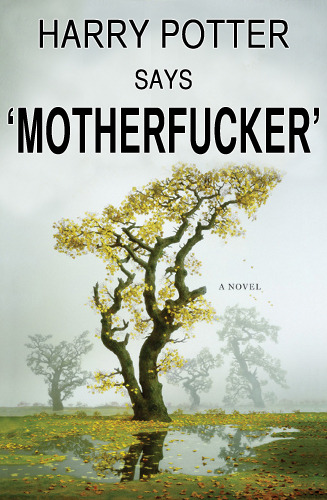
Courtesy of Better Book Titles
I like to think I was never that petulant, but I came close enough to recognize the same root problem: we were waiting for the world to make us happy instead of doing something about ourselves. Sounds simple, but it took me years to figure that out and I'm still trying to do the work. I guess that's why I was more willing to be patient with him. I get why he's an asshole. His acerbic voice and aimless but incredibly fervent ambitions struck a chord.
Despite being a cautionary tale, The Magicians outclasses standard "be careful what you wish for" stuff because it never loses sight of why the wishes were worth pursuing in the first place. It's not about scoring points, or putting line items on your CV, but about figuring out how your dreams can make you better, and getting it wrong--a lot.
The first book just hints at that broader message. If you have to read just one, the is the one to read, but I think stopping there takes a hard heart, or at least, less patience for very believably flawed people. He is not as sensationally fucked up as Joe Abercrombie or GRRM's characters, who I think hold broader appeal because they are more distant from reality. You don't have to deal with masochistic boy-kings and schizophrenic berserkers on the daily. Quentin is just kind of a prick and everybody has to put up with pricks.
The Magicians closes with him going back to Fillory, the magical land from the books of his boyhood, even though it ended up being horrifying, and later empty, because it cost him his lover. I read that as hopeful; maybe I can still find something to love about magic. Maybe I was wrong about myself. But "hopeful" isn't closure, and recognizing so many of Quentin's flaws in myself, I wanted to see how this played out.
The Magician King I think, is the weakest link of the trilogy. This one is really Julia's story, told in the middle of Quentin's, and while it's deeply compelling, it fits oddly into the arc of the other two. I think it taxed the trilogy in ways Lev could not anticipate when he started out with just one novel.
We come back to old Q at the end, and it's an important turning point: for the first time, he is subjected to true unfairness. He is viciously punished for doing the right thing. What happened to Alice hit him harder, but it was also his fault. Here, he saves magic. All the magic, in every world, and in response he is stripped of his crown and exiled from Fillory. Why? Because fuck Quentin Coldwater. That's why.
How a person reacts to punishment for doing the right thing is the truest test of their character. In Magician's Land, we finally get to see if Quentin passed. Given the veins of despondence shot throughout the series, I was afraid. I expected something brutal. Which is why the last book is truly magical. Quentin becomes a good person. Not all at once, but rapidly.
Even though his friends have seemingly abandoned him, he keeps fighting. He begins by swallowing his pride and seeking a job at Brakebills, a college he initially loved but came to resent. When he is fired for doing something risky, he acknowledges it and takes it in stride. When he hypothesizes a fantastic cause for his estranged father's death, and turns out to be wrong, he carries on instead of moping. And when he is presented with a terrifying opportunity to correct his gravest mistake, he seizes upon it.
It works, but doesn't go as planned. He rescues Alice and she hates him for it. She was utterly consumed by magic and disconnected from the world, in a blissful state of power. When he brings her back, gives her emotions, and taste buds and a body again, a life with meaning, she is livid. The first Quentin would go "this is bullshit," and give up. This Quentin keeps trying and manages to remind her that being a human beats being a selfish monster; I mean, talk about epic role reversals. At the end, things aren't perfect between them, she flat out tells him "we're not dating." Given her actions at the end, I think that they might pick things up again, but even if they don't, Quentin is just happy to have rescued her from madness.
He also becomes a dragon and then, briefly, a god, which is, you know, freaking awesome.
I love the way Lev does magic. Sure, the study and theory might be a little mathematical; not sufficiently subjective, (which was Robert's gripe), but when it actually goes off, wow is it cool. I can't decide whether the fox transformation or Quentin's first spell cast is my favorite scene of magic, and the probability-shifting card game that starts the third book is great as well. The first appearance of the beast, and Reynard's rape of Julia are both as terrifying as they need to be, which is no mean feat.
One of my favorite scenes in the whole trilogy is in book one, where Fogg speculates as to why certain people can use magic. His hypothesis is that magicians are inherently unhappy. Which made a lot of sense to me. Maybe I just liked it because I can be a broody sumbitch, but there is logic there. You won't try to change the world in earnest unless you feel like there is something wrong with it. I was bothered by the implied corollary, however. Once you find happiness, or worse, in order to find happiness, you have to break your staff, bury it fathoms, and drown your book. Prospero could have done better.
Quentin's story is a journey to another conclusion: you can keep your magic, and have happiness too, as long as you work on yourself in tandem with the world. Find your magic, find a goal, and use them to figure yourself out. That's what it means to be a magician.
One of my favorite scenes in the whole trilogy is in book one, where Fogg speculates as to why certain people can use magic. His hypothesis is that magicians are inherently unhappy. Which made a lot of sense to me. Maybe I just liked it because I can be a broody sumbitch, but there is logic there. You won't try to change the world in earnest unless you feel like there is something wrong with it. I was bothered by the implied corollary, however. Once you find happiness, or worse, in order to find happiness, you have to break your staff, bury it fathoms, and drown your book. Prospero could have done better.
Quentin's story is a journey to another conclusion: you can keep your magic, and have happiness too, as long as you work on yourself in tandem with the world. Find your magic, find a goal, and use them to figure yourself out. That's what it means to be a magician.
Subscribe to:
Posts (Atom)