Tuesday, March 4, 2014

AWP 2014: A Guy's Take on Sex in YA Fiction

Last weekend I attended AWP for the first time. For those who don't know, AWP is short for Association of Writers and Writing Programs. It is North America's largest literary conference, boasts a big book fair (primarily focused on lit mags, small presses, and MFA programs) and tons of panels (mostly) hosted by people who would sooner be tortured to death than admit they write anything that could be construed as speculative fiction.

As a self-professed genre writer, I felt like people were going to make me wear an armband and put me on a train, but I had a great time, learned a lot and came away with a ton of awesome stories. I attended the explosive and very weird Magic & Intellect Panel. My wife and I watched a dude perfect his slow-motion pelvic thrust on the dance floor each night over the course of the convention. I will share some of these stories in detail over the coming days, but I want to begin by talking about one of the final panels of the convention: How Far to Go: Sex in YA Fiction.

The panel was hosted by Adele Griffin, Emily Lockhart, Robin Wasserman, and Sara Mlynowski, all well-established YA novelists. The reason I feel like I have something worth saying is twofold. Firstly, I was one of five men in an audience of about fifty people, which struck me as unusual. Secondly, I also attended a similar panel earlier in the program: Warning Extreme Content: Sex, Drugs, and Abuse in Young Adult Literature and thought I could compare the two.

I have not read any of these ladies' books, but based on their readings, I feel the four of them nailed teenage girl sexuality. Or at least, four very varied approaches toward it. I say this based on my youth spent in a ballet studio, where I was surrounded by scores of young women who occupied roles in my life ranging from surrogate sisters, idealized crushes, awkward girlfriends, close friends, lust idols, patient mentors, artistic rivals, caustic hell-bitches, and the woman who would become my wife and soul mate. The insight they have given me is invaluable.

The panel offered some priceless advice as well. It observed that good writing about sex in YA can not only steer kids away from bad sexual experiences, but prepare them for positive ones down the road (and what parent doesn't want their kids to eventually have positive sexual experiences)? There was the observation that going into great detail during the act of sex typically does not move the plot forward, and that in YA, where the sex is under a particularly exacting microscope, it’s important for every detail to serve the story. Throughout, all the panelists also had a healthy sense of humor, and they were welcome exceptions to the general rule of being anti-speculative lit.

The panel's biggest blind spot though, as observed by an audience member, was teenage guy sexuality, which is what I thought I would talk about for the majority of this post.

I think the sharpest distinction between girl and guy sexuality, is that while women are simultaneously warned against being sluts and depicted as perfected sexual objects in the media, guys are given one message from the time that they are nine: bed hot women. Not people you connect with, or even people you find physically pleasing. You are to seek out hot women and screw as many of them as possible, as soon as possible. On the one hand, there is no frustrating doublespeak, no ambiguity in that message. But on the flipside, it leaves much less room for self-discovery and personal growth, both sexually, and in general. The disparity in messages also carries over to the way men and women bully each other.

Teenage girls are the cruelest people on the planet. Teenage boys are the most brutal. Girls hatch elaborate campaigns to destroy each other, using both blade of the double-standard. You’re a pathetic prude one minute, and an irredeemable whore the next.  For guys there is only constant blunt-force verbal and (often) physical trauma. You’re a fag. You will die a virgin. How are you gonna get laid looking like that? There is no cunning. There is no deception. The only respite is how casual and flippant the barrage becomes. And the only gold-standard of respect is who you’ve stuck your dick in—nevermind if it meant ruining her reputation or self-esteem in the process.

As adults we know this is bullshit.  Hell, most guys realize it is an appalling falsehood by freshman year. But that doesn’t stop the story. The pervasive, ceaseless social narrative reminding you that who you’ve fucked is what really matters. God help you if you are gay, bi, trans, or simply figuring your shit out. They say that women tend to have more body issues than men thanks to the enduring prevalence of the male gaze in media, but men are also trained to view themselves with the same superficial eye, and if you are chubby, or skinny, or have acne, you are going to be wracked by insecurities. Ditto if you engage in any activity that is considered feminine, like, say, ballet.

As far as physiology goes, I would say that sex is more of a constant distraction and annoyance for guys. Not because our urges are necessarily stronger, or because guys think about sex more than girls, but because we can always get an erection, and the physical element makes our arousal harder for everybody to ignore. Most of the time it’s not a big deal, but at some point in four years, it will be as bad as it possibly can be. Given our more ostentatious anatomy, I think guys tend to think about sex in more superficial terms than most girls. Boners may also partially explain our fixation with boobs—which are the most ostentatious part of a girl’s anatomy. Pro Tip: I know it sounds stupid, but you really cannot overestimate the average teenage guy’s fixation on breasts (in their defense, I am 26 and boobs are still awesome).

What does she look like when she’s naked? How does my penis compare to other guys'? Where can I touch her? These are the questions boys tend to ask when they get stuck in their own heads. Everything else is an afterthought, including: What will feel best? How can I make it memorable? Are we going to have fun? Though, I think that last one eludes almost everybody starting out. Sex is serious fucking business for teens. Which brings me to how to write the deed itself.

In this scenario, I think both genders are on an equal playing field. If the sex act (even something as harmless as kissing) is premeditated, it is inevitably over-thought and horrendously awkward. If equally inexperienced, both parties will do everything cautiously and by stumbling half-measure. Conversely, unplanned make-out sessions (and accompanying sex acts) tend to be unbridled animalistic hedonism. They are incandescent bright spots amidst one of the shittier periods of your life, and it is difficult to overstate the passion or accompanying elation. I think girls tend to keep a clearer head in the heat of the moment, as they tend to be more wary of the threat of gestation, but it really depends on the personalities involved.

So how did How Far to Go compare to the other panel on taboo subjects in YA fiction? I think I have to give the nod to Warning Extreme Content but it scratched a very personal itch. The panel was hosted by Ann Angel ("Not the pornstar!"), Kekla Magoon, and Carrie Jones. It was one of my favorite panels in the entire convention, because the panelists focused less on their own material in favor of crafting broader arguments against pro-censorship organizations. They backed up their arguments with excellent quotes from Chuck Wendig (Blackbirds), Sherman Alexie of (The Absolutely True Diary of a Part Time Indian) and Carrie Mesrobian (Sex and Violence). And while they still had an excellent sense of humor about their subject matter (especially Ms. Angel), the main reason I think I preferred this panel is because it speaks to a fight I feel very passionately about: the idea that YA fiction should be neutered and bloodless.

To my eye, YA's biggest handicap is that it has to aggressively justify "extreme" content to society. Kids cannot merely grow up. They have to grow up in ways we can all sign-off on. There are already so many damn people lecturing kids—parents, teachers, preachers, people who do not have kids of their own but nonetheless believe that they know how kids ought to be raised—that having another voice shouting at them is a sure way for them to give up reading in favor of games, movies, television, or anything less likely to preach at them. I think that one of the most crucial cultural services that fiction provides is a means to escape those pressures. And those are the kind of books I want to write for young adults.

To put all my cards on the table, I will admit that my own first YA effort, The Harrowing, has a lot of violence with no obvious moral through-line to excuse it. My closest literary approximations are Ender's Game, or to a lesser extent, Hunger Games, right down to the troubling "survival necessitates murder" politics, but my tone is decidedly more manic and quipy than either of those books. There isn't a lot of sex in it; certainly nothing explicit, but it is something I want to explore in future books in the series. I'm working on a much sexier, totally unrelated novel right now, but all the characters are twenty-somethings so it probably won't piss off any parents (and where is the fun in that?).

Enough self-promotion. Did anybody else attend these panels? What did you think? My comment section is sorry and desolate. Light it up.

Wednesday, December 11, 2013

Ainur and Barrel-Riders

I got to watch The Hobbit: Desolation of Smaug on Monday night, and your enjoyment of the film can be probably boiled down to a single, extremely nerdy question: do you identify more closely with "Barrel-riders" or "Ainur"?

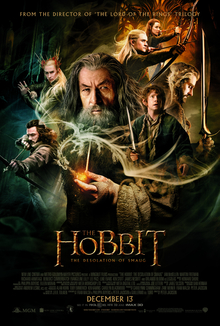
The poster doesn't break any new ground, but it lets you know it is a Lord of The Rings movie in the barrel-riding tradition of Peter Jackson's films.

The former is a title that Bilbo grants himself when addressing the dragon Smaug, and refers to an earlier segment of the book (and the movie) where the party manages to escape wood-elf custody by riding downstream in a bunch of emptied wine barrels. In the film's take on this sequence, Legolas and  the new character Tauriel leap from dwarf head to dwarf head, committing stylish orc genocide via bow and elven dagger, with with excessively graceful flourishes and occasional assistance from the bobbing dwarves. The whole scene, and the whole movie, are filled with flagrant convenience.

There are two ways to look at this scene.

The first way is to happily tag along for the ride, as the sequence is like a more violent  take on a Disneyland roller coaster. If you enjoy the pairing of fantasy trappings with preposterous, contrived logical leaps and elven acrobatics, you are a "Barrel-rider."  A reader who appreciates rollicking adventure regardless of plausibility or depth of world building. You stand with Bilbo Baggins.

The second way is to be disgusted at the childish treatment of the most sacred work in the history of western fantasy literature. If you throw your hands up at absurdly cinematic happenstance and stylized combat, and a presentation that utterly ignores Tolkien's legacy as a folklorist, historian, and linguist, you are one of the Ainur (the predecessors to the Valar, or Middle Earth-bound angels who shepherded the races of Elves, Dwarves and Men) described in tremendous detail by Tolkien in the Simarillion (the ponderous cosmology and early history of Middle Earth).

Between these poles, you have the full experience of Tolkien's offerings. Most children will fall in the barrel-rider camp, while most Tolkien devotees can be described as Ainur. I would argue that both of these views are both flawed and virtuous for their own reasons. Barrel-riders are fundamentally childish and frustratingly prone to accept sillines, but they are also naturally predisposed to enjoy adventure in all its forms. They have the most fun. Ainur are pretentious and dry, but they will appreciate Tolkien on a much deeper intellectual level than anybody who experiences Middle Earth exclusively through the movies (or even exclusively through The Hobbit and Lord of the Rings novels). They truly understand Middle Earth.

Both Hobbit films to date, An Unexpected Journey and Desolation of Smaug, err on the side of barrel-riders, and by the numbers, it is the right call. Tolkien wrote The Hobbit for younger audiences, who are more taken with wacky hijinks like hiding in barrels, and having surprisingly detailed conversations with dragons and trolls that ought to be devouring our heroes instead of chatting them up. The problem, is that the Hobbit films must also be built and marketed as PG-13 action movies pitched towards fans of the original trilogy of Lord of the Rings movies.

The Lord of The Rings trilogy remains Tolkien's most popular work because it strikes the perfect balance between his Ainur fans and his barrel-rider fans--on paper at least. But it is undeniable that Peter Jackson's direction, in both The Hobbit films and Lord of The Rings very heavily favors fans of action. It is really hard to fault him for it though, because truth be told, most people are bored to tears by cosmologies and familial lineages. And most Ainur fans will argue that that is how it ought to be. If you cannot endure the songs, and the genealogies, and the almost biblical takes on creation mythology, then you are not worthy of  the total joys of Tolkien's work--never mind the fact that The Hobbit was plotted and paced for younger readers.

The problem with The Hobbit films, is that they try to be too many things to too many people. They struggle to remain faithful to the child's story source material, while integrating the far darker-themed appendices of the Lord of the Rings (which are closer in tone to the Simarillion) and the bloody, violent, PG-13 style of that original trilogy. Perhaps the gravest flaws of Desolation, are its concessions to Hollywood focus testing. "Let's make Legolas a major character because he was so popular in The LOTR Trilogy!" and  "Let's invent a love interest (Tauriel) from whole cloth because we need more female characters and people won't watch movies if there isn't romance in it." (That said, as shoe-horned romances go, it was written well, if predictably).

If I were in Peter Jackson's position, and had the benefit of hindsight, I would have made three groups of films. The first would greatly resemble the original Lord of the Rings trilogy that we already have. The second would be a much more kid-friendly, almost story-book (and possibly animated) approach to The Hobbit, and the third would be the Ainur-devoted adaptation of both The Lord of the Rings' appendices and the Simarillion, maybe with a few scraps of Unfinished Tails thrown in (maybe as DVD extra content).

I'm getting off-topic though. The question remains: is Desolation worth your holiday movie-going dollars?

If you are a barrel-rider, the answer is an unqualified "Yes!" Let it be known that Bilbo, THE barrel-rider, is the best part of The Hobbit, both in book and movie form. In fact, the preservation of his inescapable heroism may be the greatest triumph of the movie adaptations.He is a reluctant hero who quickly comes into his own as a charming trickster rogue, relying on quick wit, moments of astounding courage, and a reckless willingness to exploit the dubious powers of The One Ring. Even in the source text, he blows Frodo out of the water by actually taking initiative and using The Ring to achieve unqualified good (albeit at the expense of his own sanity in the long game), rather than moping around, relying on Gandalf and his far stronger-willed gardener to bail his ass out of every hardship. It doesn't hurt that Martin Freeman is much stronger actor than Elijah Wood.

If you are an Ainur however, chances are you already feel the series went astray as soon as it hit the silver screen, or at the very least, as soon as they started adapting The Hobbit.

Ultimately, I have to give the nod to the Barrel-riders though. The set-design, CGI, and production values are all top notch. Even without the surreal benefits of 48 frame 3D, the film is visually breathtaking, with a parade of gorgeous sets that set the imagination alight. The musical score is equal parts haunting and inspiring. And while the romantic subplot is forced and contrived, it is about as good as you could hope it would be. Even if you do not appreciate Jackson's tone and direction, the sheer amount of art present in the movie demands a viewing.

I suspect that There and Back Again will follow a similar pattern to this film... but who knows? If this trilogy does well enough, Ainur fans may finally be treated to a faithful adaptation of the Simarillion.

NOTE: My close friend and chief Ainur fan Andrew Nay asserts that any Simarillion movies will not actually be faithful. And given Jackson's barrel-rider sensibilities, that is a fair point.

Monday, December 2, 2013

Gunn & Bohemia

An embarrassing number of weeks ago, a friend of mine at Xchyler publishing gave me access to a copy of Pete Ford’s debut novel, Mr. Gunn & Dr. Bohemia. It is a good-natured steampunk adventure about Cornelius and Sophie Gunn, a British journalist and his wife who uncover a conspiracy that threatens all of Europe. In order to thwart the plot, they must team up with Dr. Bohemia, a reclusive inventor and scientist.

Despite my belated review, the book is a very quick read boasting easy prose and brisk pacing. Those finding themselves fatigued by the unrelenting grimness of most modern fantasy novels will find relief in Gunn & Bohemia, which is chipper throughout. Even in the wake of grave firefights, or on the lam from the law, our heroes are always in high spirits and rarely succumb to the take-no-prisoners tactics that have become so prevalent in modern fiction.

Unfortunately, this intrepidness and unambiguous morality comes at the expense of distinctive characterization. Most characters suffer from very scant personal histories, posses few personal ties, and the heroes all have very vague aspirations for the future, beyond halting he evil conspiracy they have discovered. They are also short on personal identifiers, and baring a few situations requiring Bohemia's scientific skills, one gets the sense that you could shuffle the characters like a deck of cards in a given situation and end up with a similar outcome. The villains fair no better. The final confrontation is straight out of a Disney flick, right down to peels of evil laughter and a conspicuously convenient refusal to kill the defenseless heroes. The plot has a couple crafty turns to keep you guessing throughout, but it too can feel a bit simple, and Ford’s language also occasionally falls prey to over-familiar metaphors, like ‘lighting bolts of pain.’

The book makes good use of steampunk staples ranging from massive airships and metal prosthetics that put our existing technology to shame, to night-vision goggles, lightning shooting rods, and primitive computers linked to telegraph wires. Even though they have the least impact on the plot, my favorite pieces of fanciful tech in the novel were the Dynamics: a series of moving sculptures wrought from clockwork. Even though the Europe is imperiled by a bunch of hyper-nationalistic bell-ends with napoleon complexes, Ford presents a vision of Europe that is ultimately optimistic, and almost Utopian in tone.

I would not recommend Gunn & Bohemia to everybody, but the mix of rollicking adventure and good humor delivered by distinctly British voice will likely endear itself to fans of Dr. Who. The book also serves as a conceptually pure introduction to the steampunk genre uncomplicated by supernatural or Lovecraftian elements. Even though it is not written as a young adult novel, there is no content more objectionable than what you would expect to find in a Harry Potter novel, lending itself to younger readers as well.

Monday, November 11, 2013

Attack on Shonen

Hard to believe I've only done a hundred of these, but then again, it has been a very busy half-decade. Lately, I have been up to my neck in queries, weddings, and dealing with a new bizarre foot ailment. Oh, and binging on Attack on Titan. I am now completely caught up on the manga, including the new side series that just started, but I promise to flag spoilers and keep even those to a bare minimum. This post is mostly about what Titan represents in terms of contemporary narratives, specifically conformity, imperialism, individuality and generational warfare.
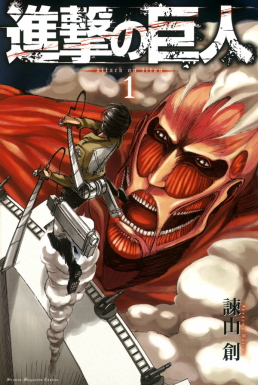
People have accused Isayama's art of being rough and sloppy, but I think it pairs well
with the aesthetics of the world, which alternate between smart, eerie, and bloody.

In short, Titan is easily the best thing from Japan since Brotherhood ended, which is a hell of a tough act to follow. It has already reached cultural phenomenon status in the land of the rising sun and gained a respectable level of viral notoriety here in the US.

The show chronicles a steampunk dystopian future where the whole of human civilization exists behind three colossal walls. The walls are the only barriers between us and an endless horde of enormous, oddly-proportioned, and thoroughly androgynous giants that compulsively devour people. Instead of inventing battle mechs as-per-usual, humans fight these colossal menaces by using twin, hip-mounted grappling hooks and gas-propulsion canisters, paired with swords resembling giant exacto-knives. For reasons unknown, the only way to kill a titan is to completely cut through the nape of its neck. It near-instantaneously recovers from everything else, rendering conventional artillery fire useless, and we either lost all of our more advanced technology, or never invented it in the first place. At first blush, it greatly resembles medieval Evangelion, but with a ridiculous body count and considerably less existential whining.

But none of that is what makes Titan awesome. I have long imagined a manga that would take the whole shonen genre to task for its hackneyed tropes. In Titan, willpower and diligence are not enough to overcome the enemy in battle. In Titan, "believing in your comrades" is not only a fallible battle strategy, but a decision that can yield truly tragic results. In Titan, you can even see the beginning of anti-conformist narratives in shonen comics. This is a refreshing change of pace to be sure, but it also has huge cultural implications.

I realize this sounds highly suspect coming from a hyper-normative American. The only compelling cultural heritage I could lay claim to in my adolescence were narratives of anti-conformity and rebellion, and when you hold a hammer, the whole world looks like a box of self-same nails. But I am not arguing here, that Japan has never had anti-conformity stories before (Battle Royale says "Hi" for one). Rather, it is a country with a great deal more to say on the subject--and it has insights that will benefit the entire rest of the world. The job market may be rough here in the US, but the future facing Japanese millenials is positively despondent. Anything less than unflinching academic excellence yields a very bleak future, and this explains why so many comics and shows have deified diligence, and promise readers that working hard and finding friends is a sure pathway to success. In these stories, the hero's awesome power must always be reserved to protect beloved friends from evil, and never to create a legacy for oneself, lest he become taken by the vile current of imperialism.

In Titan it readily becomes apparent that merely defending your borders and toeing the line in society is a recipe for disaster. Humanity has become rotted by corruption behind its walls, where the best and brightest soldiers are recruited to languish in the most corrupt branch of service, and the masses are manipulated by a deceitful religion that worships the walls while selfishly concealing truly damning secrets about the titan threat. The heroes of the story are the survey corps. who strive to reclaim the world that has been taken by the titans. Unsurprisingly, the series creator, Hajime Isayama, has been accused of attempting to rekindle the militant spirit of imperial Japan.

I have a different theory. The Titans do not represent foreigners, but the goliaths in our midst. The corporations and institutions that have proven too big to fail. The survey corps. is not looking to take land away from other humans, but rather, the land that is rightfully human, which has been claimed as grazing grounds for irrational, mindless monsters. As haughty as it sounds to suggest it, Attack on Titan is not about the imperial versus the foreign, but a younger generation overcoming an older one.

Minor anime spoilers are present in this paragraph. Early on in the series, it is revealed that Eren Jaeger, our fated hero, has the power to turn into a titan himself, and as the series continues, we discover that he is not unique. While most titans are mindless, humans with the ability to become titans are shrewd, and rational, with all the power that comes with fifteen meters of height and muscle. These "titan-shifters" represent people who can affect the status quo and this metaphor only gets more explicit as the manga progresses. Even mankind's most capable warriors, such as Eren's superior officer, Levi, and his adopted-sister, Mikasa, can only take down weaker titans, so it is up to people with Titan Powers, to reclaim the world for humans. And if the conspiratorial self-serving status quo remains in power, society, robbed of its ability to grow, will continue to rot until it collapses. End spoilers.

As I watch, I am  continually reminded not of other anime, but of George RR Martin's Game of Thrones. A large part of this correlation undoubtedly stems from both creators' willingness, or rather, their apparent gleeful eagerness, to savagely kill off likable characters. But another reason the two shows are so compelling is that they casually break the longstanding rules associated with their genre. Even if you don't give a damn about Isayama's theoretical politics, the show is a delight to watch because you never know for sure what will happen next. Consequently, I cannot recommend Titan highly enough.

Tuesday, October 8, 2013

The Need to Teach Fun Books

As much as this news hurts and frightens me, I think the most productive response as a writer and literature enthusiast is to write books that show people—young people in particular—that reading can be fun. If that sounds trite, you are grossly underestimating the appeal of video games, film, television and the entire goddamn internet.

If you cannot first light a spark that suggests there is joy to be had in reading, why will your students bother? Please realize that why they should bother is irrelevant from their perspective. In fact, whenever you start in on why another person should do something for themselves, you are almost always going to come across as an asshole. I’m not saying that all literature must lend itself to easy readings, nor should every book strive to be fun. But in a society that celebrates and aggressively peddles entertainment that is literally engineered according to endorphin-to-effort ratios, forcing people to slog through something that is both hard to understand and difficult to relate to does not seem like the smartest play. If The Grapes of Wrath is the best you can muster in high school, you will have lost them to Call of Duty by college.

Some educators and bibliophiles seem to think Stockholm Syndrome is the solution. They would have you believe the joys of close-reading and high-minded prose will eventually blossom in students if you simply assign the texts hard enough. The most poisonous of their breed extols the lofty virtues of the written word and disparages the entirety of popular fiction in the same breath. These are not educators, but jailers. Temple guards rather than evangelists. The last thing these people want is broader readership. They want to feel superior to "non-literary" readers. They take refuge in the arcane recesses of language and smite anything that challenges their concept of what books and writing ought to be.

If you as an educator are so desperate to play the iconoclast to today's idols, find out what books your students are freely reading and expose the shortcomings of those texts to the harsh dawn of truth. But be damn sure you have an adequate grasp of their appeal first, because that is probably where your classics are falling short. At the very least, such an exercise may help you present those ivory tower tomes in a way that is relevant to modern readers.

Better yet, seek to teach books that are fun, relevant, and meaningful. They are out there. More are being written every day. When your students encounter those books, they will be more willing to take on the hard stuff of their own volition. And when a student does something they ought to without first being assigned to do it, you have succeeded as a teacher.

Wednesday, September 25, 2013

The Promise of S.H.I.E.L.D.

Saw Agents of S.H.I.E.L.D. last night and I came away with feelings so mixed I had to write about them. Spoilers for the pilot follow.


The dialog had a few fun moments with characteristic Whedon-wit ("I'm sorry, that corner was really dark and I couldn't help myself." "Somebody really wanted our initials to spell out 'shield.'") but we are still leagues away from the empyrean heights of Firefly. The resolution was a literal Chekov's Stun Gun and it was telegraphed so blatantly that I thought it up and discounted it because it seemed too pat and obvious.

Another thing that bugs me is that I can feel the influence of Disney's general ethos. This is a lighter show than anything team Joss has done for TV before. The characters are less volatile than Firefly. We have none of the macabre satirical humor that defined Buffy and Angel. The sci-fi is much lower concept than Dollhouse.

Then again, Whedon pilots are usually pretty bad. Remember Angel's pilot? Hell, remember most of Buffy season 1? Neither do most people. Dollhouse is perhaps the worst offender. It had the best sci-fi premise on network in ages, but they spent the first six episodes unsuccessfully attempting to dumb things down to second grade level, offending Whedon fans and average audiences alike.

It would be disingenuous for me to suggest that I would stop watching this show for any reason.  It is penned by a group of writers I greatly admire and aspire to learn from, to a point that probably flirts with sycophancy. But I can still give you two fairly good reasons to stick it out through the first couple episodes.

Save for a few isolated characters Whedon has always portrayed the government (and authority writ large) as the ultimate bad guy. Behavioral modification programs. Bureaucratic nightmares. Extra-judicial detainment and unregulated experimentation. He and his team have given us some of the most terrifying law bodies this side of Orwell.

But this time Joss, Jed, and Maurissa are couching a government team as the good guys and they seem to be doing it earnestly. I'm not a half-wit. I know that there will be twists and betrayals within the organization (they are already foreshadowing falsehood about Coulsin's resurrection story). But most of the people working for the status quo are actually trying to be honest, old-fashioned good guys. Sky's little journey from Anonymous-esque Counter Culture Hacker girl to S.H.I.E.L.D. collaborator perfectly symbolizes this transition. It's a huge tonal shift, and it is going to take a couple episodes to nail down.

My second defense is that this show is set in the Marvel cinematic universe. By themselves, the Marvel superhero films are fairly mediocre. Together though, they represent a trans-media vision of unprecedented scope. Seeing all the little ligatures and references is nerd cocaine. Inside jokery is part of it, but it's more than that. Being familiar with everything creates a semi-exclusive layer of knowledge that extends a sense of community to all who consume it. That is the very core of fandom. And the show isn't dragging its heels capitalizing on that promise. It is already calling back stuff from Captain America, Iron Man 2 and Iron Man 3.

There are less intellectually compelling reasons to keep watching too. Stuff seems to blow up on a regular basis. Kung-fu fights abound. Also most of the cast is stupidly, ludicrously attractive. Whedon favorites Ron Glass and J August Richards return to TV. And Coulson, who is a refreshingly average middle-aged dude with a penchant for nerdy collectibles, has proven himself to be extremely endearing. I suspect that he is actually a LMD, or a bio-augmented clone, or some ish, but taken at face value, he is the closest most of us will become to being a hero.

I will probably talk about this show again in the future, especially if it is a spectacular failure or if it blossoms into something rich and compelling.

Wednesday, September 18, 2013

Vacation Reading

Hello friends. Haven't posted anything on here since I've finished writing The Harrowing. Part of the reason is I have been on my honeymoon, which was amazing but probably not something you want to hear me go on about. The bigger picture is that I am shifting my focus away from critiquing entertainment to actually producing it. I am sacrificing all of my freetime on the altar of fiction writing. I will still periodically write about stuff that has moved me, but my posts will be in this scatter-gun style and they will likely grow more and more irregular. In the interim between book and honeymoon, I wrote a couple short stories, but now I am starting on my next long-term project (and working to get The Harrowing in front of an agent who knows what's what).


The Cuckoo's Calling


I actually like this better than the British cover, 
which has the bog-standard dude in a longcoat.

I am a huge devotee of Rowling, but I gave The Casual Vacancy a pass after I heard from multiple people that it was mostly bleak and filled with all sorts of unpleasantness. So I was extremely relieved when I had a great time with "Robert Galbraith's" "debut" (this is the detective novel Rowling mentioned in passing ages ago, but recently published under a pseudonym). The book really doesn't reinvent the detective novel; the protagonist is world-weary and lovably gruff, the mystery is an apparent suicide conundrum; a lot of it feels terribly familiar. But I can't help but care about her characters. In the space of a conversation, she can create a portrait of a personality that is either deliciously contemptible, genuinely endearing, sharp and sassy. The main characters have real problems presented with excellent pacing. I am looking forward to more of these.


The Last of Us


Fascinating how much the font says in this cover. Screams:
"Take me seriously, also think of The Road by McCarthy."

Naughty Dog is one of very few game companies whose titles go on my must-buy list. Uncharted 2 put them there, but with Last of Us, they've proven they can tame a far more serious breed of story and make you cry when they want to. The solemn tone hits you from the cover, and it's almost overbearing. I played the single-player game in small doses, in the company of friends over the course of several weeks, and I think I experienced in the optimal fashion. Any more than that, and I think the bleakness would be overbearing, or the game's own gravitas would come across as pretentious. But that's a very rare problem in triple A titles, and frankly, it's a refreshing one to encounter when paired with Naughty Dog's game design craftsmanship. It's a complex title, but there are no under-utilized systems. Everything from crafting to stealth to gunplay to upgrading skills and weapons feels tight and still very organic. It is lean. The story is engaging and brutal from beginning to end and while I am open to DLC, I honestly hope this doesn't become a franchise.


The Ocean at the End of the Lane

File:Ocean at the End of the Lane US Cover.jpg

Short of Joss Whedon, Neil Gaiman is probably my strongest literary influence, and The Ocean at the End of the Lane is very much a Neil Gaiman novel. There are some touching moments, a handful of awful ones, and a fantasy wrapper to capture it all, but I was ultimately kind of underwhelmed by the brief little book, which felt similar to other stuff Gaiman has written before. When weighed against The Graveyard Book, or even Coraline, the Hempstock women didn't do much for me. He's drawing on the familiar Mother, Maid and Crone trinity of magic women, but the story also doesn't really contribute anything new to their lore. The villainess was fascinating, but she is ultimately undercut by an abrupt switch to another more amorphous threat at the end. And ultimately, each character felt like abstracted versions of real people, especially when immediately contrasted against Rowling's characters.


Dredd


File:Dredd2012Poster.jpg


I've never touched a Judge Dredd book, and I probably wouldn't even know the character existed if it were not for that awful Stallone-vehicle from the 90s. That said, I heard positive things about this little film. It's acted extremely well, with an inspired bit of casting placing Karl Urban in the titular role, and the sparing use of visual effects in the crime-ridden dystopia of Megacity 1 works very well. If you are looking for high concept sci-fi, you will walk away disappointed; this is essentially RoboCop minus the sense of humor and social commentary; lots of brutal violence and explosive gun fights. That said, the dialog is reasonably sharp and the film captures the core of a lesser known comic hero. I'm not sure it will find the sequel that the internet is pulling for but it's on Netflix and worth a lazy Sunday afternoon.

Saga


I blew through both the available trades in the space of an afternoon and now I want more. There is so much imagination at work in Brian Vaughn's writing, and Fiona Staple's art brings it to life in a vivid, gorgeous way. If the devil offered me the opportunity to have her illustrate my work, he'd be a soul richer and I one poorer. This is the "next big thing" I didn't know I was waiting for. To my fellow comic nerds, the hype you've heard is well-earned. To use the laziest form of explanation in the critic's arsenal, Saga feels like the middle ground between Star Wars and Firefly but with more inventive magic and a lot more sex thrown in. Vaughn and Staple have said they are not interested in adapting the franchise to TV or film because they want to use it as a vehicle to explore what they can do in comics. Part of me wishes they would consider adapting, just so I can have more Saga to love, but I also tremendously respect their decision to keep the creative ball firmly in their own courts. People love to cite Game of Thrones and Breaking Bad as the heralds of this golden age of television, but I don't know man...From my perspective comics are where it is happening hard right now.

As I descend back into novel writing mode, I'm not sure when I will do another one of these. I am starting on Breaking Bad finally, so you can expect to have my 2 cents on that at some point. I'll probably get around to GTAV too after the hype train has left the station and everybody is officially over it. Until then readers!