Monday, January 7, 2013

Bloodiest Fun in The South

I'm hard-pressed to think of a film that has been more poorly suited for a Christmas Day release than Django Unchained. It's a modern day exploitation film about one of the United States' most shameful periods of history with a central theme of vengeance, whose spree of gleeful violence is punctuated by scenes of truly sickening brutality. In other words, Quentin Tarantino is square in his comfort zone making damn sure you never find yours. But it's a hell of a lot of fun despite how hard it can be to watch.

One of the weaker posters for the movie. Sit tight and I'll find a cooler one...

Most of Tarantino's films are Westerns (you could even make the case that they all are), but Django wears the genre most ostentatiously. The titular character is a reference to a Franco Nero film that is famous for both its extreme violence, and the host of unofficial sequels it spawned. 

Just as Inglorious Basterds was a dark, fairy tale re-imagining of World War II, Django is a dark fairy tale about the pre-Civil War South. The eponymous hero (Jamie Foxx) is a slave liberated by Doctor Schultz (Christoph Waltz), a German dentist turned bounty-hunter. Django displays a prodigious talent for killing people and declares that his ultimate goal is to reunite with his wife Brunhilde. Schultz, touched by the parallels between Django and the German folk hero Seigfried (who also set out to rescue a Brunhilde), takes Django on as his partner. While Schultz has no problem killing people, even in front of their own children, he finds the institution of slavery appalling and morally reprehensible; the obvious implication being that the serial slaughter of "bad guys" is preferential to slavery.

This one is more abstract, but I really liked the look of it.

It's a position you can't help but sympathize with when you are introduced to plantation owner and mandigo fighting enthusiast, Calvin J. Candie (Leonardo DiCaprio). This is one of DiCaprio's finest performances, and far and away his most chilling. Candie's mix of abject cruelty, vapid dandyism and slimy smugness easily makes him the most loathsome villain of 2012. But what is mandigo fighting you ask? It is a (fictitious) practice where plantation owners pit their male slaves against each other in fights to the death. One would think that slavery held enough actual horrors to furnish an exploitation flick, even one as lengthy and exaggerated as Django. But, the exploitation film Mandingo happens to be one of Tarantino's favorites, and he's always been a sucker for self-indulgent cinematic references. And if you are going to this movie for historical accuracy, or an enlightened discourse on the evils of slavery, you are watching for the wrong fucking reasons.  

Although, like all of Taratino's stuff, there were moments where I wondered if there was a right reason to watch, and what my choice of movie said about me as a person. In a pivotal scene, DiCaprio actually slices his hand on a crushed cordial glass, but rather than cutting the scene to get a bandage, he continues on in-character and wipes his real bleeding palm on Kerry Washington's face without her prior knowledge or consent. It was the most disturbing thing I've seen at the movies in the past year, and it makes you wonder how much of this is actually making an artistic point versus trying to shock and alienate the audience.


I think this one is fan-made, but it is my favorite. 

This raw intensity is oddly juxtaposed against the film's gunfights, which come off as comical by comparison, with full-on Spaghetti Western blood geysers erupting from each felled foe. Despite that disparity, I had more fun with Django than I did with Basterds, because it felt like a much more focused experience. Ironically, my favorite Tarantino flick is still Pulp Fiction, which is far more surreal and discordant than either of these two historical exploitation fairy tales, though I'll admit my personal nostalgia for that film is a big, (and at this point, unassailable) factor.  The thing I like about all of Tarantino movies, aside from the dialog and corny-yet-undeniably-cool style, is that they are equally divorced from formulaic, impotent Hollywood blockbusters and overwrought, pompous Oscar-bait. If you ail from either, Django is an antidote to both. 

Friday, January 4, 2013

On Revenge and Fantasy Whales

I've yet to get my pistol belt in Assassin's Creed III but I have stopped playing it for the time being, partially because I realized how sad that was after writing about it, but mostly because another game has utterly outclassed it. If you've guessed I'm talking about Dishonored, give yourself a little pat on the back.

Corvo's creepy-ass mask gives you a good idea of the game's tone. 

Like that other title, the plot revolves around assassination. And once again, the primary personal motivator is revenge; I suspect because narratively-speaking, it's actually quite difficult to 'justify' serial assassination with anything else, even if the people you are killing are objectively 'bad.' You play as Corvo, the framed bodyguard of a murdered empress, and you join the ranks of a rag-tag alliance trying to rescue her kidnapped daughter.

That story had the potential to be pretty interesting, but it is hamstrung by the decision to have a mute protagonist. The game tries it's hardest to give other characters personalities, but since you can only kill them or complete quests for them, they come across as road-bumps for your man-shaped car. I hope that one day this trend will go the way of Classical Dramatic Unities as well-meaning but primitive conventions that hold media back.

The world though! The world of Dishonored oozes character. The decor echoes The Combine from Half-Life as well as Victorian England and World War I Germany. As that recipe may suggest, it's almost relentlessly grim, but also a little bit mad. So far, I haven't fought any monsters that could described as Lovecraftian; there are no tentacles or squamous blobs to speak of, but the atmosphere of madness is here in spades. It's a dark world whose secrets are pulling it apart by the seams. And there is the Outsider to consider.

He may remind you of a darker version of Gaiman's Morpheus, what with his abraxael temperament and his pitch black eyes. Shortly after you join up with the rebels, he gives you the power to teleport short distances and the opportunity for more fearsome magic like possessing rats and people, slowing down time, blasting people with wind and summoning rats to devour bodies--dead or alive. He also gives you one of the coolest videogame tools I've ever received. A beating heart stuffed with clockwork that helps you find upgrades, and when prompted, whispers disquieting secrets about the world and the people in it. If you are making a storytelling game, seriously consider putting neat optional narration tools like that into it. At the very least, I will love you for it.

One of the coolest things about Dishonored is it's treatment of whales. Conceptually speaking, anyway. The actual treatment of in-game whales is appalling to modern sensibilities. They are tirelessly hunted so people can harvest ambergris, which is a real thing. Except, instead of being used to make perfume, it acts as a revolutionary, universally applicable and highly volatile energy source.  It can power futuristic devices. It explodes if you shoot at it. The stuff is saturated with mystic power. And the same seems to be true of whales in general. You can collect charms and runes which are both carved from whale bones and used to purchase upgrades for your otherworldly powers. They are like currency for the Outsider.

It's one thing to invent a creature from whole cloth and say it's magical. Since you just made it up, how can it not be? It's another thing to take a known creature, especially one already fraught with significance and symbolism, exaggerating here and tweaking there to turn it into the driving force behind an entire world.

I think I've already sunk a good 15 hours into the game in my roundabout way, and so far I've only completed the first assassination mission. I'm not even attempting anything particularly fancy, like a no-kill or perfect stealth runthrough, though those options exist if you want to challenge yourself.

If you enjoyed Deus Ex: HR, Thief titles, or even BioShock, Dishonored is well-worth your ticks and cents.  

Tuesday, December 11, 2012

Assassin Screed

Lately I've been playing a lot of video games, (which, along with the wedding thing, accounts for the two month drought of blog posts), and today I'm going to rant about the Assassin's Creed series.

File:Assassin's Creed cover.png
A simpler time, when you had to cut off a finger to use a hidden blade,
and assassinating people was the object of the game.

At the risk of sounding like a hipster douche, I liked Assassin's Creed from the series' first installment, when the fashionable thing to do was generally hate on it and bemoan how repetitive it was. The combat was fairly simplistic. You did do variations on the same 5 or so mission types for the entire game. But the past-life conceit of the sci-fi narrative was engaging enough for me to keep playing. That and the movement.

The first game boasted absolutely intoxicating freedom of movement that fostered beautifully organic chases. And the game world was also liberally sprinkled with some truly vertical level design that required thoughtful climbing to scale the highest towers. I know that Mirror's Edge has become a cult favorite where free-running is concerned, but I absolutely despise that game. For all it's promises of freedom of movement, the levels were more or less linear, and they routinely required players to execute a specific parkour move (using needlessly finicky, fighting-game-like controls) to progress. Furthermore, when the game decided it was time for you to fight, it was time to pick up a gun, or suffer a thousand deaths resisting predetermined combat. And trying to fight when the game wanted you to run was usually out of the question entirely. Even though it wasn't as heinously scripted as Call of Duty, the game forced the player to play it on the designer's terms. By contrast, Assassin's Creed allowed players to tackle it's sandbox world any way they liked. After you pulled off a successful assassination, you could run for holy hell and hide until your wanted level dropped down, or slaughter every damn guard in the city. At least, that's what I got out of it when I played it. Freedom.

File:Assassins Creed 2 Box Art.JPG
The creative and mechanical high point of the series, in my opinion.

Most people agree that the AC series really hit it's stride with the second installment, where mission variety blossomed and it introduced the series' most charismatic leading man: Ezio Auditore. The story was more engaging, the Italian Renaissance was a bold new video game destination. I never got bored with the core campaign, which ranged between hang gliding on Leonardo's flying machine, to frantic chariot races in the foothills of Italia, to good old fashioned stabbing people to death.  The tricky assassin's crypt challenges puzzles, and the civic-management minigame that allowed you to spruce up your villa had just enough depth to be completely engrossing, without getting lost in minutae. I italicized that last bit because it will be important later.

Anyhow, Ubisoft struck gold and they knew it. Sarcastic, womanizing Ezio was so bad ass, that they decided to milk three games out of him: AC2, AC: Brotherhood and AC: Revelations. Fond as I was of assassinating people, and the fresh setting, I passed on the two unnumbered psuedo-sequels because:

A) I had only so much time to devote to video games
B) I had only so much money to devote to video games
C) I was already routinely ignoring caveats A and B

I vowed that I would pick up Assassin's Creed the next time a number rolled around. When they announced that the next installment of the series would be set in Revolutionary America, I squealed with glee. It was another criminally under-represented period in video gaming, what with fledgling firearms and the tantalizing mix of wilderness and budding colonial cities. And a mixed British and Native American protagonist sounded  like it had the potential to tell an intensely interesting story.

File:Assassin's Creed III Game Cover.jpg
A rare shot of the master assassin, Connor Kenway, actually killing
 somebody when he isn't busy micromanaging his lucrative trade routes.

Well, the game is out, expectation has met reality and disappointment has ensued. Before I continue, I will concede that I can't stop playing the damn thing every night. But it frustrates and disappoints as much as it delights and entertains.

For starters, the prologue, where you control the protagonist's father, is too long and the twist at the end comes at you a long way off. This would have been very forgivable if the entree, Ratonhnhaké:ton, also known as Connor Kenway, wasn't so bland. He broods and whines. He objects to obviously loathsome things like slavery, but conveniently cooperates with his revolutionary compatriots anyway. He's a fucking bore. Honestly, I would have found a satirical caricature of the stoic Native American chieftain preferable because a stereotype at least has a personality.

The beautiful climbing has been stultified by the inescapably bland architecture of the period. The organic mission design that encouraged you to solve problems however you saw fit has been crippled by a second-order achievement system that gives you extra points for meeting the game's meddling criteria. The intriguing tour of history, subtly adjusted to portray an invisible war between two warring secret societies, has been replaced by an idiotic parade of historical moments and under-characterized people of supposed interest. Worse yet, the game routinely half-asses it's own rich research. For example, the Boston Tea Party entries in the game's codex (there are inexplicably two of them), clearly states that the rioters dressed themselves to look like Native Americans. But during the actual damn mission, no one, including the game's Mohawk protagonist, is dressed in Native American Garb.

Finally, the core game has become so polluted with sprawling not-so-mini-games, like naval combat and the manufacture and shipment of trade goods, that it scarcely seems like an Assassin's Creed title anymore. Yes, it is impressive that you shoe-horned all these disparate style of gameplay into a single package, but it also betrays a lack of confidence in the core theme of murdering historical figures. That's compelling enough! I really don't need a furniture crafting simulator to go with it.

So what keeps me playing, this pompous, overblown game night after night, mission after mission?

I really want to get the belt that can hold two pistols at once.

I'm dead serious. The greater prevalence of firearms are one of the few changes to the game I like, and the idea of being able to crack off two shots, (or four if you're using double barreled pistols!) before reloading sounds incredibly appealing. Unlike most modern shooters, a single bullet in Assassin's Creed is typically quite lethal, and  the constraints of having to reload after each shot (or two) makes guns fairly balanced and interesting again.

Unfortunately, this new gear isn't an automatic unlock. You have to play a sufficient portion of the main campaign, and then play several other mini-game missions to unlock the right craftsman and resources to build the damn belt.

Throughout my ludic and academic career, I've learned that people play games for a number of reasons and many of them are quite strange. For me, the big draws are abilities. Not raw power. Not numbers or stats that must be increased ad infinitum, but new capabilities within the game world. New skills, or super powers or spells or equipment that let you do things you couldn't do before. These things give players new types of freedom. New paradigms to explore virtual existence.

The Assassin's Creed series started off by giving you the freedom to run or fight, and it got better when it introduced even more freedom through greater mission variety. And now that the series has reached the historical installment which trumpets "Freedom" as the chief historical virtue, it falters and starts telling you what to do, or that you should be doing something other than running around assassinating people altogether.  

Friday, September 28, 2012

3 Perspectives on the 3DS

Between starting a new job (!), buying a new place (!!), moving and wedding planning, it's been a busy couple months. I've still found time to break in my shiny new red 3DS though. I've played three games on it and they provide three different perspectives on the console. Together, they give you a pretty good idea of what the system is capable of and where it falls short.

Does classic Mario ever get old? Nintendo hopes not.

New Super Mario Bros. 2: The 3DS as Your Classic Nintendo Fix
NSMB2 could more accurately be titled Super Mario Bros 3: Coin Frenzy Remix. The levels themselves are new, but aside from an increased emphasis on collecting coins and a few associated power ups, everything about this game was boosted from Super Mario Bros 3. Raccoon Tail powerups are back. The Koopa Kids are back. Those odd little abstract platforms are back. Fortunately, the Mega Mushrooms from the first New Super Mario Bros also make a comeback, but with diminished prominence. For some reason, Nintendo got the idea that what gamers really want is collecting more coins. You can get a gold coin block head that gives you extra coins as you run, a gold fire flower that gives you extra coins as you waste enemies, etc. Supposedly there is local multiplayer, but they need the game too, so in America where owning a DS is a niche choice and not a nationwide requirement, you're batting against long odds.

That said, NSMB2 offers hours of  fun.  Super Mario Bros 3 was, proverbially speaking "Fuckin' Rad" and returning to those roots was a smart move. The coin collection gimmick is weak, but with a proposed goal of one million coins, it offers players an absurd goal they can return to ad infinitum. You can hack away at it  on a plane ride, or a commute, or while just waiting for the office meeting to start. Could they have taken more risks? Yes. Should they have? I'll say yes, because I am an incredibly entitled video gamer who has been desensitized by thousands of hours of play, but the original Mario Bros. was brilliant and it still is.

So this is one perspective on the 3DS: it is a system that will give you the fine, family friendly and conceptually familiar gaming experiences you have come to expect of Nintendo.


Never regret thy fall, O Icarus of the fearless flight, For the greatest tragedy of them all 
Is never to feel the burning light

Kid Icarus: Uprising: The 3DS as a Tragic Mess
Yahtzee Croshaw of Zero Punctuation fame summed up Kid Icarus: Uprising as "A shit game for twats." Frankly, that sounds a hell of more like DOTA and DOTA2 to me, but there is no denying the fact that Uprising is painfully flawed. It literally physically hurts you when you play it, like the original Mario Party did with is awful joystick rotation minigames. But unlike Mario Party, Uprising does not establish an entire new genre while doing so. It's a hybrid rail shooter slash simplisitic 3D adventure game. It has the potential to be awesome, the potential to fill the void of a truly awesome rail shooter, the likes of which has yet to be eclipsed by Star Fox 64 and Panzer Dragoon Orta, but the control scheme is so utterly asinine that it will cause your hands to cramp up. The developers were so aware of the problem that they shipped the game with a support stand, depriving this hand held console of its primary asset.

The complaints have been so pervasive that Masahiro Sakurai, father of both the Kirby and Super Smash Bros. franchises has borrowed a move from Apple's playbook and essentially said that people are playing it wrong.  Now, I totally believe that there are wrong ways to go about playing games. If you deliberately try to elbow people in the groin during a Football game (either European or American), you are playing the game wrong. But if the game's rules permit you and encourage you to engage in a specific type of behavior, and you can do it wrong, that is a problem stemming from bad game design.

As much as I want to knee Sakurai in the neck for his assertion that stylus control could ever surpass joystick control for shooting, it really isn't his fault. The control problems stem from the hardware. You see, some genius (read: Moron/Asshole) decided that the 3DS should have one analog stick, even though that shortcoming hamstrung both the original DS and the original PSP. Attention game designers: Henceforth, every dedicated gaming machine that is not a PC should come equipped with 2 joysticks. We gamers are accustomed to them and you game developers really do need them.

So Uprising and the 3DS console, much like the mythological Icarus and Daedalus,  suffer from a tragic, fatal, hubris: the idea that stylus control could compensate for the lack of dual analog sticks. Worse yet, even if you buy the Circle Pad Pro attachment that was made to address this problem, it doesn't make a bit of damn difference; it came too late in the day for the designer's to incorporate it.

It's a shame too. Because the game really has promise. The localization is quirky and weird but at times legitimately funny, the shooting works well (for those few scant minutes that your hand can put up with it), and it has a robust randomized weapon collection system. The game is also chock full of extras like sound play modes, 3D model viewers and the like.

I do like the fact that the system, and Nintendo were willing to take a risk, but the lack of dual analogs really is an inexcusable design flaw, and one that will haunt the platform until it is obsolesced.


Of the 3 games I have played on the 3DS, this one gives me the most hope.

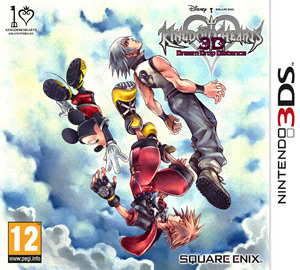
Kingdom Hearts: Dream Drop Distance: A Promise of Things to Come
I realize the Final Fantasy/Disney Mashup has a niche audience, but this game really has left me hopeful. The last Kingdom Heart's game I played was Kingdom Hearts 2 and I thoroughly enjoyed it. The gameplay feels much more vibrant, and virile than classic turn or tactics based RPGs. I do strain against the forced Disney cheerfulness, but the premise of traveling between disparate realities, with a decidedly Square-Enix aesthetic has an undeniable draw. 

Despite my former gripes, Dream Drop Distance proves that the 3DS is capable of rendering 3D worlds in the absence of dual analog camera controls in an accessible, if archaic way. I haven't spent much time with the game, but the return of Riku and Sora as protagonists is appealing (I decided to pass on both the prequel, the two side-stories). 

Truth be told, I am not very far into the game, so I do not have much to contribute as far as the game's borderline unintelligible story has to go, but I am a fan of the Dream Eater monster-collecting element. Call it a hold-over from Pokemon, but I love games that let me collect and combine things (monsters, abilities, and to a lesser extent, equipment) in a variety of ways.

The voice acting is top notch, the graphics are clean, and the game sports cameo's from The World Ends with You characters, sustaining my vain but desperate hope that that title will one day receive the sequel it needs. I need. The world needs.

The game is so rich with systems that there is plenty of depth to be had, even if you try to button-mash your way through. A small, confused part of me wishes that I could complain about, or object to the ridiculous number of game systems that are involved with Dream Drop Distance. The rest of me realizes, this is truly the stuff that games are made out of, and as long as their is some semblance of balance and coherence, I couldn't be happier.

You may have noticed in my 3 perspectives on the game that I have not once mentioned the 3DS' 3D feature. This is no accident: said feature is best ignored. In Mario, it provides a negligible difference to the 2-dimensional platforming experience. In Kid Icarus it induces headaches in addition to hand aches. In Dream Drop Distance, it almost works, but not well enough to keep me from turning it off most of the time. To be honest, the 3D aspect of the 3DS is its weakest feature, save for the criminal lack of a second analog stick.My fingers are crossed for another Metroid-vania style game, and if such a title manifests, you can be sure to check back here for a full report. In the mean time, I am withholding judgement on the 3DS until something truly earth-shattering emerges.


Tuesday, August 14, 2012

Magic as Logical Lacunae


In my past two essays, I have discussed the history of magic systems in video games, and the how magic can be used as a mundane force used for world building. In the second essay, I described magic as an analogy for other systems of technology that exist in our world, like ordinance, the internet, and economics. I further argued that one way for magic systems to progress would be to consider more mundane, less-fantastic uses of magic that would mirror more pedestrian uses of real-world technology. In this third essay, I will discuss an alternative approach to magic. One that presents magic as a disruptive, countervailing force to technology that is inherently chaotic and inconsistent as opposed to reliable and technological. These alternative systems do not follow the technological rules of Acquisition, Execution and Calculation; or if they do, these mechanics are hidden away from the player to keep the mystery alive.

To begin I would like to briefly consider the ontology of various concepts of magic in the real world. There are several kinds of magic to consider, each existing through combinations of material reality, cultural practices, and in some cases, faith-based belief.

First, there is legerdemain, or slight-of-hand, which exists as a performance art based around dexterity and misdirection. This type of magic represents a trainable skill grounded in physical reality with ontology resembling ballet, acting and pantomime. Like those other performance arts, sleight of hand has a number of cultural traditions that vary throughout the globe. Many practices invoke the superstitious themes of earlier conceptions of magic (discussed below) to perpetuate the illusion of mythical power. Other practitioners guard their secrets as tools of their trade.

The second form of magic is stage magic, which often overlaps with the former category of legerdemain. This form of magic is perhaps even more grounded in physical reality, and is ontologically similar to set-design, stage lighting, prop-use and more generously, CGI, camera tricks and other fanciful post-production techniques. It too invokes mystical metaphors for thematic reasons, though due to the collaborative nature of theater, it is generally less secretive than sleight of hand.

The third way to consider magic is as a primitive science. Many superstitious practices, such as alchemy, humorism, and herbal medicine, were motivated by spiritual or esoteric beliefs that gradually formed the foundation for scientific disciplines such as chemistry, anatomy, and nutrition. The ontology of these systems is more complex. For example, alchemy’s existence is partially comprised of non-scientific, but empirical practices of early chemistry, and faith-based belief systems. It is exceedingly difficult, if not impossible, to identify a modern day cognate to this early science ontology. If we knew what our delusions were, we would not suffer from them so persistently.

The fourth type of magic is fictional magic. The type of magic I discussed in the prior two essays fall within this category, which encompasses escapist fiction, role-playing systems and other forms of willful, but self-conscious make-believe. The ontology of this type of magic is comparable to other forms of fiction, though it is arguably more speculative than fiction set in historical, or realistic contemporary situations. Like science-fiction, the motivations for creating and consuming this type of fiction range from pure escapism, to speculative curiosity to metaphorical polemics.

The next type of magic, which we might describe as true belief, is ontologically analogous to modern religion and spiritual practices. The actual form of that ontology however, varies drastically depending on one’s personal belief system. To the skeptic, or realist, this type of magic is flatly wrong. At worse, it is a malicious type of willful ignorance that impedes scientific and cultural progress. At best, it signifies confusion, naivete, a lack of education and access to information, or exists as a psychological placebo to make hard truths (like the inevitability of death) bearable. True believers’ take on magic also vary wildly according to their belief. Since the inquisition, modern Christian religions have drawn distinction between miraculous phenomena which are benevolent, and magical phenomena, which are infernal. Few true believers bother to consider the actual ontological implications of the existence of magical phenomena, however.

With the readers’ indulgence, I would like to conduct a thought experiment considering the implications of actual magical phenomena. It is not my intention to try and prove or disprove magic, but because such a perspective, “unreal” as it is, may yield interesting design decisions for games featuring magic. It may hint at experiences that lie well-outside the realm of typical ludic systems and encounters.

The first and most important truth suggested by this thought experiment is tragic and terrifying: there are things about the universe we cannot understand or accurately describe, let alone manipulate. If magic phenomena could be accurately explained, they would cease to be magic and start to be scientific. The skeptics now ask “Why should we bother talking about things we will inevitably get wrong?” The answer is to think about the things we can get right; and to color in the edges that define our conceptual blind spot.

For example, skeptics and fanatics can agree on one thing: magic exists in opposition to logic. This accounts for why magic is often associated with madness in art and literature. Those who purport to practice or interact with magic are necessarily acting under delusions, since magic cannot be logically understood. Another truth, consistent with all five ontologies of magic is that magic phenomena are things that provoke wonder and curiosity. Even if they cannot be explained, attempts to understand it can be made. There is no core of sense to be had, no actual solution to the mystery, but an infinite potential for delusional explanations to be made. Magic phenomena could therefore ontologically exist as persistent logical problems that cannot be explained.

Already, we have enough information for a conceptual simulation approaching actual magic: a computer glitch within a game world. Granted, we have to approach a computer glitch from this very specific perspective: an entity existing within a flawed diegesis, or broken narrative world. As a figment of computer code, we cannot fix the glitch in the game world, but we can interact with it. And if we attempt to interact with the glitch, we run the risk of tearing at the seams that hold the world together.

One example that springs to mind is the famous missingno glitch in Pokemon Red and Pokemon Blue. In the game, the player assumes the role of a child who catches animals called pokemon in tiny balls, and ‘trains’ them through gladiatorial combat. The missingno glitch is actually a combination of two specific glitches, as explained in JpDeathBlade’s Missingno info-graphic (currently visible at
http://imgur.com/vFbFu), which I will attempt to summarize below. 

In the game world, the player encounters different pokemon by wandering through different environments. Environments are determined by terrain panels, such as grass, water, caves, buildings, and through fishing. In towns, pokemon are normally not encountered. There is a case however, where you can receive a tutorial on how to catch pokemon by talking to an old man. This special encounter carries a grass tile encounter. When a player transitions from one environment to the next, the terrain memory from the previous location is usually wiped. But by using the “fly” command from Viridian City to Cinnabar Island, the terrain memory from the previous location will be retained. Cinnabar Island is unique as it has a specific stretch of land along its coast that is erroneously labeled as grass tiles.

Due to the limited memory of the Game Boy platform that runs the game (32 bits), the information that would normally determine which pokemon are encountered is instead used to store the player’s name data. As a result, when the player triggers a pokemon counter on the coast of Cinnabar Island, the game incorrectly attempts to draw pokemon data from the player’s name data. This allows the player to encounter a number of different pokemon depending on the spelling of the player’s name, and it also leads to a confrontation to missingno. Missingno, which is short for Missing Number, is an exception handler that is thrown up in place of missing data.


Fig. 1: Missingno Encounter in Pokemon

Several things can result from an encounter with missingno. If the player flees from the encounter, the item in his sixth inventory slot will be doubled, again due to memory problems. If the player captures missingno, it will very likely corrupt the games’ save file by creating a non-existent entry in the player’s pokedex, encyclopedia.

From a diagetic perspective, these interactions are both possible—easy even!—but they make no logical sense in the game-world (that said, many fans have concocted explanations that attempt to reconcile missingno with pokemon canon). Even in a world where monsters can be captured in pocket-sized balls and humans can be carried aloft by pidgeon-sized birds, being able to duplicate items and break the game world makes no sense. Making something from nothing (a common trope in every ontology of magic) threatens to destabilize the game’s fictional economy, and interacting with the missingno entity could destroy the game-world itself. This brings us to a second important truth about magic: if it were to exist in a “realistic sense,” it would not only be terrifying and maddening, but also fundamentally and catastrophically dangerous.

So how can we make a game with a system that captures this “actual” type of magic? First of all, since we are necessarily building a system out of logic, to create “actual” magic, we would need a filter that at least creates the illusion of illogic, where cause is severely decoupled from effect. This can be simulated with varying degrees of crudeness, through clever use of random functions in programming. Secondly, these randomized consequences would have to be dangerous, or at least severely frightening to convey the terrifying lacunae, the unknowable black hole that actual magic would represent. Finally, from a pragmatic perspective, we cannot expect the player to engage the gameworld from an immersive, hypothetical perspective, as I have just done with pokemon. Therefore, we would need some sort of game system that engages with the player at a meta-level. Finally

Surprisingly, there are already two games that fit these conceptually difficult and bizarrely specific criteria.

The first title that springs to mind is Eternal Darkness: Sanity’s Requiem. The game was developed by Silicon Knights, and exclusively released for the Nintendo GameCube in North America on June 24th, 2002. As you may expect from scary criteria, the game has a horror theme, and a “Mature” rating the ESRB. In fact, it was the first ever mature-rated title to be directly published by Nintendo.

In the game’s frame narrative, you play Alexandra Roivas, a young woman exploring her Grandfather’s Rhode Island Mansion. You stumble across The Tome of Eternal Darkness, a book as evil as its title suggests, which documents the lives of the Roivas bloodline. This frame narrative serves to segment the plot into different levels set in disparate time periods, and in each level, Alexandra’s ancestors do battle with some unspeakable evil. Eventually Alexandra learns how to face the unspeakable evil herself learning spells and skills from her ancestor’s accounts in a manner that is not-unlike the Assassin’s Creed series’ science-fiction meta-narrative.

The truly magical mechanic of the game is called the “sanity meter.” In addition to physical health, the character’s state of mind will gradually deteriorate as they encounter frightening enemies. As the sanity meter depletes, strange and unsettling things occur in the game. The player will suffer hallucinations were they explicably explode, or gravity is inverted. Sometimes the hallucinations will abate; other times the player is forced to play through them. The true master-stroke of the game, is that it will often disrupt the very medium of the videogames itself. When saving, the game will occasionally present players with messages that their save card has become corrupted (destroying save data from every title on the card).


Fig. 2: Eternal Darkness’s Sanity Meter (upper left)

Admittedly, the sanity meter does create a rough logical framework to forewarn players, in the interest of making the game fair. The bar’s depletion is roughly equivalent to the musical swells in horror films, playing on viewers’ dread by hinting at the violence that will soon occur. But the system is also delightfully deceptive. Hallucinations will periodically occur when the player’s sanity bar is nearly full. Other times, when the bar is nearly depleted, several minutes will pass before the player suffers a hallucination.

The game also features a more conventional magic system that is oriented around combat and recovery. The Acquisition system is based on items that are termed runes (but more accurately thought of as Sigils), which can be mixed and matched to create different spell effects. The Execution system boils down to button presses (as opposed to menu commands, or crafting recipes). The Calculation system falls in line with Rock-Paper-Scissors-style elemental dominance, with Magic presiding over Health, Health presiding over Sanity, and Sanity presiding over Magic.

Relatively simple combat system notwithstanding, the inherently hostile game world, whose logical consistency steadily degrades as players navigate it, comes close to capturing the sentiment of a perpetually unknowable magical world.

One other game comes closer still to a truly magical world.

LSD: The Dream Emulator was developed by Outside Directors Company, and published bu Asmik Ace Entertainment for the original Sony PlayStation on October 22nd, 1998. It was re-released in Japan, through the PlayStation network, on August 11th, 2010. It has never been officially released in the United States, but in recent years, the game has gained a cult following thanks to the internet

The premise of the game is simple: the player wanders around a randomly generated psychedelic dream world. By bumping into various objects, she may be transported to new environments, or if she falls into a pit, she will wake up. After roughly 10 minutes of play time, she will wake up anyway. Each dream concludes with a graph that is supposed to char the player’s mental state throughout the dream according to four categories: Upper, Downer, Static and Dynamic.


Fig. 3: LSD’s Dream Grid


For memory reasons, there are a limited number of environments and entities the player can encounter, but the textures used to color said entities are often distorted, resulting in subtly different experiences every time. Due to the randomized nature of gameplay, players very rarely have duplicate experiences. Eventually, the player will unlock a “flashback” feature, allowing them to revisit dreams, but for a shorter period of time, unless they precisely retrace their steps from the first dream.

There are no objectives or win conditions. There is no combat. The game is a perpetual mystery, and while it is occasionally disturbing, it is not remotely concerned with providing players with a frame of reference to judge their experience. In this sense it is even more magical than Eternal Darkness. While an unknowable, or inherently anomalous world has terrifying implications, those implications are only terrifying from an anthro-centric view point.

Magic, should it exist, is much bigger and weirder than humanity can comprehend. Glitches and games both represent a very promising opportunity to get outside of our conceptual comfort zone and see just how strange, damaging and irrational magic could possibly be.

Tuesday, August 7, 2012

A Tale of Two Superheroes


This has been an especially good summer for superheroics. Even if we were only entitled to the Avenger's assembly, and the Dark Knight's ascent, we would be well-off over most year's offerings. But a third contender, maligned as an unnecessary reboot, deserves your attention: The Amazing Spider-Man is a hell of a lot of fun.

The poster's palette effectively conveys the film's darker tone.

The first thing you need to know about the Marc Webb reboot is that it easily has as much humor as the Sam Raimi trilogy, but with less goofiness. Despite the darker and edgier aesthetic, the film is never lost to the murky waters of Emo-dom.  The most important thing to note is that Andrew Garfield is a marked improvement over Tobey Maguire's dopey, doughy take on Peter Parker. Garfield plays the part of a genuine nerd; an outcast by choice as opposed to an aspiring popular kid who fails miserably at ever step, and  it is a welcome change. More importantly, the fight and action choreography has been completely re-done to reflect a superhero who is agile and spry as opposed to burly and hard-headed.

Emma Stone is another reason to watch this reboot. She nearly steals the show from Garfield as a more active, memorable, and appealing heroine than Kristen Dunst. She and Garfield share an easy, convincing chemistry that is compelling to watch, despite a familiar set-up of Nerd meets Nice Girl. Marc Webb's prior work with 500 Days of Summer leaves him well-equipped to capture an cultivate the quirky chemistry between these two young stars.

The supporting cast for this film is also top tier. Martin Sheen puts in a brief but satisfying performance as Uncle Ben, though disappointingly, he never utters the greatest aphorism in the history of comic-books: "With great power comes great responsibility." They do paraphrase it, and I realize they harped on it in the Raimi trilogy, but it still would have been nice to hear it spoken as-is in this reboot. Dennis Leary also puts in a solid performance as a more conservative cop caricature of himself.

Rhys Ifans doesn't do a bad job as Dr. Curt Connors, AKA "The Lizard," but the villain is ultimately something of a letdown. The character's descent from respectable scientist to insane crocodilian mutant lacks the relative finesse present in the rest of the film. He feels like he belongs to the Raimi trilogy as opposed to Webb's reboot. 

I think the thing I like most about this movie is that Spider-Man actually moves like a spider and thinks like a super-scientist. He is an agile, impossibly flexible fighter as opposed to a bruiser like Superman or Captain America. And even though he relies on gadgets, he is distinct persona from Batman. He doesn't have a ridiculous R&D budget, or special training. He is a tinkerer. A bedroom-bricoleur. A champion of jury-riggery. 

So I hope we will be treated to a sequel in the same vein. It looks like the plot is curving back towards Norman Osborn/Oscorp/Hobgoblin, which is a little disappointing, as ol' Greenie struck me as a poor man's Joker on a hoverboard, but I'm more than willing to give Webb another shot with the wall-crawler.

On to The Batman.

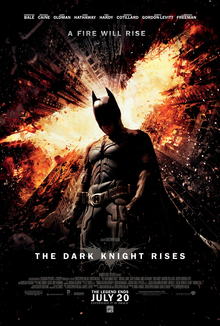
The new Bat Symbol, born from Gotham's burning ruins 
is just one example of the brilliant design aesthetic 
that pervades the movie. 

You have probably already seen the grand finale to Nolan's Batman trilogy once already. I've been fortunate enough to see it twice, and found that I actually enjoyed it more the second time around. That said, I don't think it quite lives up to the high bar set by The Dark Knight. Nolan, Goyer and Ledger tapped into something too potent and primal with the Joker. I think letting the character rest in honor of Ledger's memory was absolutely the right call, but I cannot help but compare Bane to him and come away feeling shortchanged.

Tom Hardy does a damn sight better than your average superhero villain. He outclasses the Lizard, and even the Avenger's Loki. Nolan and Goyer give him a reasonably intriguing anti-heroic journey as a back-story. But at the end of the day, he's an eloquent brute with a crab-like mask and a scary voice. The Joker not only felt like a criminal force of nature, but a harbinger of modern times. He was the evil side of the internet incarnate. To a certain degree, Bane feels like we are backsliding into post 9/11 territory. The jingoism is as understated and a-politicized as it possibly can be, but at the end of the day, Batman is dealing with a terrorist born from a distinctly desert region who hates Gotham for it's "way of life." There are also a few war-like action sequences at the ending with Bane's fanatical commandos that make the movie feel a little like Batman by way of Call of Duty; too much "gritty realism," and not enough escapism. 

But there is more to the movie than Bane. Anne Hathaway's Catwoman is a hoot. A delight. She steals every scene she's in, and watching her flip from demure flirt to self-interested cut-purse to harlot with a heart of gold is a joy. Honestly, she injects a lot of levity into what is otherwise a relentlessly grim movie.

Don't get me wrong. I like grim. I vastly prefer it to the Saturday Morning Wackiness that followed Tim Burton's creepy take on the Batman film series. Grimness is what made Batman: The Animated Series a truly groundbreaking cartoon show. Grimness is a big part of why Batman is (and always will be) more compelling than Superman. But Christian Bale hits one note the entire movie and sticks with it. Weirdly, his scenes as Batman are more emotive and complex than his mopey, obsessive and injured stints as Bruce Wayne. And I like that. It drives the point home that Bruce is the fabrication, and Batman is the man's reality. Significant spoilers follow through the end of this paragraph: unfortunately, that awesome dynamic utterly contradicts the optimistic spirit of the ending; Bale gives us no evidence that Bruce can persist without the cowl. I want to believe he escapes Gotham with Selina and lives happily ever after. But it comes from left of nowhere.

For all that, I enjoyed the ending. And I love the scenes where Bale is being Batman. Swooping around in his jet, playing with his wonderful toys, taking out bad guys with one punch in the blink of an eye. It's what Batman should be.

The supporting cast is, in my mind, undoubtedly the finest of all superhero movies to date. Michael Caine, Gary Oldman and Morgan Freeman are again, exquisite. And they are joined by two other star performers: Cotillard and Gordon-Levitt. Gordon-Levitt in particular continues to impress with maturing acting abilities and expanding range. His character also has an enjoyable, emotional arc that concedes little despite its expediency. Cotillard feels under-developed for most of the movie, especially when weighed against Hathaway, but she eventually has her moment to shine.

It is a good movie, and a fitting end to Nolan's trilogy. As to which Superhero movie is better? If I had to give the nod to one, I'd go with Batman, but seeing as I'm a hardcore Batman fan, that's hardly fair. Really, its Apples and Oranges. I realize these movies are both pitched to the comic book nerd crowd, but they both deserve your attention for different reasons. Nolan finishes a epic story and he finishes it well, and Webb successfully starts a new saga batting against steep odds and an unforgiving fan-base. Watch them yourself, and let me know what you think.

Saturday, July 14, 2012

Mundane Magic as a Method for World-Building


“Any sufficiently advanced technology is indistinguishable from magic.”
-Arthur C. Clarke’s Third Law

“Any sufficiently advanced magic is indistinguishable from technology.”
-Larry Niven being a smart-ass

This is the second in three essays examining magic as an imagined medium, specifically in relation to videogames. In the previous essay, I provided readers with a brief overview of video game magic systems and how they have changed throughout the past three decades. In this essay I will explore what else magic is capable of, and why video games are especially well-suited to exploring the concept.

I concluded my last essay by saying that magic systems must move beyond combat and puzzle solving, but I believe it would be useful to briefly address the conceptual causes that perpetuate these practices.

The very notion of magical combat supports the Campbellian mono-mythical structure that characterizes the overwhelming majority of fantasy fiction. If a person is armed with magic, it is easier for audiences to believe he can act as a one man army, that he can survive injuries that would kill mere mortals, and that he can change the world in a dramatic and profound way. More importantly, the fantasy of magical violence satisfies a fundamental escapist desire: the physically weak can overcome the physically strong through intellect and creativity; which is why mages are so often portrayed as very young, or very old, and described with adjectives like ‘frail’ and ‘bookish.’ Videogames are especially well-suited for this type of fantasy, because they allow players to experience this fantasy through direct simulation, rather than vicariously imagining themselves as a movie or novel’s protagonist.

Magical problem-solving is a step in the direction of subtlety, but the types of problems videogames ask players to solve with magic are generally very blunt and uninspired. How can I move this boulder? How can I cross that gap? How do I get all the way up there? The reason videogames pose these very physical questions to players is that most game-design is predicated on creating a believable sense of physicality. Conundrums leveraging collision detection and physics engines effectively force players to acknowledge and succumb to the consistency of their world. In order for magic systems to “grow up,” game designers must move beyond physical means to establish cohesive realities.


Admittedly, some very creative things have been done with the “magical solutions to physical problems” premise. Valve’s Half-Life and Portal franchises feature extremely innovative puzzles and physical simulations. Now, I’m sure some genre purists are objecting on the grounds that both of those titles are “science fiction” whereas “magic” is a juvenile notion that belongs to children and fairy tales. Dear petulant smartasses: there is as much ‘hard science’ behind a gun that spits out portals—sans ammunition no less!—as there is to a kiss turning a frog into a prince. The difference between the two primarily boils down to thematic presentation (namely frame narrative and graphical style) rather than conceptual integrity.

See this? It's fucking magic.

I will concede that magic can be invoked as a capricious force that exists in opposition to technology and logic. That is the subject of the final essay in this series, in fact.

Generally speaking though, videogames use magic systems and magical technologies for a similar purpose: conceptual frameworks for structuring fictional worlds. When rendered with sufficient detail, magic becomes indistinguishable from technology like Mr. Niven said up top.

There are many more ways to make things “real” than through creating a facsimile of physical reality, however. In speculative fiction, an author’s world building skills are measured by her ability to create a comprehensive, inhabitable world with unique social customs, and value systems as well as foreign physical technologies. One institution that shapes these cultural values is an economy.

Video game economies are often employed as a means of controlling the rate of character progress. Players must collect currency or some other valuable resource in order to purchase beneficial game objects, or to pay for training to use new abilities. The acquisition of wealth is very to balance, and in most single player games, the player ends up being ludicrously wealthy by the final phase of the game, and money has very little meaning. The cultural implications of wealth rarely have narrative consequences; NPCs rarely treat players differently. Massively Multiplayer Online Games (MMOGs) are different however, because multiple players inhabit the same world and share the same economy, introducing in a genuine social value to game currencies. Players learn to recognize other wealthier players by their virtual garb, or the items they try to sell in barter economies (which are the norm in most fantasy games). The frame stories of most MMOGs rarely examine or describe the inherently magical mechanics that drive these economies however.

In World of Warcraft, money is obtained by killing and looting enemy corpses, harvesting and selling “natural” resources or by completing quests (which almost always entails some combination of the prior two activities). This is a standard model for most MMOGs and single player games, but I am using Warcraft an archetypal example. The magical aspect of this economy is that natural resources, and value-laden monsters, are infinitely renewable. Given the social scope of MMOG’s if the resources did not constantly renew all of the game’s enemies would be dead in a matter of hours and the world’s resources would be similarly depleted. Consequently, this mechanic is a necessity of game design rather than an intentional thought experiment. I would argue that it can function as the latter, however.

A world with infinitely renewable resources results in a society where exploitation is pervasive, but also meaningless. There are no environmental concerns to consider when hunting animals (or even sentient monsters and humanoids), or gathering “rare” resources. The resources are gathered, but the environment never strains or suffers.

Charitably, this system results in a sort of utopian meritocracy: there is literally no limit to the amount of wealth players can amass by exploring the game’s world and killing its monsters. The exploitation of natural resources also synergizes with ludic experimentation; players learn to play the game more effectively as they amass greater riches. They learn to play more efficiently and more effectively. 

Cynically, a magic system of infinite resources sucks the wonder and value out of rare commodities. Collecting gold ore, exotic animal pelts, and rare herbs is no longer an adventure: it is drudgery. Duplicate items appear in the world at a logarithmic rate, rather than over the course of decades, centuries or millennia. Blizzard has attempted to curtail this encroaching sense of drudgery by introducing crafting recipes that require an exorbitant amount of the limitless natural resources. The theory is that their rareness can be reified by increasing the total time players have to spend searching for components and reagents. In actuality, this merely reinforces a player’s sense of monotony. It is no accident that MMOG’s are frequently described as grinds.

Other design decisions made in the interest of fairness and expedient-play have led Warcraft’s economy to become increasingly clinical and sterile throughout the years. Like all economies, Warcraft features various professions that can gather and craft resources in various ways. Initially, attempting to craft an item was a risky undertaking; there was a small probability that the player would fail and waste the required reagents. To make the game more broadly appealing, this mechanic was truncated fairly early on in the game’s life cycle. Furthermore, the game’s various professions did not feature any unique mechanics that meaningfully differentiated the crafting process; the gameplay behind mixing an alchemical potion and enchanting an item boils down to clicking through a series of menus.

Many single-player games suffer from similarly broken and monotonous magical economies, but their future has a somewhat brighter prognosis than MMOG’s. In a single-player experience, game designers do not have to worry about fine-tuning a system to be fair for a vast number of players interacting with the world simultaneously. They can create truly scarce resources, or infinite resources that re-emerge at a much slower rate than in MMOG’s. More adventurously, they can also allow player behavior to meaningfully warp and alter in-game economies.

Butterflies are tricky to catch but not as hard as in real life. Still, it's a step in the right direction. (Picture found at One Girl Geek's blog in a post about things you can eat in Skyrim)

Bethesda’s latest entry in The Elder Scrolls franchise, Skyrim, engages in a few such experiments. Even though Skyrim does not allow players to barter and argue with other actual people, its economy is more compelling in several ways. In Warcraft, the absolute bottom of a game object’s value on the player-traded auction house is determined by the amount a non-player-character (NPC) will pay for it. Save for acts of charity and obvious mistakes, players will not sell items to other players if they can get more money from the computer. In Skyrim however, flooding an NPC with the same type of item will result in market saturation and cause an observable decline in value. In Warcraft, flooding the market is less dangerous because NPC vendor values do not vary.

Skyrim’s most compelling crafting profession also features mechanics that establish cost and risk. Player’s must ingest ingredients to learn their initial effects, and then mix them with other combinations of ingredients to learn their secondary, tertiary and quaternary effects. This yields an absurdly childish but undeniably gleeful approach toward mixing potions that necessitates exploration and experimentation. If two ingredients do not have compatible effects they will be wasted. And the act of tasting ingredients has a degree of risk to it as well, since poisonous materials will harm or sicken the player. The design lesson here, is that compelling speculative economies must feature meaningful and costly differentiation as well as observable, routinized behavior.

Another neglected, but promising dimension for thought-provoking magic systems lie with scheduling. The overwhelming majority of videogames do not feature schedules of any kind. Videogame plots often present players with an impending apocalyptic danger but their implied urgency is undercut by mechanics that permit (and occasionally encourage) players to dawdle.

The speculative concept of a time-loop presents one example of magical scheduling. Nintendo’s strangest (and arguably most refreshing) installment in the legend of Zelda franchise, Majora’s Mask, features such a hook. The game sees franchise hero Link trying to save a world by preventing the moon from crashing into the planet in three days. Like the classic movie, Ground Hog’s Day, the game follows a looping structure, with the world changing appropriately, (or in some cases, utterly bizarrely) in relation to the impending apocalypse. This system is paradoxically urgent, as a player must complete every task in the game world in less than three days (roughly 54 minutes of real-time), but also permits the type of dawdling that players have come to expect and appreciate from role-playing games. Like Skyrim’s alchemy system, Majora’s Mask time loop presents players with a combination of established routines and the potential for experimentation. To solve many of the game’s mystery, and ultimately thwart the end of the world, players must observe NPC’s schedules and other changes that occur in the game world (the clearance of road blockages, changes in merchant’s stock). The NPCs consistent behavioral patterns serve to reinforce the diegesis in a more subtle and thought-provoking way than a simple facsimile of physical reality.

Recent installments in Atlus’ Persona franchise explore the possibilities of magical scheduling in even greater detail by adding an element of socialization. In both Persona 3 and 4, players inhabit the role of a Japanese high school student who must balance mundane activities like attending class, studying, sports and socializing with saving the world from supernatural evil. In Persona 4 there is a direct correlation between the forces of darkness and the real world’s weather patterns. By consulting in-game weather reports, players can literally pick their battles.

The Persona series offers player the opportunity to 
obtain superior firepower through friendship. 

The game’s socialization system is also intertwined with the game’s fanciful combat system. Like most Japanese young-adult fiction, social conformity and team work are heavily emphasized. The player’s avatar builds relationships with other characters, referred to as social links. Stronger social links allow the player to summon more powerful supernatural identities called Personas. Social links are strengthened by essentially being a good friend; helping people over-come their personal demons, (like reservations about inheriting a family business, or confused sexual orientation), become vital processes for triumphing over more direct, physical threats. The resulting tone is often bizarre and disappointingly preachy, but the game world is satisfyingly cohesive and the social mechanics add a thought-provoking spin on traditional role-playing premise. Again, we have a system that is ultimately beholden to simulated physical combat and for games to truly mature as a world-building medium, subtler forms of simulation are necessary.

Here I have hopefully explained now how magic systems can establish cohesive, mundane fictional realities through routinized gameplay mechanics, in ways that traditional forms of speculative literature cannot parallel. In order for magic to mature, we must explore the social and temporal aspects of reality in addition to physical applications of magic. The physical aspect of videogame realities are often the most sensational, far-fetched part of the experience. Exploring politics, social relationships, and daily scheduling allow designers to take a more gradual, thoughtful and thought-provoking approach toward magic as a system of speculative technology.

The concept of magic is bigger still, however. In my final essay, I describe how the concept of magic transcends even speculative sciences, and how deliberately disruptive gameplay experiences and glitches can simulate the concept of “actual” magic; forces that are ontologically “other” than technology and logic.