Tuesday, August 14, 2012

Magic as Logical Lacunae


In my past two essays, I have discussed the history of magic systems in video games, and the how magic can be used as a mundane force used for world building. In the second essay, I described magic as an analogy for other systems of technology that exist in our world, like ordinance, the internet, and economics. I further argued that one way for magic systems to progress would be to consider more mundane, less-fantastic uses of magic that would mirror more pedestrian uses of real-world technology. In this third essay, I will discuss an alternative approach to magic. One that presents magic as a disruptive, countervailing force to technology that is inherently chaotic and inconsistent as opposed to reliable and technological. These alternative systems do not follow the technological rules of Acquisition, Execution and Calculation; or if they do, these mechanics are hidden away from the player to keep the mystery alive.

To begin I would like to briefly consider the ontology of various concepts of magic in the real world. There are several kinds of magic to consider, each existing through combinations of material reality, cultural practices, and in some cases, faith-based belief.

First, there is legerdemain, or slight-of-hand, which exists as a performance art based around dexterity and misdirection. This type of magic represents a trainable skill grounded in physical reality with ontology resembling ballet, acting and pantomime. Like those other performance arts, sleight of hand has a number of cultural traditions that vary throughout the globe. Many practices invoke the superstitious themes of earlier conceptions of magic (discussed below) to perpetuate the illusion of mythical power. Other practitioners guard their secrets as tools of their trade.

The second form of magic is stage magic, which often overlaps with the former category of legerdemain. This form of magic is perhaps even more grounded in physical reality, and is ontologically similar to set-design, stage lighting, prop-use and more generously, CGI, camera tricks and other fanciful post-production techniques. It too invokes mystical metaphors for thematic reasons, though due to the collaborative nature of theater, it is generally less secretive than sleight of hand.

The third way to consider magic is as a primitive science. Many superstitious practices, such as alchemy, humorism, and herbal medicine, were motivated by spiritual or esoteric beliefs that gradually formed the foundation for scientific disciplines such as chemistry, anatomy, and nutrition. The ontology of these systems is more complex. For example, alchemy’s existence is partially comprised of non-scientific, but empirical practices of early chemistry, and faith-based belief systems. It is exceedingly difficult, if not impossible, to identify a modern day cognate to this early science ontology. If we knew what our delusions were, we would not suffer from them so persistently.

The fourth type of magic is fictional magic. The type of magic I discussed in the prior two essays fall within this category, which encompasses escapist fiction, role-playing systems and other forms of willful, but self-conscious make-believe. The ontology of this type of magic is comparable to other forms of fiction, though it is arguably more speculative than fiction set in historical, or realistic contemporary situations. Like science-fiction, the motivations for creating and consuming this type of fiction range from pure escapism, to speculative curiosity to metaphorical polemics.

The next type of magic, which we might describe as true belief, is ontologically analogous to modern religion and spiritual practices. The actual form of that ontology however, varies drastically depending on one’s personal belief system. To the skeptic, or realist, this type of magic is flatly wrong. At worse, it is a malicious type of willful ignorance that impedes scientific and cultural progress. At best, it signifies confusion, naivete, a lack of education and access to information, or exists as a psychological placebo to make hard truths (like the inevitability of death) bearable. True believers’ take on magic also vary wildly according to their belief. Since the inquisition, modern Christian religions have drawn distinction between miraculous phenomena which are benevolent, and magical phenomena, which are infernal. Few true believers bother to consider the actual ontological implications of the existence of magical phenomena, however.

With the readers’ indulgence, I would like to conduct a thought experiment considering the implications of actual magical phenomena. It is not my intention to try and prove or disprove magic, but because such a perspective, “unreal” as it is, may yield interesting design decisions for games featuring magic. It may hint at experiences that lie well-outside the realm of typical ludic systems and encounters.

The first and most important truth suggested by this thought experiment is tragic and terrifying: there are things about the universe we cannot understand or accurately describe, let alone manipulate. If magic phenomena could be accurately explained, they would cease to be magic and start to be scientific. The skeptics now ask “Why should we bother talking about things we will inevitably get wrong?” The answer is to think about the things we can get right; and to color in the edges that define our conceptual blind spot.

For example, skeptics and fanatics can agree on one thing: magic exists in opposition to logic. This accounts for why magic is often associated with madness in art and literature. Those who purport to practice or interact with magic are necessarily acting under delusions, since magic cannot be logically understood. Another truth, consistent with all five ontologies of magic is that magic phenomena are things that provoke wonder and curiosity. Even if they cannot be explained, attempts to understand it can be made. There is no core of sense to be had, no actual solution to the mystery, but an infinite potential for delusional explanations to be made. Magic phenomena could therefore ontologically exist as persistent logical problems that cannot be explained.

Already, we have enough information for a conceptual simulation approaching actual magic: a computer glitch within a game world. Granted, we have to approach a computer glitch from this very specific perspective: an entity existing within a flawed diegesis, or broken narrative world. As a figment of computer code, we cannot fix the glitch in the game world, but we can interact with it. And if we attempt to interact with the glitch, we run the risk of tearing at the seams that hold the world together.

One example that springs to mind is the famous missingno glitch in Pokemon Red and Pokemon Blue. In the game, the player assumes the role of a child who catches animals called pokemon in tiny balls, and ‘trains’ them through gladiatorial combat. The missingno glitch is actually a combination of two specific glitches, as explained in JpDeathBlade’s Missingno info-graphic (currently visible at
http://imgur.com/vFbFu), which I will attempt to summarize below. 

In the game world, the player encounters different pokemon by wandering through different environments. Environments are determined by terrain panels, such as grass, water, caves, buildings, and through fishing. In towns, pokemon are normally not encountered. There is a case however, where you can receive a tutorial on how to catch pokemon by talking to an old man. This special encounter carries a grass tile encounter. When a player transitions from one environment to the next, the terrain memory from the previous location is usually wiped. But by using the “fly” command from Viridian City to Cinnabar Island, the terrain memory from the previous location will be retained. Cinnabar Island is unique as it has a specific stretch of land along its coast that is erroneously labeled as grass tiles.

Due to the limited memory of the Game Boy platform that runs the game (32 bits), the information that would normally determine which pokemon are encountered is instead used to store the player’s name data. As a result, when the player triggers a pokemon counter on the coast of Cinnabar Island, the game incorrectly attempts to draw pokemon data from the player’s name data. This allows the player to encounter a number of different pokemon depending on the spelling of the player’s name, and it also leads to a confrontation to missingno. Missingno, which is short for Missing Number, is an exception handler that is thrown up in place of missing data.


Fig. 1: Missingno Encounter in Pokemon

Several things can result from an encounter with missingno. If the player flees from the encounter, the item in his sixth inventory slot will be doubled, again due to memory problems. If the player captures missingno, it will very likely corrupt the games’ save file by creating a non-existent entry in the player’s pokedex, encyclopedia.

From a diagetic perspective, these interactions are both possible—easy even!—but they make no logical sense in the game-world (that said, many fans have concocted explanations that attempt to reconcile missingno with pokemon canon). Even in a world where monsters can be captured in pocket-sized balls and humans can be carried aloft by pidgeon-sized birds, being able to duplicate items and break the game world makes no sense. Making something from nothing (a common trope in every ontology of magic) threatens to destabilize the game’s fictional economy, and interacting with the missingno entity could destroy the game-world itself. This brings us to a second important truth about magic: if it were to exist in a “realistic sense,” it would not only be terrifying and maddening, but also fundamentally and catastrophically dangerous.

So how can we make a game with a system that captures this “actual” type of magic? First of all, since we are necessarily building a system out of logic, to create “actual” magic, we would need a filter that at least creates the illusion of illogic, where cause is severely decoupled from effect. This can be simulated with varying degrees of crudeness, through clever use of random functions in programming. Secondly, these randomized consequences would have to be dangerous, or at least severely frightening to convey the terrifying lacunae, the unknowable black hole that actual magic would represent. Finally, from a pragmatic perspective, we cannot expect the player to engage the gameworld from an immersive, hypothetical perspective, as I have just done with pokemon. Therefore, we would need some sort of game system that engages with the player at a meta-level. Finally

Surprisingly, there are already two games that fit these conceptually difficult and bizarrely specific criteria.

The first title that springs to mind is Eternal Darkness: Sanity’s Requiem. The game was developed by Silicon Knights, and exclusively released for the Nintendo GameCube in North America on June 24th, 2002. As you may expect from scary criteria, the game has a horror theme, and a “Mature” rating the ESRB. In fact, it was the first ever mature-rated title to be directly published by Nintendo.

In the game’s frame narrative, you play Alexandra Roivas, a young woman exploring her Grandfather’s Rhode Island Mansion. You stumble across The Tome of Eternal Darkness, a book as evil as its title suggests, which documents the lives of the Roivas bloodline. This frame narrative serves to segment the plot into different levels set in disparate time periods, and in each level, Alexandra’s ancestors do battle with some unspeakable evil. Eventually Alexandra learns how to face the unspeakable evil herself learning spells and skills from her ancestor’s accounts in a manner that is not-unlike the Assassin’s Creed series’ science-fiction meta-narrative.

The truly magical mechanic of the game is called the “sanity meter.” In addition to physical health, the character’s state of mind will gradually deteriorate as they encounter frightening enemies. As the sanity meter depletes, strange and unsettling things occur in the game. The player will suffer hallucinations were they explicably explode, or gravity is inverted. Sometimes the hallucinations will abate; other times the player is forced to play through them. The true master-stroke of the game, is that it will often disrupt the very medium of the videogames itself. When saving, the game will occasionally present players with messages that their save card has become corrupted (destroying save data from every title on the card).


Fig. 2: Eternal Darkness’s Sanity Meter (upper left)

Admittedly, the sanity meter does create a rough logical framework to forewarn players, in the interest of making the game fair. The bar’s depletion is roughly equivalent to the musical swells in horror films, playing on viewers’ dread by hinting at the violence that will soon occur. But the system is also delightfully deceptive. Hallucinations will periodically occur when the player’s sanity bar is nearly full. Other times, when the bar is nearly depleted, several minutes will pass before the player suffers a hallucination.

The game also features a more conventional magic system that is oriented around combat and recovery. The Acquisition system is based on items that are termed runes (but more accurately thought of as Sigils), which can be mixed and matched to create different spell effects. The Execution system boils down to button presses (as opposed to menu commands, or crafting recipes). The Calculation system falls in line with Rock-Paper-Scissors-style elemental dominance, with Magic presiding over Health, Health presiding over Sanity, and Sanity presiding over Magic.

Relatively simple combat system notwithstanding, the inherently hostile game world, whose logical consistency steadily degrades as players navigate it, comes close to capturing the sentiment of a perpetually unknowable magical world.

One other game comes closer still to a truly magical world.

LSD: The Dream Emulator was developed by Outside Directors Company, and published bu Asmik Ace Entertainment for the original Sony PlayStation on October 22nd, 1998. It was re-released in Japan, through the PlayStation network, on August 11th, 2010. It has never been officially released in the United States, but in recent years, the game has gained a cult following thanks to the internet

The premise of the game is simple: the player wanders around a randomly generated psychedelic dream world. By bumping into various objects, she may be transported to new environments, or if she falls into a pit, she will wake up. After roughly 10 minutes of play time, she will wake up anyway. Each dream concludes with a graph that is supposed to char the player’s mental state throughout the dream according to four categories: Upper, Downer, Static and Dynamic.


Fig. 3: LSD’s Dream Grid


For memory reasons, there are a limited number of environments and entities the player can encounter, but the textures used to color said entities are often distorted, resulting in subtly different experiences every time. Due to the randomized nature of gameplay, players very rarely have duplicate experiences. Eventually, the player will unlock a “flashback” feature, allowing them to revisit dreams, but for a shorter period of time, unless they precisely retrace their steps from the first dream.

There are no objectives or win conditions. There is no combat. The game is a perpetual mystery, and while it is occasionally disturbing, it is not remotely concerned with providing players with a frame of reference to judge their experience. In this sense it is even more magical than Eternal Darkness. While an unknowable, or inherently anomalous world has terrifying implications, those implications are only terrifying from an anthro-centric view point.

Magic, should it exist, is much bigger and weirder than humanity can comprehend. Glitches and games both represent a very promising opportunity to get outside of our conceptual comfort zone and see just how strange, damaging and irrational magic could possibly be.

Tuesday, August 7, 2012

A Tale of Two Superheroes


This has been an especially good summer for superheroics. Even if we were only entitled to the Avenger's assembly, and the Dark Knight's ascent, we would be well-off over most year's offerings. But a third contender, maligned as an unnecessary reboot, deserves your attention: The Amazing Spider-Man is a hell of a lot of fun.

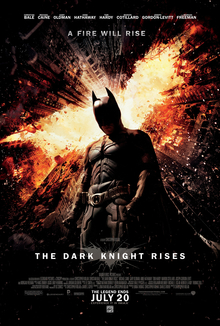
The poster's palette effectively conveys the film's darker tone.

The first thing you need to know about the Marc Webb reboot is that it easily has as much humor as the Sam Raimi trilogy, but with less goofiness. Despite the darker and edgier aesthetic, the film is never lost to the murky waters of Emo-dom.  The most important thing to note is that Andrew Garfield is a marked improvement over Tobey Maguire's dopey, doughy take on Peter Parker. Garfield plays the part of a genuine nerd; an outcast by choice as opposed to an aspiring popular kid who fails miserably at ever step, and  it is a welcome change. More importantly, the fight and action choreography has been completely re-done to reflect a superhero who is agile and spry as opposed to burly and hard-headed.

Emma Stone is another reason to watch this reboot. She nearly steals the show from Garfield as a more active, memorable, and appealing heroine than Kristen Dunst. She and Garfield share an easy, convincing chemistry that is compelling to watch, despite a familiar set-up of Nerd meets Nice Girl. Marc Webb's prior work with 500 Days of Summer leaves him well-equipped to capture an cultivate the quirky chemistry between these two young stars.

The supporting cast for this film is also top tier. Martin Sheen puts in a brief but satisfying performance as Uncle Ben, though disappointingly, he never utters the greatest aphorism in the history of comic-books: "With great power comes great responsibility." They do paraphrase it, and I realize they harped on it in the Raimi trilogy, but it still would have been nice to hear it spoken as-is in this reboot. Dennis Leary also puts in a solid performance as a more conservative cop caricature of himself.

Rhys Ifans doesn't do a bad job as Dr. Curt Connors, AKA "The Lizard," but the villain is ultimately something of a letdown. The character's descent from respectable scientist to insane crocodilian mutant lacks the relative finesse present in the rest of the film. He feels like he belongs to the Raimi trilogy as opposed to Webb's reboot. 

I think the thing I like most about this movie is that Spider-Man actually moves like a spider and thinks like a super-scientist. He is an agile, impossibly flexible fighter as opposed to a bruiser like Superman or Captain America. And even though he relies on gadgets, he is distinct persona from Batman. He doesn't have a ridiculous R&D budget, or special training. He is a tinkerer. A bedroom-bricoleur. A champion of jury-riggery. 

So I hope we will be treated to a sequel in the same vein. It looks like the plot is curving back towards Norman Osborn/Oscorp/Hobgoblin, which is a little disappointing, as ol' Greenie struck me as a poor man's Joker on a hoverboard, but I'm more than willing to give Webb another shot with the wall-crawler.

On to The Batman.

The new Bat Symbol, born from Gotham's burning ruins 
is just one example of the brilliant design aesthetic 
that pervades the movie. 

You have probably already seen the grand finale to Nolan's Batman trilogy once already. I've been fortunate enough to see it twice, and found that I actually enjoyed it more the second time around. That said, I don't think it quite lives up to the high bar set by The Dark Knight. Nolan, Goyer and Ledger tapped into something too potent and primal with the Joker. I think letting the character rest in honor of Ledger's memory was absolutely the right call, but I cannot help but compare Bane to him and come away feeling shortchanged.

Tom Hardy does a damn sight better than your average superhero villain. He outclasses the Lizard, and even the Avenger's Loki. Nolan and Goyer give him a reasonably intriguing anti-heroic journey as a back-story. But at the end of the day, he's an eloquent brute with a crab-like mask and a scary voice. The Joker not only felt like a criminal force of nature, but a harbinger of modern times. He was the evil side of the internet incarnate. To a certain degree, Bane feels like we are backsliding into post 9/11 territory. The jingoism is as understated and a-politicized as it possibly can be, but at the end of the day, Batman is dealing with a terrorist born from a distinctly desert region who hates Gotham for it's "way of life." There are also a few war-like action sequences at the ending with Bane's fanatical commandos that make the movie feel a little like Batman by way of Call of Duty; too much "gritty realism," and not enough escapism. 

But there is more to the movie than Bane. Anne Hathaway's Catwoman is a hoot. A delight. She steals every scene she's in, and watching her flip from demure flirt to self-interested cut-purse to harlot with a heart of gold is a joy. Honestly, she injects a lot of levity into what is otherwise a relentlessly grim movie.

Don't get me wrong. I like grim. I vastly prefer it to the Saturday Morning Wackiness that followed Tim Burton's creepy take on the Batman film series. Grimness is what made Batman: The Animated Series a truly groundbreaking cartoon show. Grimness is a big part of why Batman is (and always will be) more compelling than Superman. But Christian Bale hits one note the entire movie and sticks with it. Weirdly, his scenes as Batman are more emotive and complex than his mopey, obsessive and injured stints as Bruce Wayne. And I like that. It drives the point home that Bruce is the fabrication, and Batman is the man's reality. Significant spoilers follow through the end of this paragraph: unfortunately, that awesome dynamic utterly contradicts the optimistic spirit of the ending; Bale gives us no evidence that Bruce can persist without the cowl. I want to believe he escapes Gotham with Selina and lives happily ever after. But it comes from left of nowhere.

For all that, I enjoyed the ending. And I love the scenes where Bale is being Batman. Swooping around in his jet, playing with his wonderful toys, taking out bad guys with one punch in the blink of an eye. It's what Batman should be.

The supporting cast is, in my mind, undoubtedly the finest of all superhero movies to date. Michael Caine, Gary Oldman and Morgan Freeman are again, exquisite. And they are joined by two other star performers: Cotillard and Gordon-Levitt. Gordon-Levitt in particular continues to impress with maturing acting abilities and expanding range. His character also has an enjoyable, emotional arc that concedes little despite its expediency. Cotillard feels under-developed for most of the movie, especially when weighed against Hathaway, but she eventually has her moment to shine.

It is a good movie, and a fitting end to Nolan's trilogy. As to which Superhero movie is better? If I had to give the nod to one, I'd go with Batman, but seeing as I'm a hardcore Batman fan, that's hardly fair. Really, its Apples and Oranges. I realize these movies are both pitched to the comic book nerd crowd, but they both deserve your attention for different reasons. Nolan finishes a epic story and he finishes it well, and Webb successfully starts a new saga batting against steep odds and an unforgiving fan-base. Watch them yourself, and let me know what you think.

Saturday, July 14, 2012

Mundane Magic as a Method for World-Building


“Any sufficiently advanced technology is indistinguishable from magic.”
-Arthur C. Clarke’s Third Law

“Any sufficiently advanced magic is indistinguishable from technology.”
-Larry Niven being a smart-ass

This is the second in three essays examining magic as an imagined medium, specifically in relation to videogames. In the previous essay, I provided readers with a brief overview of video game magic systems and how they have changed throughout the past three decades. In this essay I will explore what else magic is capable of, and why video games are especially well-suited to exploring the concept.

I concluded my last essay by saying that magic systems must move beyond combat and puzzle solving, but I believe it would be useful to briefly address the conceptual causes that perpetuate these practices.

The very notion of magical combat supports the Campbellian mono-mythical structure that characterizes the overwhelming majority of fantasy fiction. If a person is armed with magic, it is easier for audiences to believe he can act as a one man army, that he can survive injuries that would kill mere mortals, and that he can change the world in a dramatic and profound way. More importantly, the fantasy of magical violence satisfies a fundamental escapist desire: the physically weak can overcome the physically strong through intellect and creativity; which is why mages are so often portrayed as very young, or very old, and described with adjectives like ‘frail’ and ‘bookish.’ Videogames are especially well-suited for this type of fantasy, because they allow players to experience this fantasy through direct simulation, rather than vicariously imagining themselves as a movie or novel’s protagonist.

Magical problem-solving is a step in the direction of subtlety, but the types of problems videogames ask players to solve with magic are generally very blunt and uninspired. How can I move this boulder? How can I cross that gap? How do I get all the way up there? The reason videogames pose these very physical questions to players is that most game-design is predicated on creating a believable sense of physicality. Conundrums leveraging collision detection and physics engines effectively force players to acknowledge and succumb to the consistency of their world. In order for magic systems to “grow up,” game designers must move beyond physical means to establish cohesive realities.


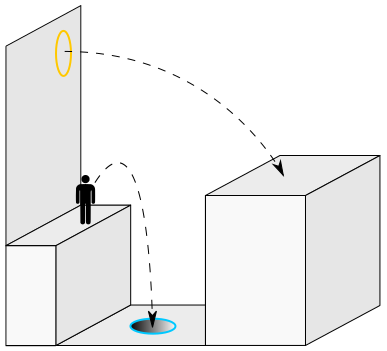
Admittedly, some very creative things have been done with the “magical solutions to physical problems” premise. Valve’s Half-Life and Portal franchises feature extremely innovative puzzles and physical simulations. Now, I’m sure some genre purists are objecting on the grounds that both of those titles are “science fiction” whereas “magic” is a juvenile notion that belongs to children and fairy tales. Dear petulant smartasses: there is as much ‘hard science’ behind a gun that spits out portals—sans ammunition no less!—as there is to a kiss turning a frog into a prince. The difference between the two primarily boils down to thematic presentation (namely frame narrative and graphical style) rather than conceptual integrity.

See this? It's fucking magic.

I will concede that magic can be invoked as a capricious force that exists in opposition to technology and logic. That is the subject of the final essay in this series, in fact.

Generally speaking though, videogames use magic systems and magical technologies for a similar purpose: conceptual frameworks for structuring fictional worlds. When rendered with sufficient detail, magic becomes indistinguishable from technology like Mr. Niven said up top.

There are many more ways to make things “real” than through creating a facsimile of physical reality, however. In speculative fiction, an author’s world building skills are measured by her ability to create a comprehensive, inhabitable world with unique social customs, and value systems as well as foreign physical technologies. One institution that shapes these cultural values is an economy.

Video game economies are often employed as a means of controlling the rate of character progress. Players must collect currency or some other valuable resource in order to purchase beneficial game objects, or to pay for training to use new abilities. The acquisition of wealth is very to balance, and in most single player games, the player ends up being ludicrously wealthy by the final phase of the game, and money has very little meaning. The cultural implications of wealth rarely have narrative consequences; NPCs rarely treat players differently. Massively Multiplayer Online Games (MMOGs) are different however, because multiple players inhabit the same world and share the same economy, introducing in a genuine social value to game currencies. Players learn to recognize other wealthier players by their virtual garb, or the items they try to sell in barter economies (which are the norm in most fantasy games). The frame stories of most MMOGs rarely examine or describe the inherently magical mechanics that drive these economies however.

In World of Warcraft, money is obtained by killing and looting enemy corpses, harvesting and selling “natural” resources or by completing quests (which almost always entails some combination of the prior two activities). This is a standard model for most MMOGs and single player games, but I am using Warcraft an archetypal example. The magical aspect of this economy is that natural resources, and value-laden monsters, are infinitely renewable. Given the social scope of MMOG’s if the resources did not constantly renew all of the game’s enemies would be dead in a matter of hours and the world’s resources would be similarly depleted. Consequently, this mechanic is a necessity of game design rather than an intentional thought experiment. I would argue that it can function as the latter, however.

A world with infinitely renewable resources results in a society where exploitation is pervasive, but also meaningless. There are no environmental concerns to consider when hunting animals (or even sentient monsters and humanoids), or gathering “rare” resources. The resources are gathered, but the environment never strains or suffers.

Charitably, this system results in a sort of utopian meritocracy: there is literally no limit to the amount of wealth players can amass by exploring the game’s world and killing its monsters. The exploitation of natural resources also synergizes with ludic experimentation; players learn to play the game more effectively as they amass greater riches. They learn to play more efficiently and more effectively. 

Cynically, a magic system of infinite resources sucks the wonder and value out of rare commodities. Collecting gold ore, exotic animal pelts, and rare herbs is no longer an adventure: it is drudgery. Duplicate items appear in the world at a logarithmic rate, rather than over the course of decades, centuries or millennia. Blizzard has attempted to curtail this encroaching sense of drudgery by introducing crafting recipes that require an exorbitant amount of the limitless natural resources. The theory is that their rareness can be reified by increasing the total time players have to spend searching for components and reagents. In actuality, this merely reinforces a player’s sense of monotony. It is no accident that MMOG’s are frequently described as grinds.

Other design decisions made in the interest of fairness and expedient-play have led Warcraft’s economy to become increasingly clinical and sterile throughout the years. Like all economies, Warcraft features various professions that can gather and craft resources in various ways. Initially, attempting to craft an item was a risky undertaking; there was a small probability that the player would fail and waste the required reagents. To make the game more broadly appealing, this mechanic was truncated fairly early on in the game’s life cycle. Furthermore, the game’s various professions did not feature any unique mechanics that meaningfully differentiated the crafting process; the gameplay behind mixing an alchemical potion and enchanting an item boils down to clicking through a series of menus.

Many single-player games suffer from similarly broken and monotonous magical economies, but their future has a somewhat brighter prognosis than MMOG’s. In a single-player experience, game designers do not have to worry about fine-tuning a system to be fair for a vast number of players interacting with the world simultaneously. They can create truly scarce resources, or infinite resources that re-emerge at a much slower rate than in MMOG’s. More adventurously, they can also allow player behavior to meaningfully warp and alter in-game economies.

Butterflies are tricky to catch but not as hard as in real life. Still, it's a step in the right direction. (Picture found at One Girl Geek's blog in a post about things you can eat in Skyrim)

Bethesda’s latest entry in The Elder Scrolls franchise, Skyrim, engages in a few such experiments. Even though Skyrim does not allow players to barter and argue with other actual people, its economy is more compelling in several ways. In Warcraft, the absolute bottom of a game object’s value on the player-traded auction house is determined by the amount a non-player-character (NPC) will pay for it. Save for acts of charity and obvious mistakes, players will not sell items to other players if they can get more money from the computer. In Skyrim however, flooding an NPC with the same type of item will result in market saturation and cause an observable decline in value. In Warcraft, flooding the market is less dangerous because NPC vendor values do not vary.

Skyrim’s most compelling crafting profession also features mechanics that establish cost and risk. Player’s must ingest ingredients to learn their initial effects, and then mix them with other combinations of ingredients to learn their secondary, tertiary and quaternary effects. This yields an absurdly childish but undeniably gleeful approach toward mixing potions that necessitates exploration and experimentation. If two ingredients do not have compatible effects they will be wasted. And the act of tasting ingredients has a degree of risk to it as well, since poisonous materials will harm or sicken the player. The design lesson here, is that compelling speculative economies must feature meaningful and costly differentiation as well as observable, routinized behavior.

Another neglected, but promising dimension for thought-provoking magic systems lie with scheduling. The overwhelming majority of videogames do not feature schedules of any kind. Videogame plots often present players with an impending apocalyptic danger but their implied urgency is undercut by mechanics that permit (and occasionally encourage) players to dawdle.

The speculative concept of a time-loop presents one example of magical scheduling. Nintendo’s strangest (and arguably most refreshing) installment in the legend of Zelda franchise, Majora’s Mask, features such a hook. The game sees franchise hero Link trying to save a world by preventing the moon from crashing into the planet in three days. Like the classic movie, Ground Hog’s Day, the game follows a looping structure, with the world changing appropriately, (or in some cases, utterly bizarrely) in relation to the impending apocalypse. This system is paradoxically urgent, as a player must complete every task in the game world in less than three days (roughly 54 minutes of real-time), but also permits the type of dawdling that players have come to expect and appreciate from role-playing games. Like Skyrim’s alchemy system, Majora’s Mask time loop presents players with a combination of established routines and the potential for experimentation. To solve many of the game’s mystery, and ultimately thwart the end of the world, players must observe NPC’s schedules and other changes that occur in the game world (the clearance of road blockages, changes in merchant’s stock). The NPCs consistent behavioral patterns serve to reinforce the diegesis in a more subtle and thought-provoking way than a simple facsimile of physical reality.

Recent installments in Atlus’ Persona franchise explore the possibilities of magical scheduling in even greater detail by adding an element of socialization. In both Persona 3 and 4, players inhabit the role of a Japanese high school student who must balance mundane activities like attending class, studying, sports and socializing with saving the world from supernatural evil. In Persona 4 there is a direct correlation between the forces of darkness and the real world’s weather patterns. By consulting in-game weather reports, players can literally pick their battles.

The Persona series offers player the opportunity to 
obtain superior firepower through friendship. 

The game’s socialization system is also intertwined with the game’s fanciful combat system. Like most Japanese young-adult fiction, social conformity and team work are heavily emphasized. The player’s avatar builds relationships with other characters, referred to as social links. Stronger social links allow the player to summon more powerful supernatural identities called Personas. Social links are strengthened by essentially being a good friend; helping people over-come their personal demons, (like reservations about inheriting a family business, or confused sexual orientation), become vital processes for triumphing over more direct, physical threats. The resulting tone is often bizarre and disappointingly preachy, but the game world is satisfyingly cohesive and the social mechanics add a thought-provoking spin on traditional role-playing premise. Again, we have a system that is ultimately beholden to simulated physical combat and for games to truly mature as a world-building medium, subtler forms of simulation are necessary.

Here I have hopefully explained now how magic systems can establish cohesive, mundane fictional realities through routinized gameplay mechanics, in ways that traditional forms of speculative literature cannot parallel. In order for magic to mature, we must explore the social and temporal aspects of reality in addition to physical applications of magic. The physical aspect of videogame realities are often the most sensational, far-fetched part of the experience. Exploring politics, social relationships, and daily scheduling allow designers to take a more gradual, thoughtful and thought-provoking approach toward magic as a system of speculative technology.

The concept of magic is bigger still, however. In my final essay, I describe how the concept of magic transcends even speculative sciences, and how deliberately disruptive gameplay experiences and glitches can simulate the concept of “actual” magic; forces that are ontologically “other” than technology and logic.

Thursday, June 28, 2012

The Return of Linkin Park Proper


I haven’t written about music before and there are many reasons for that. My musical tastes are not particularly sophisticated or exotic. I misuse or misunderstand the technology. I appreciate good and distinctive vocals but my standards are pretty low and in this era of auto-tunage, most people make a passing grade easy enough. As a writer, I respect good lyrics, but it usually takes fifteen or so listenings for me to register them, so I have very little trouble tuning out verses most people would find insufferably repetitive or insipid. Interesting time signatures are wasted on me because I have enough trouble counting the more regular rhythms (which explains, in large part, my short-lived career as a dancer).

So, having thoroughly established my lack of musical qualifications, I’d like to talk about Linkin Park’s latest album, Living Things. Yeah, see? I can hear you groaning from here. This is why I warned you.

In high school I was a huge fan of Linkin Park. They were far and away my favorite band and I loved Hybrid Theory, Meteora and Reanimation. I skipped their Jay-Z collaboration because I wasn’t (and still am not) really into rap. Minutes to Midnight was initially very disappointing, mostly because my expectations were ridiculous after a four year wait, but I have come to really enjoy the album. Admittedly, I don’t think I would like it nearly as much as I do if I didn’t have A Thousand Suns to compare it to.

I think the bird being vaporized is supposed to signify the end of peace, or hope, 
or some shit, but all I see is the band I loved doing its damnedest to self-destruct.
  
Many critics described A Thousand Suns as a love it or hate it experience. Hate is a strong word, but in my case, its also a stupendous understatement. The album not only eroded my faith in the band, eating through goodwill four discs deep, it poisoned my mind against the very concept of “concept albums.” Linkin Park had surrendered themselves to superficial, sophomoric and impotent activism set against grating 90s house music. Their first two albums were frequently dismissed as adolescent and over-produced, but they were also a hell of a lot of fun and they created a distinctive sound and style. Listening to their self-indulgent faux-political reinvention was like watching a close friend piss away his promising career as a pulp-fiction writer in favor of “finding himself” as a tragically untalented and staggeringly preachy spoken-word poet.

This story has a hopeful ending though, because Living Things is good. Very damn good in fact.

Now THIS is what a Linkin Park cover should look like. 
Stylish and evocative with the barest hint of violence.

Don’t worry if you are unimpressed by “Burn it Down,” the single that’s getting so much radio play lately. It really grows on you, and it is far from the best song on the CD. I would put it in about 5th or 6th place.  

“Lost in the Echo” is the opening track and I think it is a much better representation of the album. It sounds like LP circa Meteora, with some modern electronic touches. It is complex, reasonably quick and the lyrics aren’t terribly coherent, but they capture that anrgy, dramatic edge that defined the band’s sound. "Skin to Bone" is another favorite. It has a bunch of hackneyed verses (“right to left and left to right, night and day to day and night,”) but you know what? The tune is catchy and a lot of fun.

"Tinfoil" is a brief but atmospheric ambient track; something I’ve missed since Meteora.  It is followed by “Powerless,” a compelling, elegiac song about trying to help your significant other but being unable to do so. It’s kind of a curious choice for the final song on the CD, but it captures an isolated idea, a poignant situation in a brief stylish manner.

“Castle of Glass” is my second favorite track on the album, demonstrating the good lessons Linkin Park has learned since Meteora: simplified lyrics and smooth vocals with a melody that is simultaneously dark and upbeat. Again, the lyrics don't mean a hell of a lot, but they capture this mood of uncertainty, angst and hopefulness that I find incredibly appealing.

My number one track though is a haunting little anthem called “Roads Untraveled.” Stylistically, it’s similar to LP’s early hit, “My December,” but a little clearer and more focused. Yeah, the lyrics and message border on trite, but the sentiment is tempered by the melancholy melody. Honestly, it is one of my favorite Linkin Park songs.

Like most CDs, there are a couple songs that suck. “Lies Greed Misery” is as unpleasant as the title would lead you to believe. Forced rhymes, over-syncopated syllables and plenty of shouting. No thanks. “Victimized” and “Until it Breaks” suffer from similar issues. Still, I’ll take all three of these tracks over anything from A Thousand Suns.

Living Things (which I prefer to think of as a verb phrase rather than a noun phrase) is pretty damn good, and it shows a band evolving while coming back to who they were. Whenever you can pull that trick off, being true to yourself while making progress and moving forward, you’re doing something very right. Good to have you back Linkin Park. I missed you something fierce.

Saturday, June 16, 2012

A Very Brief History of Videogame Magic


This is the first of three essays examining magic as an imagined medium, specifically in relation to videogames and to a lesser extent, speculative literature. If you already know Materia from Magecite, and plasmids from biotics, feel free to skip ahead to the next essay, Mundane Magic & World Building. If not, this quick history lesson should bring you up to speed on how magic has changed in videogames throughout the last 3 decades.

Computer programming and digital media have often employed fantastic and magical metaphors. Early MUDs and virtual worlds were shaped by analog role-playing practices and tropes, most famously those in the Dungeon’s & Dragons series (D&D). Webmasters and forum moderators held titles like ‘Wizard,’ and ‘Warlock,’ and it was a fitting nomenclature. Their abilities to censor and abjure disruptive users, functions that are automated and taken for granted today, often required non-trivial knowledge of computer programming. 

Fig. 1: A small sample of D&D manuals with various rules and spells.

This arcane heritage allowed magic to make a handsome transition to videogames. But the adaptation to consoles and computers has had an ironic effect on the practice of magic: it convenienced what was intentionally arcane. The encyclopedic and procedural affordances of digital media berated players from the tasks of consulting rule and spell books and calculating their effects through convoluted formulas. These tasks share considerable parallels with the occult practices they are intended to portray, and in many ways, their remission undercuts the mysterious nature of the supernatural. In fact, mere spell menus and magic points became so pedestrian that game designers have recently started to bring the mystery and strangeness back into magic by incorporating new mechanics to make the process complex again.

Even relatively simple magic systems require fairly complex conceptual frameworks that boil down to at least three essential parts: Acquisition, Execution and Calculation. Acquiring spells entails how the player first manages to obtain spells. Early installments of the Ultima and Final Fantasy role-playing franchise treated magic as commodities, while more recent games treat them as reusable abilities that are gained automatically as the player advances, or as character customization choices. Execution entails how the player performs magic in games. This can range in complexity from selecting a menu option (Final Fantasy, Ultima) or pulling a trigger (BioShock), to drawing sigils on a touch screen with a stylus (Castlevania: Dawn of Sorrow) and mixing different elemental values into complex chains (Magicka). The third category, Calculation, not only describes the nature and extent of a spell’s effect on the gameworld, but also how the player’s use of magic is limited. Unique magic systems have come to define certain gaming franchises, not only by shaping gameplay, but by defining the laws of the game’s diegesis, and in many cases, the game’s narrative arc. Arguably, the most effective magic systems synergize with effective storytelling.

Fig. 2: Buying magic spells as consumable commodities in Ultima 1

Acquisition is the foundation of every magic system because it describes how magic comes into existence the game world. Commodity magic is the simplest magic system to grasp, and it can be described as the consumable reification of the supernatural. Spells must be bought or found. This system is often paired with the execution of text-based menu selection, and a calculation system with fixed values that causes the spell-item to disappear after use.

The Ultima series began using this system (1981), and complicated it in the series’ fourth installment (1985) with an acquisition system I refer to as the Recipe System. The Recipe System is similar to the Commodity System, except that multiple commodities must be combined to create spell effects. Conceptually this decouples the concept of a spell with the concept of resource. Spells become abilities that can be performed with the correct combination of resources.  Practically, spells become verbs rather than nouns.

A similar effect results from the Magic Point (MP) System. The player must acquire the ability to use a spell, and the magical energy (referred to as mana, manna, chi, ki, energy, psi, and hundreds of other things) necessary to perform the spell. Acquisition of spells is typically non-trivial, requiring expensive purchases, ‘leveling up’ by earning experience, or learning magic from magical items, often equipment. In contrast, magical energy can typically be gained and regained fairly easily; often automatically recharging over time, or when the player saves or rests, or through relatively inexpensive consumable items.

The MP System has existed in pen and paper gaming since at least 1980, with the DragonQuest gaming system, though it likely dates back even earlier through D&D variants. The DragonQuest pen and paper game is not to be confused with the similarly named Japanese RPG series, Dragon Quest which was released in the United States as Dragon Warrior in 1986. Incidentally, Dragon Warrior was one of the first console RPGs to leverage the MP system. The rogue-like Moria was one of the first computer games to use the MP System computationally, in its v 1.0 release in 1983. To this day, the MP system remains the most prevalent form of magic system.

Fig. 3: Moria was one of the first computer games to use an MP system.

We are already presented with a wide variety of potential systems based on ‘remixing’ the various systems described here, and we have yet to touch on Execution systems in any detail. Early roleplaying titles mediated combat through text-based menus that allowed players to select which actions to take. These actions would then be carried out in a turn-taking fashion; another legacy practice adopted from D&D. This was partially due to computational constraints, but also for reasons of tone. RPGs were associated with thoughtful, tactical play, similar to chess.

New genres yielded new Execution systems. In the late 80s, magic systems began to spread beyond their native roleplaying genre. The first entry of Konami’s monster-hunting Castlevnia (NES, 1986) franchise allows players to use magical “Sub Weapons” with a single button command, as opposed to a menu. The Acquisition system is also two-fold: players must pick up the sub-weapon item, and then obtain a sufficient number of hearts (MP by yet another name) in order to use the weapon. Zelda II: The Adventures of Link (NES, 1987) features a hybrid system, where magic power had to be obtained by obtaining game objects in action-oriented, platform style gameplay, but cast through a menu-based execution system.


Fig. 4: Konami’s Castlevania; an early example of a magic system in
an action title. Note the heart points on the upper right of the HUD.

Perhaps due to the frenetic influence of these action-oriented titles, tastes began to change within the roleplaying genre as well.  Squaresoft incorporated temporal constraints into their formerly turn-based RPGS, beginning with Final Fantasy IV (SNES, 1991). The feature they used, called the “Active Time Battle” system, restricts player and enemy actions with a timer, as opposed to completely pausing the fight while the players select which action to take. If a player dithers while selecting what spell to cast, enemies can attack them repeatedly. Admittedly, this is not an explicitly magical mechanic (and it can also be switched off), but it resulted in a considerable change in pace in the roleplaying genre that clashed with traditional pen and paper practices. The ATB timer was later represented by a gauge that gradually fills. The recently released Final Fantasy XIII-2 (PS3, 2012) uses a refined version of the ATB system.

Fig. 5: Final Fantasy V featuring a visible ATB Gauge

In addition to the new temporal constraints placed on players, game designers began to incorporate more complex Execution systems. Final Fantasy V (SNES 1992) features a staggering array of character classes, which can be ‘equipped’ to gradually teach characters new spells. Character classes are perhaps the most prevalent form of modern Acquisition systems, where players select a role, such as healer, wizard, warrior or thief, and gradually learn the skills and spells associated with that class.

Final Fantasy VI (1994) hard-codes character classes but gives each character a unique Execution system, in addition to a more traditional magic-learning system. For example, the monk (or martial artist) character, Sabin, can use the special Blitz system to perform attacks based on complex button inputs similar to those used in 2-dimensional fighting games.

Fig. 6: Sabin’s Blitz skill menu in Final Fantasy VI.
 Note the button presses listed beneath each ability.

I have said very little about each game’s Calculation Systems so far, and the reason for this is that there is not much to say. In pen and paper games, calculating spell effects involved the player through dice-rolling and coin-flipping; activities that mirrored ‘actual’ magical practices called auguries which were used to determine future events. Calculation systems are particularly interesting for non-combative “utility” spells, whose effects can vary more drastically than differing amounts of damage (a poorly rolled transformation spell might make enemies more malicious instead of making them harmless).  In videogames, utility spells (if they exist at all) often have binary or hard-coded effects and the majority of the calculation system is devoted to determining damage.  Generally, damage calculation is still semi-randomized, but completely automatic: The computer rolls the dice and doesn’t even bother to read players the results.

One type of Calculation System that does involve players is the Elemental Dominance chart, where specific categories of damage (fire, wind, electricity) are especially effective against specific categories of enemies (plant, rock, water). This system was used through-out the Final Fantasy series, but brought to greater prominence with the Pokemon franchise (Game Boy, 1998). In these systems, the players can proactively affect the calculation system by selecting spells that exploit opponent’s elemental weaknesses. The system is exceedingly prevalent, but ultimately as thought-provoking as a convoluted game of Rock-Paper-Scissors.

In the new millennium, magic has been rendered with increasingly flashy and complex graphics. Magic system mechanics have also become increasingly complex and involving, marking a technological turn back toward arcane knowledge and abilities.

Capcom’s Devil May Cry (PS2, 2001) brought magic even deeper into the action genre by incorporating a magic meter that behaved similarly to the super-move gauges of fighting games. The devil trigger gauge gradually builds up as players vanquish enemies. Once filled, the gauge allows players to initiate a brief demonic transformation with magical powers. New spells can be acquired by collecting items dropped by defeated enemies.

Square Enix’s Kingdom Hearts (PS2, 2002) series featured an interesting hybrid between action games and RPGs, in that it maintains text-based menus to mediate combat, but completely eschews artificial turn-taking mechanics in favor of immediate action. In this case, the text-based menus are employed for primarily aesthetic reasons, invoking the tone of the Final Fantasy series. In fact, the game allows players to circumvent the menu commands by creating button-combination short-cuts to activate abilities.

2K Games’ BioShock (multiplatform, 2007) married a robust, RPG-style magic and character customization system to first-person-shooting gameplay under the thematic guise of fanciful genetic-engineering. While the DOOM-like Heretic franchise feature magically themed first-person shooting gameplay as early as 1994, the magic spells behave identically to firearms with consumable ammunition, as opposed to extra abilities that can be leveraged in combat. In contrast, BioShock features a multifaceted Acquisition System, where players must find or purchase ADAM, Gene Tonics, and Gene Tonic slots to use magic. Once equipped, spells are used with the pull of a trigger, and generally behave as fanciful ordinance, with a meter that gradually depletes.

Fig. 7: A player uses a “plasmid” to freezes an enemy in place in BioShock.

It was also during this time that Blizzard unleashed its MMO juggernaut, World of Warcraft (PC, 2004). Magic had been a substantial part of MMOs and MUDs for nearly a decade and a half, but their magic systems were fairly simplistic MP-based affairs that paled in comparison to the innovations and experiments featured in the single-player titles listed above. Again, this was partially a matter of technological constraints. Lag, collision issues and balance constraints still prohibits anything as immediate or flashy as Devil May Cry’s gameplay in an MMO. World of Warcraft managed to elevate combat above Ultima Online, EverQuest, Dark Age of Camelot and countless others, by drastically increasing the pace of combat, to prioritize timely keyboard presses as opposed to relatively sedate mouse-clicking. Blizzard also did its best to differentiate the spell-casting character classes by providing them with unique game mechanics and distinctive magic spells. For example, Warlocks must drain the souls of their enemies to fuel other spells, while Druids can shapeshift into animal forms to gain new abilities.

 Fig. 8: The Druid Class' "Balance Meter" from World of Warcraft.

At high level play, Blizzard’s system ultimately boils down to triggering each ability in a meticulous ‘rotation’ to maximize damage-dealing or healing efficiency. In an effort to combat player’s waning interest in the system, Blizzard has begun layering new quirks onto the now-familiar systems of old classes, such as bestowing expendable charges of Holy Power to paladins, and implementing an elaborate “balance meter” for Druids.  The latter system causes spells to accumulate power as they are used repeatedly, up to an extent, at which point the cycle resents and starts to swing in the other direction. Optimistically, this system adds an extra element of strategy to spell-casting. Less charitably, it is another hoop to jump through that further constrains a player’s ability rotation. 
                                                                                 
The latest installment in Bethesda’s long-running Elder Scrolls series also bears comment, for its partial successes. In addition to a traditional MP based magic system, the designers implemented a new cool-down based Dragon Shout magic system. The most exciting aspect of this new, supplementary magic system is the spell Acquisition method. Players must slay dragons to absorb their souls, which can then be used as currency to unlock words of power that must be discovered in dungeons. These words of power can then be recombined to form Dragon shouts. This is lexical acquisition is suitably adventurous and praise-worthy, and having the option to use another temporally restricted attack does add another much-needed layer to the series’ rather lackluster combat. The effects of the spells however, are a considerable disappointment. Many of the shouts have identical effects to existing spells, undercutting their novelty and significance.

Arrowhead Game Studio’s charmingly humorous and aptly titled Magicka, offers one potential solution with a complex chain of elemental codes. The hackneyed mechanic of rock-paper-scissors elemental dominance rears its ugly head, but the system is redeemed by the inclusion of total incompatibility. If the player mixes two opposite elements, his spell fizzles, requiring complex memorization and genuine dexterity as opposed to merely fast reaction times, as per Warcraft’s rotations.

The changes of the late 90s and 2000s have succeeded at making magic arcane again, but they also represent a repetitious cycle of staid conceptual development. The videogame industry first streamlines complicated practices to draw in a larger audience and then gradually complicates said-practices in order to make magic systems immediately compelling again.

Videogames as a medium, and magic systems in particular, have the potential to engage people in more subtle and thought-provoking ways than increasing reaction times and requiring increasingly complex button inputs. Magic systems persist as a staple of fantasy literature because they allow readers to consider realities that play by different rules. Videogames allow people to experience working simulations of these alternate realities. In order for magic systems to mature, they must reach beyond mere combat and even puzzle-solving. They ought to consider magical politics and magical economies. Magical scullery, drudgery, newspapers, shipping and pets.

In my next essay, I will demonstrate that many videogame titles—some of them decidedly non-magical—are already flirting with these possibilities, though their conceptual potential is marginalized, particularly when weighed against technologically primitive pen and paper games. 

Thursday, June 7, 2012

Korranated

In terms of joy derived  from invested time, I think Legend of Korra is the best damn show on television right now. Animated or live action. Game of Thrones is great and all, but I've read the books and knowing what happens really takes the edge off the politics (I don't care how much extra sex you shoehorn in). I have yet to really get into Mad Men. Breaking Bad is well written, controversial and exquisitely acted, but horribly depressing. Veep is genuinely funny, but also remarkably normal for a post-Arrested Development sitcom. Community is also funny and it takes more risks with the medium, but its individual episodes are hit or miss and occasionally a little too self-indulgent.  Sherlock is a much stronger live-action contender, but its second season is already over and done with. If you are still incredulous, my runner up, Young Justice, will tell you a lot about my tastes: I enjoy animation and speculative young adult fiction that pushes some boundaries. That show deserves its own post, but good as it is, I think Korra is ultimately superior.

The title card is one of the only things 
about this show that isn't incredible.

It is the direct sequel to Nickelodeon's Avatar: The Last Airbender, which itself an was an excellent example of animated children's fiction. It told the story of a young boy called the Avatar who had to unite a world at war, a world where certain people called "benders" can control elements of Air, Earth, Fire and Water. The avatar is the only one who can control all four elements and bring balance to the land. As you might expect, the show was more than a little preachy. But it suffered from a far more serious flaw: an annoying protagonist.


Aang (the avatar) was an obnoxiously exuberant caricature of your typical good kid. Occasionally he would enter an Avatar state and display the powers of an angry god, but most of the time he was looking for ways to goof off, whining, or being relentlessly good-hearted. He's the polar opposite of Ender Wiggin. The childish happy-go-lucky flipside to Campbell's Hero with a Thousand Faces coin. And after about 3 episodes, I wanted to cave his shiny bald head in. That said, the show was quite good. Sokka was an amusing smartass. Prince Zukko was a compelling antagonist turned good guy and Toff was amazing. The world, with it's magical elemental manipulators, and strange chimeric animals (Lion-turtles, polar-bear-dogs, etc) was engrossing and fascinating.

The Legend of Korra picks up 70 years after the end of The Last Air Bender. A new Avatar has been reincarnated, and as you might guess, her name is Korra. She was born into the water tribe, and as a toddler she has already mastered three of the four elements (Fire, Water and Earth). Normally, the Avatar has spend years meditating and training to learn how to bend a new element. Each one took Aang around a year or so (I think).

People writing fantasy heroines take note: 
This is how you do it right.

Korra is a refreshing heroine for a lot of reasons. She is a powerful female protagonist with serious anger issues. She is not hyper-sexualized or habitually (exploitatively) abused, like Lisbeth Salandar. She also manages to have romantic feelings for a guy without a shred of sentimentalism. She is a teenage girl with teenager issues, as opposed to a teenage girl with girl issues. She does not handle her anger with bouts of passive aggressiveness, or by gossiping. She handles them by beating up with her powers, talking back to adults and generally taking charge. I always felt like Sokka and Katara were the real heroes of the original Avatar, because Aang couldn't be trusted to walk to the goddamn market without wanting to ride a squirrel-beaver or whatever. In this series, Korra is very much in control of her own destiny. And she has a tough opposition to face.

The most novel aspect of the Legend of Korra is that it deals with the dichotomy between the magical benders, and normal, non-bending folk. The bad guy (or rather, one of the bad guys) is a masked dude named Amon who leads the Equalists; normal people who want to cleanse the world of the supposed tyranny of the bending elite. That's a bold move for children's fiction. It doesn't have an obvious analog to our modern society, but that kind of disparity is evident in a lot of situations. It's a much smarter and more mature story than the black and white anti-war theme of the first series. It is a real world problem. Of course, the solutions to many of these problems boil down to badass bending fights. But I am perfectly okay with that convention.

Steampunk fans will also want to check out the show to see an eastern take on their decidedly occidental subculture. You have steam-driven automobiles and zeppelins modeled after pagodas, and metal bending cops who use steel cables to subdue criminals. This world has grown in obvious, stylistically rich ways since Aang's victory over the Fire Nation. These changes are also reflected in the 1930's jazz sound track.

Another thing to love about this series is it's expediency. It accomplishes more in its half-hour of viewing time than Game of Thrones does in its average hour long episodes. There is no filler in this series (which was another huge weak point of the original Avatar). Every episode forwards the politics of the world, or the relationships between the characters in a serious way.

This is the kind of fiction I want to raise my children on. The kind that I can watch with them and celebrate without qualification. So find a way to watch it, and watch it now.


Wednesday, May 30, 2012

The Trials of Diablo III

I got off to a rocky start with Diablo III. I had planned on buying it ever since it was announced, even though I had essentially missed the boat with Diablo II. Then a friend, who will remain nameless, convinced me not to get it for some stupid reason. Then again I had my own reservations. I am a huge fan of Blizzard's work, but I was not really jazzed about the "Always Online" requirement, so I figured I could give this one a pass, or at least wait for it to drop in price. Then several other friends convinced me the game was awesome, and the initial friend announced that he had caved and bought the game anyway. So after searching for the game in several sold-out stores, I eventually bought the bastard and tried to install it.

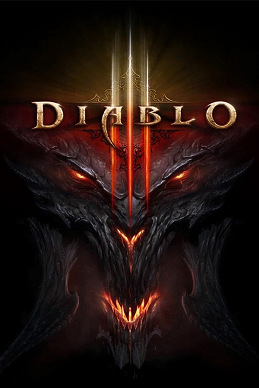
A cool cover, but nothing groundbreaking. So all in all, 
a pretty good representation of the game.

Imagine my surprise when Battlenet (Blizzard's online platform/network/ubiquitous multiplayer thing) informed me that an authenticator had been added to my account. An authenticator, for those who don't know, is a little piece of plastic and computer wizardry that generates a key-code which you need to log into a secure network. It is supposed to provide an extra level of security to your account. I have never used an authenticator, and I never received an email notifying me that somebody else had tried to add one to my account. It had been a long time since I played a Blizzard game as multiplayer Starcraft II always struck me as a terrifying prospect, and I lost interest in Cataclysm shortly after hitting the level cap. So it had been about a year since I touched my Battlenet account.

The nightmare explanation I concocted in my head was that somebody had hacked me, and then using their leet haxxor skillz, added an authenticator to lock me out of my account. In retrospect it seems stupid and far fetched, but when I checked WoW armory to see if my characters still existed and no data came up, I feared the worst. After spending an hour and twenty minutes on hold, Blizzard's tech support picked up my call as I was literally about to hang up (thankfully my phone's touch screen was being screwy).

The actual, official explanation for why a phantom authenticator was added to my account is "We have no idea. Maybe there was a problem with your cache?" This explanation actually disappointed me for several reasons. Glad as I am that I was not hacked, I like the irony of a pirate leveraging security technology to lock people out of their account. You hear about them doing shit like this all the time, and frankly, it makes for a good story. The other thing that bugs me is that I never really got a straight answer as to why this happened. I have never used a blizzard product on this machine, and I have never even used it to visit battlenet in any way, shape, or form. The tech support agent (who was very polite), said she would try refreshing something on her end, and that solved the problem. A less charitable, more irascible person might even be tempted to conclude that this "error" was a deliberate attempt to advertise the authenticator. I don't think this is the case. It was a frustrating experience that did very little to sell me on the authenticator and Blizzard can frankly come up with better ways to make you want to buy their products. But still it's weird, and it makes me wonder in a bad way.

So, after I liberated my Battlenet account, I tried to actually play the game. I should tell you that my current internet situation is unusually bad. I live in a grand old neighborhood with awful wiring, lots of zoning and historical preservation laws, and very limited options as far as ISPs go. My internet is much worse than your average gamer's. It is worse than the average person in my generation.

I will concede that Blizzard's expectation that people will always play online really isn't that outlandish in this day and age. But it does screw over quite a few people who can't meet that expectation. And it begs a question: "How much bullshit am I willing to put up with to play a really awesome game?" It's a question that is teased frequently on Reddit's videogame board, and it doesn't have a simple answer. For most people, games are a social experience and this is especially true of an online-exclusive title like Diablo 3. I proudly drew the line at Origin, when EA was pitching Battlefield 3 and later, The Old Republic. But Origin really isn't terribly dissimilar to Steam; a platform I have grown to love (the ludicrous deals offered annually are a big part of that romance). And if Blizzard were to build Battlenet in a similar way, I'm not so sure I will be able to stand firm.

There were a couple nights where I was able to coax a decent performance out of the game despite my internet difficulties. And when it plays like it is supposed to, it is a helluva lot of fun. I'm still only on the second act, and I'm playing as a Monk to start out with. This game feels a lot more fun than Diablo II ever did to me.

I'm sure some people will mourn the loss of skill points, but I think this new system facilitates more customization and experimentation. It also makes it impossible to "break" your character, which was not only possible, but very likely in Diablo II, especially at high level play. I like that you unlock a new "thing," be it a rune, a passive or some other ability, every time you level up. I know it's an artificial reward structure. I know its deliberately addictive and more than a little manipulative. But that's why I play RPGs. I like getting new powers and abilities as I go that change things. I also like the simple 'click to unleash hell' gameplay. I also enjoy the health drops as opposed to constantly chugging potions. The new energy restoration methods make for more

It isn't a perfect game. I find Leah to be a bland and incredibly annoying ally (which is perplexing because the quirky Enchantress and roguish Scoundrel are actually amusing, if archetypal company). The plot thus far, hasn't been terribly shocking (and having correctly guessed Belial's identity right off the bat, I don't really have high hopes for the rest of the yarn). Also, my friend pointed out that the in the face of the auction house, crafting is a remarkably costly and disproportionately unrewarding endeavor.

So far, I think I have broken even on the Fun to Frustration scale. But this is a very big game, and I may revisit it after I've had a chance to sample some of the other classes.